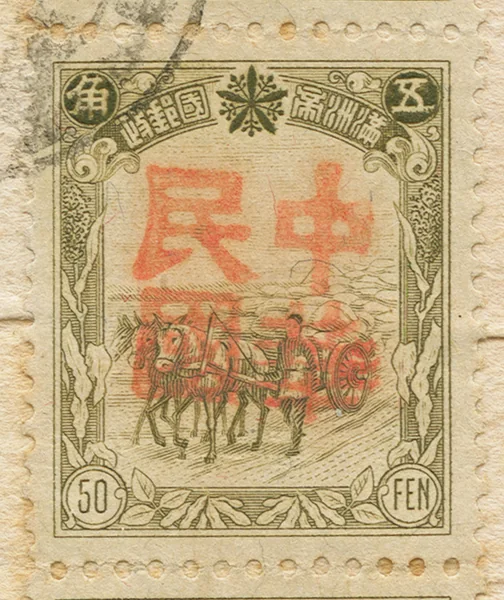
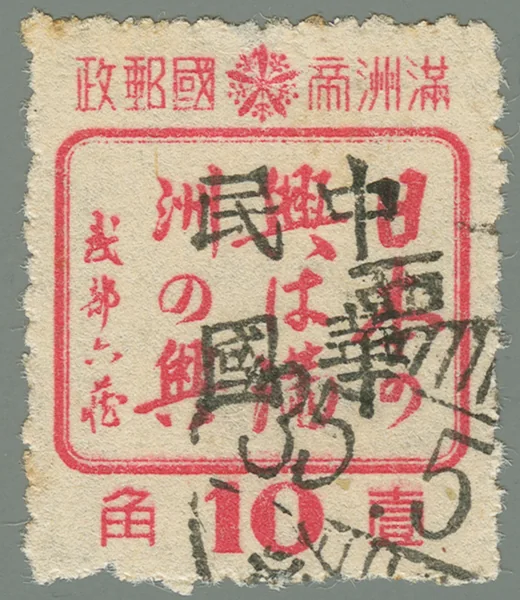
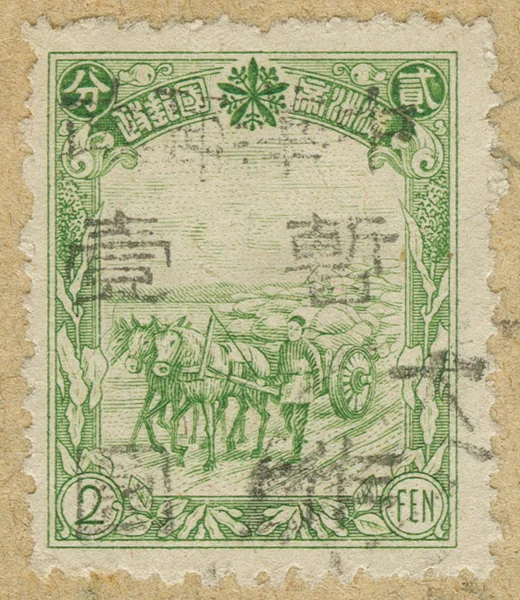
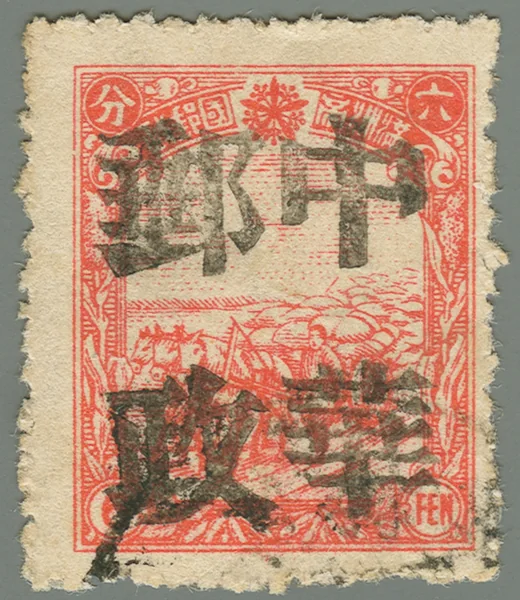
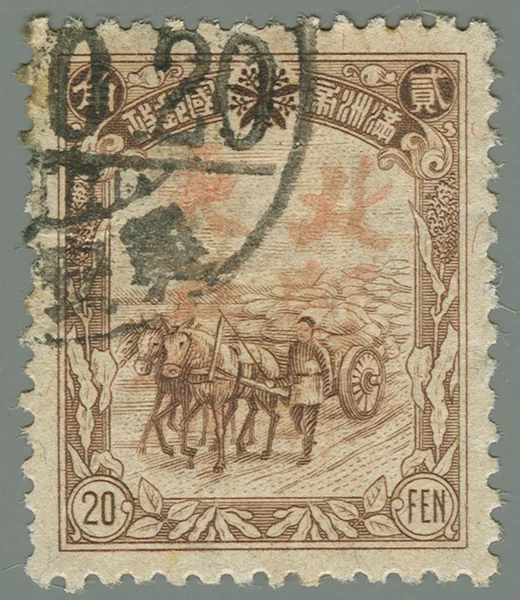
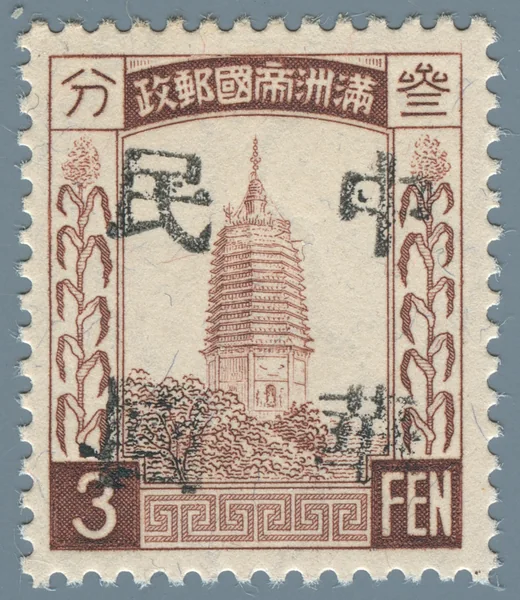
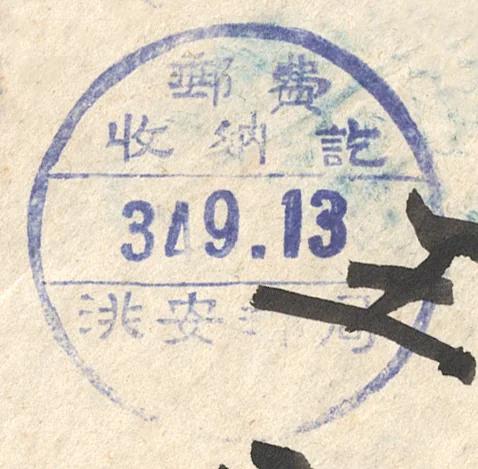
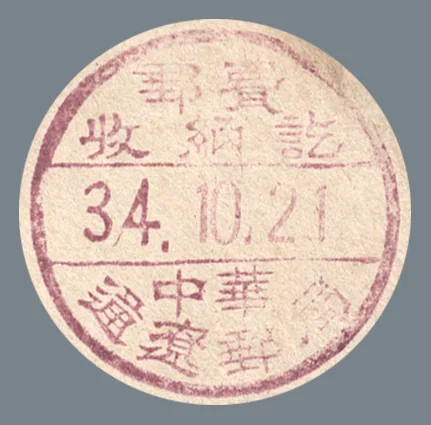
The West Manchuria Base Region covered the areas of Kailu (開魯), Fuxin (阜新), Zhengjiatun (鄭家屯), Tao’an (洮安), Fuyu (扶餘) and Qiqihar (齊齊哈爾), together with other territories lying west of the Shenyang–Changchun section of the Chinese Changchun Railway (中長鐵路). It encompassed extensive agricultural and grassland areas in the western part of the Songliao Plain (松遼平原), including territories administered as Liaobei (遼北) and Nenjiang (嫩江).¹
Compared with the heavily contested South Manchuria region, West Manchuria provided the Chinese Communist Party with a strategically important rear area and communications corridor from which political authority, military organisation and logistical support could be developed across western Northeast China.
On 27 November 1945, the Northeast Bureau of the Chinese Communist Party established the West Manchuria Sub-Bureau (西滿分局), with Li Fuchun (李富春) serving as secretary and Lü Zhengcao (呂正操) as commander of the West Manchuria Military Region. The region subsequently developed into one of the principal political, military and logistical bases of the Communist administration in Northeast China.
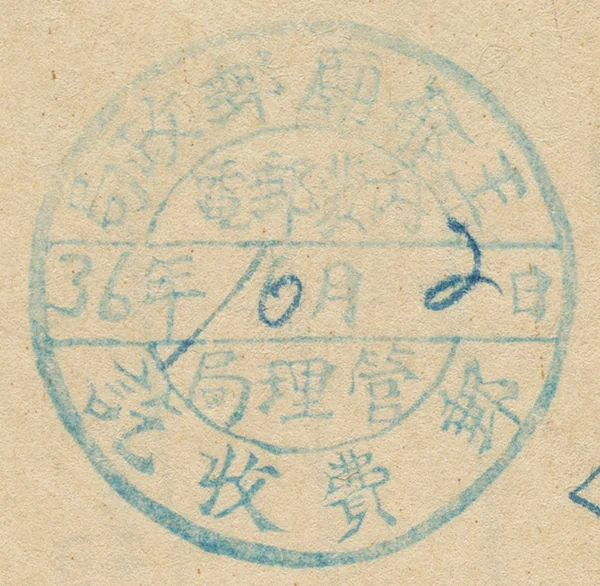
Postal and telecommunications services throughout much of the region were administered by the West Manchuria Administration of Posts and Telecommunications (西滿郵電管理局), one of the earliest regional postal administrations established in the Communist-controlled areas of Northeast China. It was established at Zhengjiatun in December 1945 and subsequently transferred its headquarters to Qiqihar during the spring of 1946. From these successive headquarters, the administration directed the restoration and operation of postal and telecommunications services throughout western Manchuria.²
References
¹ A Stamp History of China’s Liberated Areas: Northeast Area Volume (《中國解放區郵票史·東北卷》), China National Philatelic Federation, Anhui Education Publishing House, Hefei, 1995, pp. 9–10. Identifies the West Manchuria Base Region as including Kailu, Fuxin, Zhengjiatun, Tao’an, Fuyu, Qiqihar and other territories west of the Shenyang–Changchun railway.
² A Stamp History of China’s Liberated Areas: Northeast Area Volume (《中國解放區郵票史·東北卷》), China National Philatelic Federation, Anhui Education Publishing House, Hefei, 1995, chronological section for December 1945–April 1946. Records the establishment of the West Manchuria Administration of Posts and Telecommunications at Zhengjiatun in December 1945 and its transfer to Qiqihar on 24 April 1946.
西滿郵電管理局
West Manchuria Administration of Posts and Telecommunications
Following the Soviet occupation of Manchuria in August 1945, the Japanese and Manchukuo administrative structures throughout western Manchuria collapsed. As Communist control expanded across the region, the West Manchuria Sub-Bureau of the Chinese Communist Party (中共中央西滿分局) and the West Manchuria Military Region (西滿軍區) began restoring civil administration, communications and other essential public services.
The West Manchuria Administration of Posts and Telecommunications (西滿郵電管理局) was established at Zhengjiatun (鄭家屯; present-day Shuangliao) in December 1945 under the authority of the West Manchuria Military Region. It was responsible for postal, telegraph, telephone and electrical services in the Liaobei and Nenjiang areas and was among the earliest regional postal administrations established in the Communist-controlled areas of Northeast China.¹
The administration gradually assumed control of the surviving postal, telecommunications and electrical infrastructure formerly operated under Manchukuo. Offices at Sanjiangkou (三江口), Bamiancheng (八面城), Shuangshan (雙山) and Lishu (梨樹) were taken over during the initial period. In February 1946, the administration extended its control to postal and telecommunications offices at Kaitong (開通) and other localities, together with the post offices at Zhanyu (瞻榆) and Maolin (茂林). In March, it took over the generating station, electrical facilities and postal and telecommunications offices at Baichengzi (白城子).²
Postal communications were progressively restored from Zhengjiatun. In January 1946, mail services were operating between Zhengjiatun and Bamiancheng, Lishu, Shuangshan and Maolin. During February and March, connections were extended to Tongliao, Kailu, Taonan and Baichengzi. The administration thereby created an expanding regional network linking the principal Communist-controlled centres of western Manchuria.³
The published sources differ slightly concerning the chronology of the administration's movements in the spring of 1946. The specialised postal history records the establishment of an office at Baichengzi in March and the transfer of the West Manchuria Postal Administration to Qiqihar on 24 April 1946. The Jilin Provincial Gazetteer: Posts and Telecommunications Volume instead records that the administration moved to Baichengzi on 23 May and then to Qiqihar in June. It is therefore safest to conclude that the administrative transfer occurred in stages and that the headquarters was operating at Qiqihar by June 1946.⁴
The provincial gazetteer records Sun Jishu (孫繼述) as director and Jin Ziyun (靳子雲) as supervisory commissioner during the Qiqihar period. Zhang Yanxiang (張雁翔) was subsequently appointed deputy director, while Jin Ziyun later served as director and concurrently as supervisory commissioner, assisted by Zhu Jie (朱杰). The administration comprised a Personnel Section, Telecommunications Section, Postal Section, Electrical Section and Secretariat, reflecting its combined responsibility for postal, telecommunications and electrical services.²
In March 1947, the West Manchuria Administration of Posts and Telecommunications was placed under the Northeast General Administration of Posts and Telecommunications (東北郵電總局). On 15 November 1947, the West Manchuria administration was abolished, and its subordinate offices were divided among the Nenjiang, Heilongjiang and Liaobei administrations of posts and telecommunications.²
Postal Rates
Postal Rates of the West Manchuria Postal Administration
Effective Date
Ordinary Letter
Registration
Double Registration (Return Receipt)
December 1945
5 Jiao
1 Yuan
–
May 1946
1 Yuan
3 Yuan
3 Yuan 5 Jiao
15 August 1946
2 Yuan
6 Yuan
7 Yuan
February 1947
2 Yuan
10 Yuan
15 Yuan
The initial postal rates were 5 Jiao for an ordinary letter and 1 Yuan for registration. In May 1946, the ordinary-letter rate was increased to 1 Yuan, while registration cost 3 Yuan and double registration with return receipt cost 3 Yuan 5 Jiao. On 15 August 1946, the corresponding rates were increased to 2 Yuan, 6 Yuan and 7 Yuan. In February 1947, the ordinary-letter rate remained 2 Yuan, while registration increased to 10 Yuan and double registration with return receipt to 15 Yuan. From 1 March 1947, the West Manchuria postal system adopted the uniform tariff schedule of the Northeast General Administration of Posts and Telecommunications.⁵
References
¹ A Stamp History of China's Liberated Areas: Northeast Area Volume (《中國解放區郵票史·東北卷》), China National Philatelic Federation, Anhui Education Publishing House, Hefei, 1995, pp. 32–33. Records the establishment of the West Manchuria Administration of Posts and Telecommunications at Zhengjiatun in December 1945, its subordination to the West Manchuria Military Region and its responsibility for postal and communications services in Liaobei and Nenjiang.
² Jilin Provincial Gazetteer: Volume 27, Posts and Telecommunications Gazetteer (《吉林省志·卷二十七·郵電志》), Jilin Provincial Local Gazetteer Compilation Committee, Jilin People's Publishing House, Changchun, 1991, p. 23. Records the successive takeover of postal, telecommunications and electrical offices, the transfers to Baichengzi and Qiqihar, the senior personnel and internal sections of the administration, and its abolition on 15 November 1947.
³ A Stamp History of China's Liberated Areas: Northeast Area Volume (《中國解放區郵票史·東北卷》), China National Philatelic Federation, Anhui Education Publishing House, Hefei, 1995, pp. 33–34. Records the restoration of postal communications from Zhengjiatun to neighbouring offices in January 1946 and the extension of services to Tongliao, Kailu, Taonan and Baichengzi during February and March.
⁴ A Stamp History of China's Liberated Areas: Northeast Area Volume (《中國解放區郵票史·東北卷》), China National Philatelic Federation, Anhui Education Publishing House, Hefei, 1995, chronological section for March–April 1946; and Jilin Provincial Gazetteer: Volume 27, Posts and Telecommunications Gazetteer (《吉林省志·卷二十七·郵電志》), Jilin Provincial Local Gazetteer Compilation Committee, Jilin People's Publishing House, Changchun, 1991, p. 23. The former records an office at Baichengzi in March and the move to Qiqihar on 24 April, while the latter dates the transfers to 23 May and June respectively.
⁵ A Stamp History of China's Liberated Areas: Northeast Area Volume (《中國解放區郵票史·東北卷》), China National Philatelic Federation, Anhui Education Publishing House, Hefei, 1995, pp. 33–34. Records the initial West Manchurian postal rates, the increases introduced in May and August 1946 and February 1947, and the adoption of the uniform Northeast postal tariffs from 1 March 1947.
Jijiang Administrative District and Postal Restoration
Following the Soviet occupation of Manchuria in August 1945, the Japanese and Manchukuo administrative structures throughout central Jilin and western Manchuria collapsed. As Communist control expanded across the region, the Chinese Communist Party gradually re-established civil administration, communications and postal services in the liberated areas.
In January 1946, the Northeast Bureau of the Chinese Communist Party decided to abolish Liaobei Province and establish the CPC Jijiang Provincial Committee (中共吉江省委), the Jijiang Administrative Office (吉江行政公署) and the Jijiang Military Region (吉江軍區). These institutions were constituted in February 1946, with Guo Shushen (郭述申) serving as Secretary of the Provincial Committee, Li Youwen (栗又文) as head of the Administrative Office and Ni Zhiliang (倪志亮) as commander of the Military Region. Their headquarters were initially located at Lishu (梨樹) and were subsequently transferred to Dala (大賚) and Taonan (洮南).¹
The West Manchuria Posts and Telecommunications Administration (西滿郵電管理局) had been established at Zhengjiatun in December 1945 under the authority of the West Manchuria Military Region. It was responsible for postal, telegraph, telephone and electrical services in the Liaobei and Nenjiang areas and took over a number of surviving postal and communications offices formerly operated under Manchukuo.²
Postal communications were gradually restored throughout the region. In January 1946, mail services were operating between Zhengjiatun and Bamiansheng, Lishu, Shuangshan and Maolin. During February and March, postal connections were extended to Tongliao, Kailu, Taonan and Baichengzi. The Jijiang district formed part of this developing West Manchurian postal network.³
In March 1946, the Northeast Bureau and the West Manchuria Sub-Bureau reorganised the original Jijiang administration. Its western territories were assigned to the newly created Nennan Administrative District, while a smaller Jijiang Administrative District was formed under Liu Zhen (劉震). Headquartered at Qianguo Banner (前郭旗), it comprised Qianguo Banner and the counties of Dala (大賚), Qian'an (乾安), Nong'an (農安), Dehui (德惠), Changchun (長春), Fuyu (扶餘), Zhaodong (肇東), Zhaozhou (肇州) and Zhaoyuan (肇源).¹
The Jijiang administrative arrangement was short-lived. At the end of May 1946, the reduced Jijiang Administrative Office was abolished. Fuyu was transferred to Nenjiang Province, while Dala and Qianguo Banner were incorporated into the newly established Liaoji Administrative District. On 1 June 1946, the Liaoji Administrative Office (遼吉區行政公署) was formally established at Taonan.⁴
The brief existence of the Jijiang Administrative District coincided with the reconstruction of civil government and postal communications across western Manchuria. Its postal history must therefore be understood within the broader administrative framework of the West Manchuria postal system and the rapidly changing territorial organisation of early 1946.
References
¹ A Stamp History of China's Liberated Areas: Northeast Area Volume (《中國解放區郵票史·東北卷》), China National Philatelic Federation, Anhui Education Publishing House, Hefei, 1995, pp. 32–33. Records the January 1946 decision to abolish Liaobei Province, the establishment and leadership of the Jijiang party, administrative and military institutions in February, their successive headquarters, and the reorganisation of the reduced Jijiang district under Liu Zhen in March 1946.
² A Stamp History of China's Liberated Areas: Northeast Area Volume (《中國解放區郵票史·東北卷》), China National Philatelic Federation, Anhui Education Publishing House, Hefei, 1995, p. 33. Records the establishment of the West Manchuria Posts and Telecommunications Administration at Zhengjiatun in December 1945, its subordination to the West Manchuria Military Region and its responsibility for postal and communications services in Liaobei and Nenjiang.
³ A Stamp History of China's Liberated Areas: Northeast Area Volume (《中國解放區郵票史·東北卷》), China National Philatelic Federation, Anhui Education Publishing House, Hefei, 1995, pp. 33–34. Records the restoration of postal communications from Zhengjiatun to neighbouring offices in January 1946 and the extension of mail services to Tongliao, Kailu, Taonan and Baichengzi during February and March.
⁴ Baicheng Regional Gazetteer (《白城地區志》), Baicheng Regional Local Gazetteer Compilation Committee, Jilin Literature and History Publishing House, Changchun, 1992, p. 287. Records the abolition of the reduced Jijiang Administrative Office at the end of May 1946, the redistribution of its remaining territories and the establishment of the Liaoji Administrative Office at Taonan on 1 June 1946.
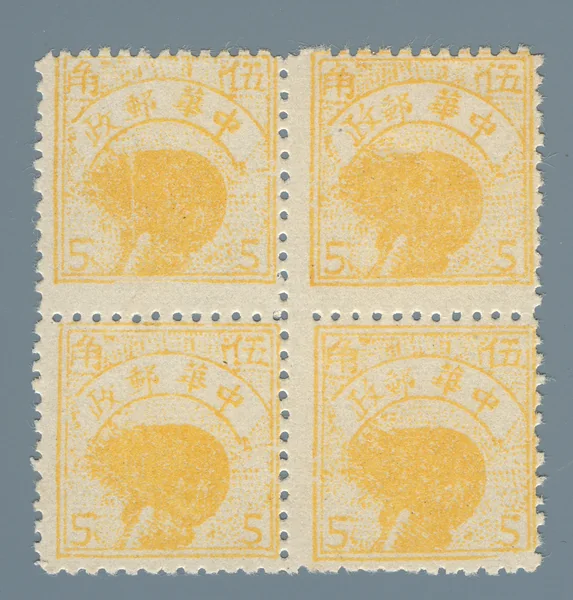
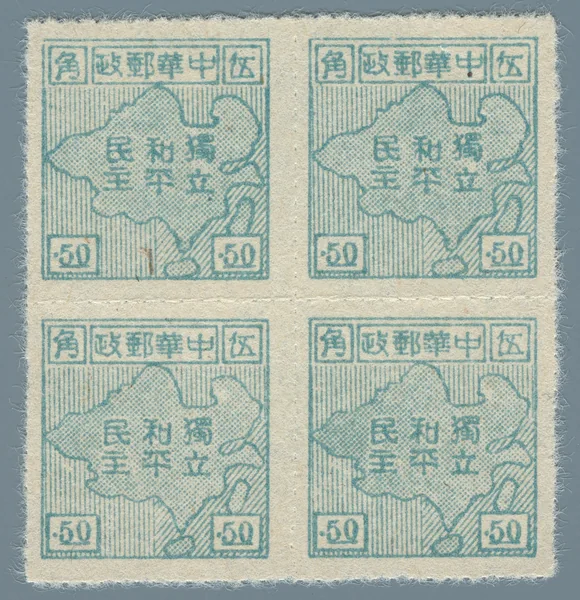
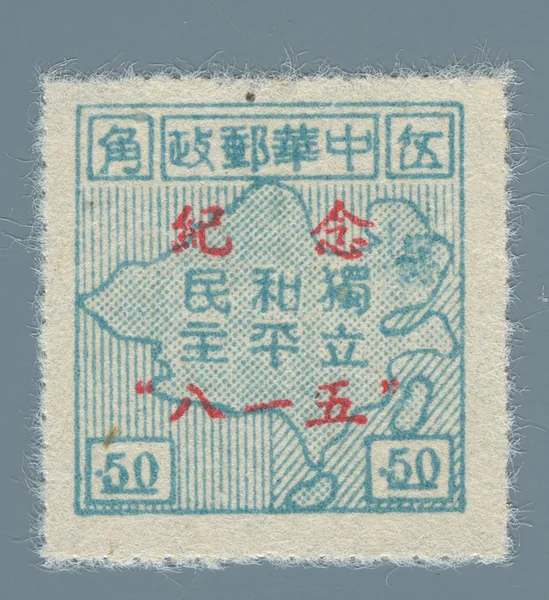
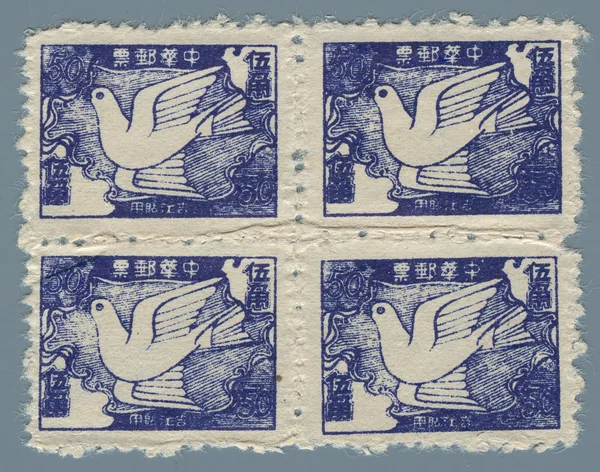
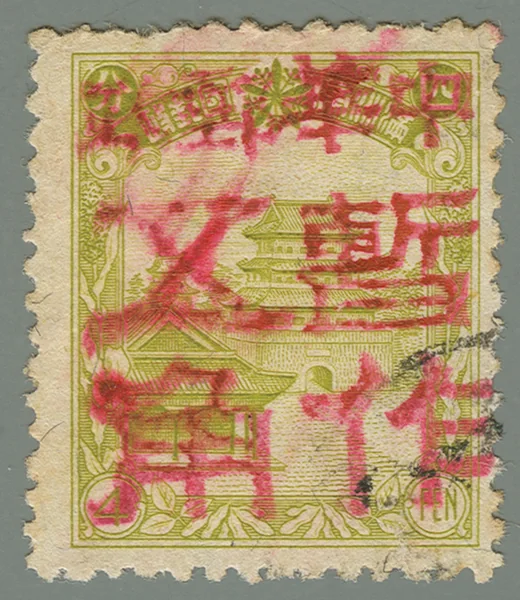
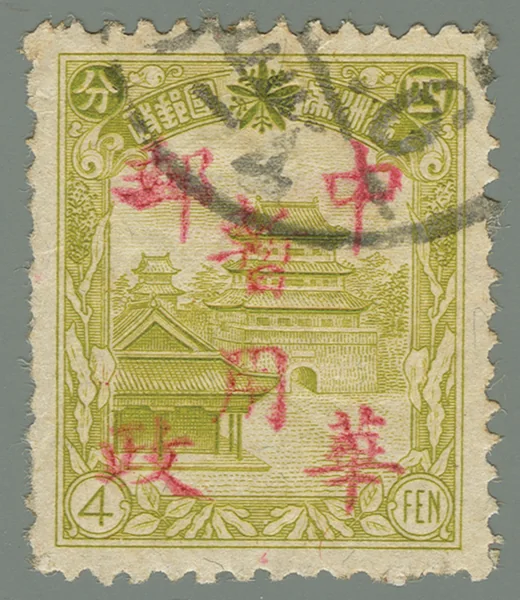
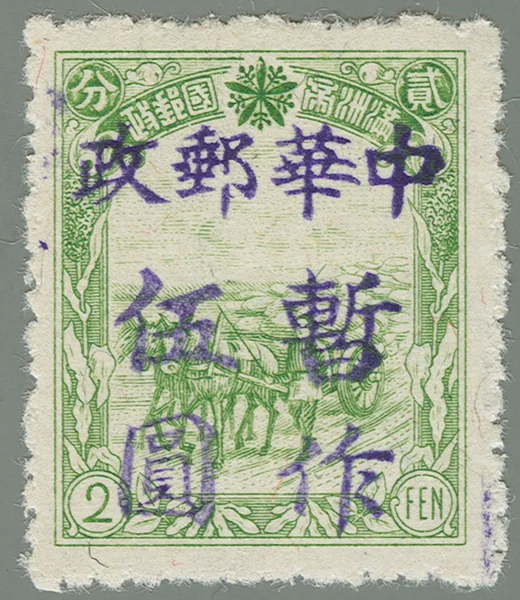
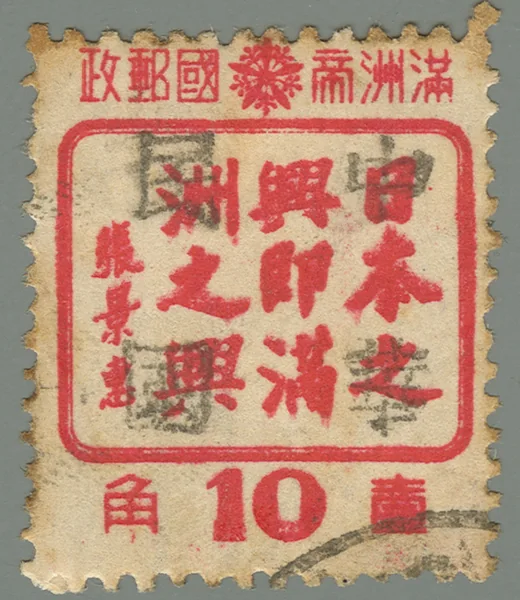
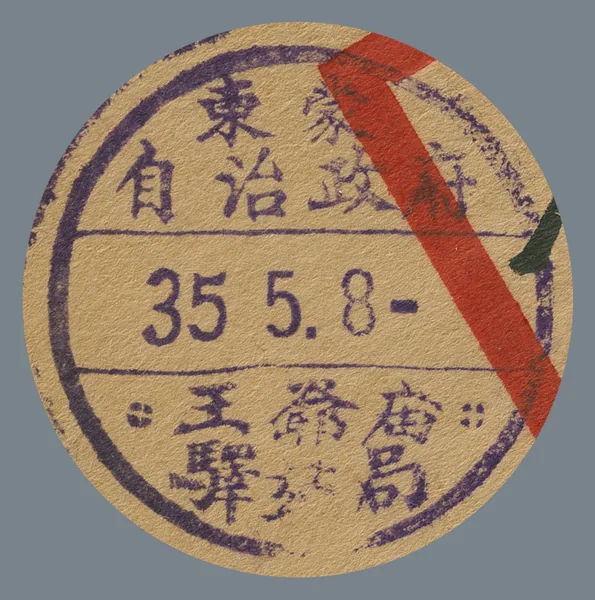
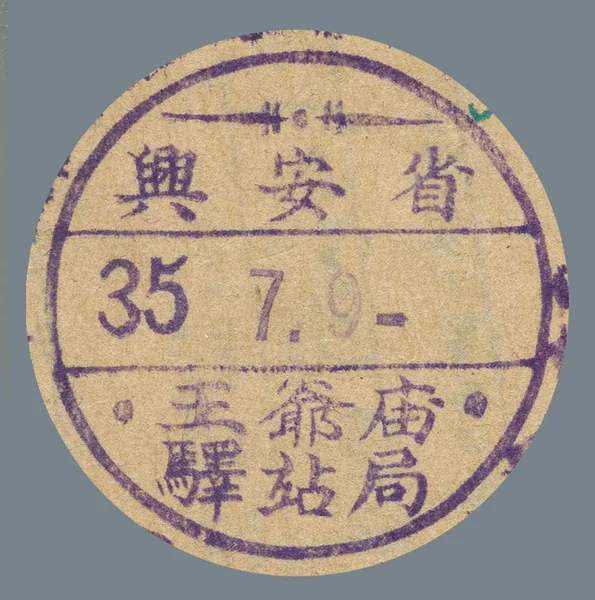
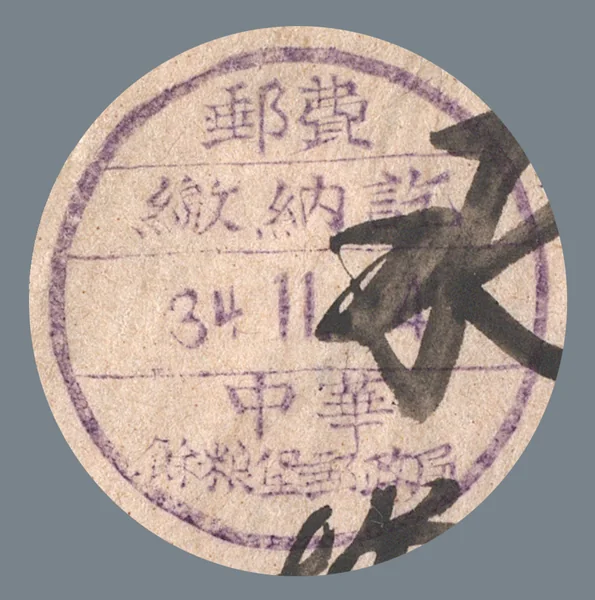
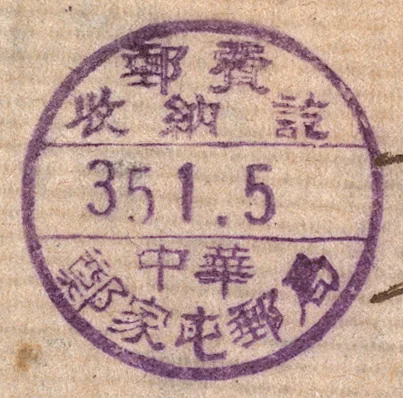
Locally produced stamps, postage-paid handstamps and other provisional frankings used at individual locations within the West-Manchuria Base Region during the restoration and reorganisation of postal services. They are catalogued according to their place of issue or use because they do not form part of a clearly defined, unified issue of a provincial or regional postal administration.
The following material appears in dealer stock and specialist collections but is not listed in any recognised philatelic catalogue. Its official status is uncertain; the stamps are considered most likely bogus. Included here for reference only.
Not catalogued
Provisional Surcharge: "Temporarily Used for" (暫作)
Base stamp: Torch and Slogan Stamps (XM1), $1 yellow-green. Violet chop surcharge 暫作 to $10. Likely late 1946. Not listed in any catalogue; probably bogus.
Not catalogued
Provisional Surcharge: "Temporarily Used for" (暫作)
Base stamp: Map of China Stamps (XM2), 50c light blue. Red chop surcharge 暫作 to $50. Likely late 1946. Not listed in any catalogue; probably bogus.