3. 北滿根據地
North-Manchuria Base Region
北滿根據地
The North Manchuria Base Region comprised the provinces of Songjiang (松江), Hejiang (合江), Heilongjiang (黑龍江), Nenjiang (嫩江) and Mudanjiang, then known as Suining (綏寧), together with the Harbin Special Municipality (哈爾濱特別市). Contemporary Party-history sources describe North Manchuria as comprising more than eighty cities and counties, covering more than 400,000 square kilometres and containing a population of almost ten million.¹
The region occupied a particularly important position in the Communist struggle for control of Northeast China. It bordered the Soviet Union, possessed extensive timber, coal and grain resources, retained a significant industrial base, and contained a large number of towns and rural districts linked by the railway network centred on Harbin. These factors provided both economic resources and strategic depth, while the extensive rural areas away from the main railway corridors offered favourable conditions for the establishment and consolidation of political and military authority.²
The Communist administrative concept of “North Manchuria” was not merely geographical. The Northeast Bureau of the Chinese Communist Party organised its work in the region through four major sub-regions: East Manchuria, West Manchuria, South Manchuria and North Manchuria. On 5 November 1945 the Northeast Bureau decided to establish the North Manchuria Sub-Bureau of the Chinese Communist Party Central Committee (中共中央北滿分局), and it formally began operating at Harbin after Chen Yun arrived there on 16 November. Chen Yun served as secretary; Gao Gang, Zhang Wentian, Zhang Xiushan and Li Zhaolin were among the members of its leadership.³
Because the Soviet military authorities required Communist organisations to withdraw from Harbin, the North Manchuria Sub-Bureau decided on 20 November to move its headquarters, together with the Songjiang Provincial Working Committee and the Songjiang Military District, to Binxian. The withdrawal was completed on 23 November. The Sub-Bureau subsequently directed the establishment and consolidation of Party, governmental and military organisations throughout the five provinces of North Manchuria.⁴
The postal situation inherited by these authorities was extremely fragmented. The surrender of Japan in August 1945 brought about the collapse of the centralised Manchukuo postal and telecommunications system. A retrospective report of the Northeast General Administration of Posts and Telecommunications later described the period from August to the end of 1945 as one of “free and dispersed administration” (自由分散). The former organisational structure had broken down and normal operations had largely ceased. Municipal telephone systems, electricity services and later postal communications were restored in individual localities under the assistance or direction of local governments, but these services initially operated independently of one another.⁵
This point is fundamental to the interpretation of the postal history of North Manchuria. There was no single “North Manchurian Post” which replaced the Manchukuo postal administration in August 1945. Instead, postal services re-emerged locally and regionally, frequently under different civilian, provincial or military authorities. The numerous provisional stamps, surcharges and locally determined postal rates of 1945 and 1946 therefore developed within an administrative environment that was itself decentralised.
Harbin was one of the first major centres in which postal activity resumed. After the Japanese surrender, the Harbin postal service again handled mail and initially maintained its own rate structure. Contemporary postal-rate research records an early ordinary-letter rate of 50 cents, with registration at two yuan and double registration at four yuan. Before unified Northeast postage stamps became available, the Harbin postal service used Manchukuo stamps locally overprinted with new values.⁶
The political and administrative position of Harbin, however, remained unstable during the winter of 1945–46. Nationalist officials arrived in late 1945 and, in February 1946, the Nationalist government took over the former Harbin Central Post Office and renamed it the Harbin Municipal Post Office. After Communist forces entered Harbin on 28 April 1946, the postal administration again passed through a period of reorganisation.⁷
Other parts of North Manchuria developed postal organisations independently of Harbin. In December 1945 the West Manchuria Posts and Telecommunications Administration (西滿郵電管理局) was established at Zhengjiatun. Although its name referred to West Manchuria, its later jurisdiction and organisational development were closely connected with Nenjiang and Heilongjiang, areas which formed part of the North Manchuria base-region structure. The Heilongjiang Provincial Gazetteer describes the West Manchuria administration as the earliest major Communist posts and telecommunications administration established in Northeast China. It initially operated separate postal, telecommunications, electrical and administrative sections and later moved to Qiqihar after the Communist occupation of that city in April 1946.⁸
The establishment of this administration had immediate philatelic consequences. In December 1945 it issued its own postage stamps at Zhengjiatun, including the 50-cent torch design and the one-yuan “Democracy, Peace, Unity” issue. Later West Manchurian issues and changing postal rates reflected the continuing regional autonomy of the administration before the introduction of unified Northeast postal regulations.⁹
At Bei’an, the administrative centre of Heilongjiang, a Heilongjiang Provincial Telegraph and Telephone Administration and a Provincial Capital Post Office were established in December 1945. These separately supervised telecommunications and postal operations within the province.¹⁰
In February 1946 the provincial postal rate was fixed at one yuan for an ordinary letter, five yuan for registered mail and ten yuan for double registration. To meet these rates, the Provincial Capital Post Office used Manchukuo definitive stamps overprinted provisionally with new one- and five-yuan values.¹¹
These early Heilongjiang issues demonstrate particularly clearly the relationship between administrative reconstruction and provisional stamp production. The overprints were not simply replacements for obsolete Manchukuo denominations; they were created to satisfy newly established provincial postal rates within a postal system that remained administratively independent of the other North Manchurian provinces.
Hejiang followed a comparable but distinct course. The Manchukuo postal system at Jiamusi collapsed in August 1945, but the Jiamusi Post Office provisionally resumed postal service in September. The Hejiang provincial government was established in November 1945, and in early 1946 a Hejiang postal administration was established at Jiamusi under the provincial Communications Bureau.¹²
By April 1946 the democratic authorities had formally taken over the Jiamusi postal and telecommunications organisations. The Heilongjiang Provincial Gazetteer records separate postal and telegraph-telephone administrations under the Hejiang Communications Bureau.¹³ The Jiamusi Municipal Gazetteer further shows that by July 1946 the municipal government itself included a Posts and Telecommunications Office among its departments.¹⁴ The evidence therefore indicates the simultaneous existence of municipal operating institutions and provincial supervisory bodies rather than a single administrative office.
The postal-rate history of Hejiang similarly reveals several rapid changes. Jiamusi temporarily resumed postal service in September 1945 with a provisional rate of two yuan. The rate was subsequently altered several times, and in January 1946 ordinary letters were charged at two yuan and registered letters at five yuan. After the democratic government took over the Jiamusi Post Office in April 1946, Manchukuo stamps were manually overprinted with “Chinese Postal Service” (中華郵政) and provisional one- and two-yuan values for use in the Hejiang currency area.¹⁵
Suining, centred on Mudanjiang, developed another separate postal administration. Later sources indicate that the postal organisation at Mudanjiang was not formally taken over by the new authorities until early 1946. One source places the administrative takeover at the beginning of March 1946 and records the resumption of postal operations on 8 March, while another dates the appointment of Guo Ning to take charge of the postal service to 23 February 1946. The slight chronological discrepancy suggests that the administrative takeover and the actual resumption of postal operations should not necessarily be treated as a single event.¹⁶
After the creation of the Suining provincial government in April, the Mudanjiang postal organisation was reorganised on 1 May 1946 as the Suining Provincial Postal Administration (綏寧省郵政管理局), under the authority of the provincial government.¹⁷
The Heilongjiang Provincial Gazetteer likewise records that Guo Ning was appointed to take charge of the postal service during the early 1946 takeover and subsequently became head of the provincial postal administration.¹⁸
Suining therefore possessed an identifiable provincial postal authority during the crucial middle months of 1946. This administration maintained its own postal rates and issued its own provisional and commemorative stamps. On 15 August 1946, for example, the Suining administration issued a locally surcharged first-anniversary liberation stamp, while Harbin and West Manchuria issued separate commemorative stamps on the same date.¹⁹ The simultaneous existence of these different “15 August” issues provides particularly clear philatelic evidence that the postal systems of North Manchuria had not yet been unified.
The administrative position of Heilongjiang itself was also formalised during the summer of 1946. On 21 July the Heilongjiang Provincial Posts and Telecommunications Administrative Committee (黑龍江省郵電管理委員會) was established at Bei’an under the direct authority of the provincial government and military district. It contained postal, telecommunications, general affairs and personnel sections and exercised jurisdiction over a substantial group of cities and counties in northern Heilongjiang.²⁰
Songjiang and Harbin likewise remained organisationally distinct during much of 1946. On 18 July the Songjiang provincial government instructed local governments to assist actively in the restoration of postal services.²¹ In Harbin, postal tariffs were again revised from 1 October 1946: ordinary letters, whether local or non-local, were charged at two yuan, single registration at ten yuan and double registration at fifteen yuan. The Harbin service continued to use locally overprinted Manchukuo stamps until postage stamps of the new unified Northeast administration became available.²²
The same date, 1 October 1946, marked an important administrative reorganisation in Harbin. The Department of Communications of the Northeast Administrative Committee formally took over the Harbin postal service and reorganised the Harbin Municipal Post Office as the Harbin Municipal Postal Bureau (哈爾濱市郵政局), under Yu Jing. The bureau contained separate secretarial and operational departments and was charged with restoring postal offices throughout the city.²³
The decisive institutional change followed eight days later. On 9 October 1946, by decision of the Northeast Administrative Coalition, the Northeast General Administration of Posts and Telecommunications (東北郵電管理總局) was established at Harbin. It initially assumed responsibility for postal, telegraph, telephone and electrical services in West Manchuria, Mudanjiang, Hejiang and the Songjiang-Harbin area. At the same time it established regional offices at Harbin, Jiamusi and Mudanjiang.²⁴
The establishment of the General Administration did not immediately eliminate the regional structure that had developed since 1945. Rather, it marked the beginning of a process of centralisation. The administration’s own retrospective account states that from November 1946 to February 1947 priority was given to restoring and linking the larger towns situated along the railway lines. Only after these principal routes had been connected did the administration proceed to reconstruct communications between provinces, counties and rural districts.²⁵
The process of administrative integration continued throughout 1947. The Hejiang office at Jiamusi was reorganised in June as the Hejiang Provincial Posts and Telecommunications Administration and placed directly under the General Administration.²⁶ The General Administration similarly absorbed or reorganised the administrations of other provinces as its authority expanded. By this stage, unified operating procedures, tariffs and organisational rules increasingly replaced the local systems established during the first year after the Japanese surrender.²⁷
The postal history of North Manchuria in 1945–46 must therefore be understood as a three-stage transition.
The first stage, from August to the end of 1945, was characterised by the collapse of the Manchukuo system and the improvised local restoration of essential communications.
The second stage, extending broadly from late 1945 to October 1946, was characterised by the establishment of a number of regional and provincial postal administrations. Harbin, Heilongjiang, Hejiang, Suining and the West Manchuria administration operating from Zhengjiatun and later Qiqihar maintained different administrative structures, rate systems and postage stamps. These institutions were generally subordinate to provincial governments, local military authorities or communications departments rather than to a single Northeast postal authority.
The third stage began with the establishment of the Northeast General Administration of Posts and Telecommunications on 9 October 1946. From that point onwards, postal administration progressively moved from regional autonomy towards common regulations, common tariffs, integrated communications routes and ultimately unified postage issues.
This administrative chronology is essential to the interpretation of the postage stamps of North Manchuria. The extraordinary number of local overprints, provisional issues and regional stamp designs of 1945 and 1946 should not be regarded merely as a confusing succession of philatelic varieties. In many cases they directly reflected the administrative and monetary fragmentation of the region. Different authorities controlled different territories, imposed different postal rates, used different currencies and had access to different stocks of former Manchukuo stamps.
The provisional issues of North Manchuria were therefore products of a rapidly changing postal administration. Their classification becomes considerably clearer when each issue is associated not simply with a town or province, but with the specific postal authority, postal rate and administrative phase under which it was produced. The creation of the Northeast General Administration in October 1946 was consequently not merely another event in the postal chronology; it represented the institutional turning point from the fragmented postal systems of the immediate postwar period towards a unified Northeast postal network.
References
¹ The North Manchuria Sub-Bureau of the Chinese Communist Party Central Committee (《中共中央北滿分局》), compiled by the Party History Research Office of the CPC Harbin Municipal Committee and the Party History Research Office of the CPC Binxian County Committee, Heilongjiang People’s Publishing House, Harbin, 1998, p. 2. The work defines North Manchuria as Songjiang, Hejiang, Heilongjiang, Nenjiang and Suining provinces together with Harbin Special Municipality, comprising more than eighty cities and counties, more than 400,000 km² and almost ten million inhabitants.
² The North Manchuria Sub-Bureau of the Chinese Communist Party Central Committee, p. 2. The source emphasises the Soviet border, timber, coal and grain resources, industrial capacity, extensive rural territory and the railway system centred on Harbin as the principal strategic advantages of North Manchuria.
³ The North Manchuria Sub-Bureau of the Chinese Communist Party Central Committee, p. 565. The Northeast Bureau decided on 5 November 1945 to establish the North Manchuria Sub-Bureau; it formally began operations after Chen Yun arrived in Harbin on 16 November.
⁴ The North Manchuria Sub-Bureau of the Chinese Communist Party Central Committee, pp. 565–566. The Sub-Bureau decided on 20 November to withdraw from Harbin; the move to Binxian was completed on 23 November.
⁵ Selected Historical Materials on the Financial and Economic History of the Northeast Liberated Areas, vol. 2 (《東北解放區財政經濟史資料選編·第二輯》), “Summary of Three Years of Northeast Posts and Telecommunications Work” (《東北郵電三年來工作總結》), Northeast General Administration of Posts and Telecommunications, 1949, pp. 632–633. The report defines August 1945–December 1946 as the first stage and describes the period from August to the end of 1945 as the period of 自由分散, during which the former Manchukuo postal and telecommunications organisation collapsed and individual services were restored locally.
⁶ History of Postal Rates in Modern China (《中國近現代郵政資費史》), pp. 484–485, section “Harbin People’s Postal Rates”. The work records the early Harbin rates of 0.5 yuan for an ordinary letter, two yuan for single registration and four yuan for double registration, and states that locally surcharged Manchukuo stamps were used before stamps issued by the Northeast General Administration became available.
⁷ Harbin Municipal Gazetteer, vol. 7: Posts and Telecommunications (《哈爾濱市志·郵政·電信》), p. 123. The Nationalist government took over the former Harbin Central Post Office in February 1946 and renamed it the Harbin Municipal Post Office; Communist forces entered Harbin on 28 April.
⁸ Heilongjiang Provincial Gazetteer, vol. 20: Posts and Telecommunications (《黑龍江省志·第二十卷·郵電志》), p. 378. The West Manchuria Posts and Telecommunications Administration was established at Zhengjiatun in December 1945 and transferred to Qiqihar after the latter’s liberation in April 1946; the Gazetteer describes it as the earliest posts and telecommunications administrative institution established in Northeast China.
⁹ History of Postage Stamps of the Chinese Liberated Areas: Northeast Volume (《中國解放區郵票史·東北卷》), p. 35. The December 1945 torch and “Democracy, Peace, Unity” issues were produced under the West Manchuria Posts and Telecommunications Administration at Zhengjiatun.
¹⁰ Heilongjiang Provincial Gazetteer, vol. 20: Posts and Telecommunications, p. 378. The Gazetteer records the establishment at Bei’an in December 1945 of the Heilongjiang Provincial Telegraph and Telephone Administration and the Provincial Capital Post Office.
¹¹ History of Postal Rates in Modern China, p. 481, Heilongjiang section. The source records February 1946 rates of one yuan for an ordinary letter, five yuan for single registration and ten yuan for double registration; the Heilongjiang Provincial Capital Post Office used Manchukuo definitive stamps surcharged “Provisional 1 yuan” and “Provisional 5 yuan” to meet these rates.
¹² History of Postage Stamps of the Chinese Liberated Areas: Northeast Volume, p. 51. Jiamusi resumed provisional postal service in September 1945; the Hejiang provincial government was established in November, and a provincial postal administration was organised at Jiamusi in early 1946 under the Hejiang Communications Bureau.
¹³ Heilongjiang Provincial Gazetteer, vol. 20: Posts and Telecommunications, p. 380. After the April 1946 takeover, separate Hejiang postal and telegraph-telephone administrations were established under the Hejiang Communications Bureau.
¹⁴ Jiamusi Municipal Gazetteer (《佳木斯市志》), p. 1296. By July 1946 the Jiamusi municipal government comprised one secretariat, five sections and two bureaus, including a Posts and Telecommunications Bureau.
¹⁵ History of Postal Rates in Modern China, p. 484, Hejiang section. The work records the provisional Jiamusi rates and the April 1946 manual overprints reading “Chinese Postal Service” with provisional one- and two-yuan values. The work itself explicitly notes uncertainties concerning the status of the early postal organisation and some of the earliest rate changes, which should therefore be treated cautiously.
¹⁶ History of Postal Rates in Modern China, p. 486, Suining section. The source states that the Mudanjiang municipal authorities formally took over the postal organisation on 1 March 1946 and that postal operations resumed on 8 March. Heilongjiang Provincial Gazetteer, vol. 20: Posts and Telecommunications, p. 379, however, records that Guo Ning was appointed on 23 February 1946 to take charge of the postal department and that the department was formally taken over at that time. The chronologies given by the two later sources are therefore not identical. This may reflect a distinction between appointment or administrative takeover and the subsequent resumption of postal operations, but such a distinction cannot presently be demonstrated from a contemporary primary document.
¹⁷ History of Postal Rates in Modern China, p. 486, Suining section. The source records that on 1 May 1946 the Mudanjiang municipal postal organisation became the Suining Provincial Postal Administration under the provincial government.
¹⁸ Heilongjiang Provincial Gazetteer, vol. 20: Posts and Telecommunications, p. 379. The source records Guo Ning’s appointment to take charge of the Mudanjiang postal service on 23 February 1946 and his subsequent appointment as head of the Suining Provincial Postal Administration.
¹⁹ History of Postage Stamps of the Chinese Liberated Areas: Northeast Volume, p. 147. Separate first-anniversary issues were released on 15 August 1946 by the West Manchuria Posts and Telecommunications Administration, the Harbin Municipal Post Office and the Suining Provincial Postal Administration.
²⁰ Heilongjiang Provincial Gazetteer, vol. 20: Posts and Telecommunications, p. 378. The Heilongjiang Provincial Posts and Telecommunications Administrative Committee was established on 21 July 1946 under the direct leadership of the provincial government and military district.
²¹ History of Postage Stamps of the Chinese Liberated Areas: Northeast Volume, p. 147. On 18 July 1946 Songjiang provincial chairman Feng Zhongyun signed an instruction requiring local governments to assist actively in restoring postal operations.
²² History of Postal Rates in Modern China, p. 485, Harbin section. From 1 October 1946 ordinary letters were two yuan, single registration ten yuan and double registration fifteen yuan; locally surcharged Manchukuo stamps continued in use before unified Northeast issues became available.
²³ Harbin Municipal Gazetteer, vol. 7: Posts and Telecommunications, p. 123. On 1 October 1946 the Department of Communications of the Northeast Administrative Committee took over the Harbin postal service, reorganised it as the Harbin Municipal Postal Bureau and appointed Yu Jing as director.
²⁴ History of Postage Stamps of the Chinese Liberated Areas: Northeast Volume, p. 85. On 9 October 1946, by decision of the Northeast Administrative Coalition, the Northeast General Administration of Posts and Telecommunications was established at Harbin to supervise West Manchuria, Mudanjiang, Hejiang and the Songjiang-Harbin area; offices were established at Harbin, Jiamusi and Mudanjiang.
²⁵ Selected Historical Materials on the Financial and Economic History of the Northeast Liberated Areas, vol. 2, “Summary of Three Years of Northeast Posts and Telecommunications Work”, p. 655. The report records that from November 1946 to February 1947 the General Administration concentrated first on connecting the principal towns along the railway lines; after the principal trunk routes had been restored, work proceeded to provincial–county and county–county branch routes.
²⁶ Heilongjiang Provincial Gazetteer, vol. 20: Posts and Telecommunications, p. 380. The Hejiang office at Jiamusi was replaced in June 1947 by the Hejiang Provincial Posts and Telecommunications Administration under the Northeast General Administration.
²⁷ History of Postage Stamps of the Chinese Liberated Areas: Northeast Volume, pp. 84–85. The work explicitly distinguishes the first phase, August 1945–October 1946, characterised by dispersed local administration developing towards regional coordination, from the second phase beginning in October 1946, which it defines as the period of unified leadership under the Northeast General Administration.
主要郵政中心
Major Postal Centres
Postal localities in which, between August 1945 and the end of 1946, a postal administrative authority with documented responsibility for other post offices or for a wider postal district was based.
北安郵政局 · 黑龍江省會郵政局
Bei’an Post Office and Heilongjiang Provincial Capital Post Office
Following Japan’s surrender in August 1945, much of the postal and telecommunications system inherited from Manchukuo ceased to function in the Heilongjiang region. Most postal routes and offices initially stopped operating. A number of post offices situated along the railway lines, however, were able to maintain limited services, including Bei’an itself. After the establishment of the new provincial authorities, postal communications were gradually restored.¹
Bei’an became the seat of the newly established Heilongjiang Provincial Government on 13 November 1945. In December, two separate provincial communications administrations were established in the city: the Heilongjiang Telegraph and Telephone General Bureau (黑龍江省電報電話總局), responsible for telecommunications, and the Heilongjiang Provincial Capital Post Office (黑龍江省會郵政局), responsible for postal services throughout the province.²
On 1 February 1946, the Heilongjiang Provincial Government issued instructions for the provisional restoration of postal services throughout the province. The Provincial Capital Post Office had been directed to formulate provisional arrangements for provincial mail communication, and local administrations were instructed to assist postal personnel in implementing them. A Sunwu County Government notice of 2 February records the resulting rates as one yuan for an ordinary letter, five yuan for single registration and ten yuan for double registration. A Nationalist postal telegram dated 11 March 1946 subsequently claimed that Communist authorities had already organised a Heilongjiang provincial government and conducted postal business at these same rates in October 1945. This chronology conflicts with the locally documented establishment of the Heilongjiang Provincial Government on 13 November and of the Provincial Capital Post Office in December, and the Nationalist account should therefore be treated cautiously as evidence for the precise chronology of the early postal administration.³
On 21 July 1946, the separate postal and telecommunications administrations were combined to form the Heilongjiang Provincial Posts and Telecommunications Management Committee (黑龍江省郵電管理委員會), under the direct authority of the provincial government and military district. Zhao Xintian (趙心田), head of the third section of the Heilongjiang Military District headquarters, served concurrently as its director. A specialised postal history dates this reorganisation more generally to August and records that the Heilongjiang Provincial Capital Post Office was then redesignated the Bei’an Post Office (北安郵政局). The difference may reflect the formal establishment of the committee on 21 July and the subsequent implementation of the reorganisation in August, but the surviving sources do not presently allow this sequence to be demonstrated conclusively. In November 1946, the committee became the Heilongjiang Provincial Posts and Telecommunications Administration (黑龍江省郵電管理局). Guan Jinghuan (關靖寰), chief of staff of the provincial military district, served concurrently as director, with Zhao Xintian and Wang Wei (王為) as deputy directors. In March 1947, the administration was placed under the West Manchuria Posts and Telecommunications Administration and reorganised as the Bei’an Posts and Telecommunications Office (北安郵電辦事處).⁴
References
¹ History of Postage Stamps of the Chinese Liberated Areas: Northeast Volume (《中國解放區郵票史·東北卷》), All-China Philatelic Federation, Anhui Education Publishing House, Hefei, 1995, pp. 39–40. The source records that after the war most postal routes and offices in the former Heilongjiang area ceased operating, while a number of offices along the railway lines, including Bei’an, Hailun, Suihua, Keshan and Kedong, were able to maintain limited operations. Following the establishment of the democratic government, the provincial authorities began organising the restoration of postal communications.
² Heilongjiang Provincial Gazetteer, vol. 20: Posts and Telecommunications (《黑龍江省志·第二十卷·郵電志》), Heilongjiang Provincial Local Gazetteer Compilation Committee, ed. Zhao Fan (趙凡), Heilongjiang People’s Publishing House, Harbin, 1994, p. 378. The Gazetteer records the establishment at Bei’an in December 1945 of the Heilongjiang Telegraph and Telephone General Bureau and the Heilongjiang Provincial Capital Post Office, which respectively administered provincial telecommunications and postal services. The North Manchuria Sub-Bureau of the Chinese Communist Party Central Committee (《中共中央北滿分局》), p. 569, records that the Heilongjiang Provincial Government was established on 13 November 1945 with its offices at Bei’an.
³ History of Postage Stamps of the Chinese Liberated Areas: Northeast Volume, pp. 40–42. The source reproduces the Heilongjiang Provincial Government instruction of 1 February 1946 concerning the provisional restoration of provincial postal communications, a Sunwu County Government notice of 2 February prescribing rates of one yuan for an ordinary letter, five yuan for single registration and ten yuan for double registration, and a Nationalist postal telegram of 11 March claiming that postal operations at the same rates had already been conducted under Communist authority in October 1945. The latter chronology conflicts with the documented establishment of the Heilongjiang Provincial Government on 13 November and of the Provincial Capital Post Office in December and should therefore not be used uncritically to date the establishment of the provincial postal administration.
⁴ Heilongjiang Provincial Gazetteer, vol. 20: Posts and Telecommunications, pp. 378–379. The Gazetteer records the establishment of the Heilongjiang Provincial Posts and Telecommunications Management Committee on 21 July 1946, under the provincial government and military district, with Zhao Xintian as concurrent director; its redesignation as the Heilongjiang Provincial Posts and Telecommunications Administration in November 1946, headed by Guan Jinghuan with Zhao Xintian and Wang Wei as deputy directors; and its transfer to the West Manchuria Posts and Telecommunications Administration and reorganisation as the Bei’an Posts and Telecommunications Office in March 1947. History of Postage Stamps of the Chinese Liberated Areas: Northeast Volume, p. 39, dates the formation of the committee more generally to August 1946 and records that the Heilongjiang Provincial Capital Post Office was then redesignated the Bei’an Post Office. The difference may represent the distinction between formal establishment and subsequent implementation, but this cannot presently be demonstrated conclusively.
⁵ Bei’an County Gazetteer (《北安縣志》), compiled by the Bei’an Municipal Local Gazetteer Office, Bei’an, May 1994, pp. 16, 490–491. The Gazetteer records both a county-level maintenance committee (under former Manchukuo county magistrate Zhong Xiuqi) and a provincial-level maintenance committee (under former Manchukuo provincial governor Wang Bingfeng) being established simultaneously at Bei’an on 15 August 1945, reflecting the city’s dual function as county seat and provincial administrative centre. The North Manchuria Sub-Bureau of the Chinese Communist Party Central Committee (《中共中央北滿分局》), p. 569, records the establishment of the Heilongjiang Provincial Government at Bei’an on 13 November 1945, confirming its continuing significance as a provincial centre.
⁶ Bei’an County Gazetteer (《北安縣志》), compiled by the Bei’an Municipal Local Gazetteer Office, Bei’an, May 1994, p. 16; see also pp. 490–491. The chronological record states that a local Maintenance Committee headed by former Manchukuo county magistrate Zhong Xiuqi was established on 15 August 1945 and that a provincial Maintenance Committee headed by former Manchukuo provincial governor Wang Bingfeng was established at the same time. The detailed administrative history gives 17 August rather than 15 August for the local committee; the discrepancy within the Gazetteer is retained rather than silently harmonised.
⁷ Bei’an County Gazetteer, p. 16. The chronological record states that the Soviet Red Army entered Bei’an on 19 August 1945, established a Soviet garrison headquarters and imposed military administration, whereupon the existing county Maintenance Committee dissolved itself.
⁸ Bei’an County Gazetteer, p. 16. The chronological record states that Wang Jun arrived in Bei’an from Khabarovsk on 23 August 1945 and became deputy commander of the Soviet garrison headquarters.
⁹ Bei’an County Gazetteer, p. 16; see also p. 491. The chronological record dates the Soviet-supported establishment of the new county Maintenance Committee under Zhang Xiyu to 8 September 1945. The detailed administrative history gives 7 September and records that the committee was established with the agreement of the Soviet commander and maintained public order under Soviet direction. The one-day discrepancy is retained as a source inconsistency.
¹⁰ The North Manchuria Sub-Bureau of the Chinese Communist Party Central Committee (《中共中央北滿分局》), pp. 568, 579. The organisational history records that Wang Yecheng (王埜騁), Chen Dafan (陳大凡) and nineteen cadres reached Hailun on 23 October and established the CPC Nenjiang Provincial Work Committee; the chronological record explains that this committee had been created by the Northeast Bureau to develop work in the Bei’an area, establish Party organisations and prepare for the takeover of the former Bei’an provincial authority. These records support the interpretation of October as a period of increasing Communist organisation rather than already established Communist governmental control in Bei’an.
¹¹ The North Manchuria Sub-Bureau of the Chinese Communist Party Central Committee, p. 578. The chronological record states that the first Heilongjiang Provincial People’s Congress met at Bei’an on 13 November 1945 and formally established the Heilongjiang Provincial Government there, with Chen Dafan as chairman. Bei’an County Gazetteer, p. 16, additionally names Yang Yingjie as vice-chairman, although its chronological entry appears to date the event to 14 November. The 13 November date is therefore followed here on the basis of the North Manchuria Party history, while the conflicting local date is retained as a source discrepancy.
¹² The North Manchuria Sub-Bureau of the Chinese Communist Party Central Committee, pp. 568, 579; see also p. 572. The source records the arrival of 195 Northeast Bureau cadres in the Bei’an area on 15 November, the replacement of the earlier Nenjiang Provincial Work Committee by the CPC Heilongjiang Provincial Work Committee, Fan Shiren’s service as acting secretary and the subsequent appointment of Wang Heshou as secretary. It also records the simultaneous establishment of the Heilongjiang Military District under Ye Changgeng. The source is internally inconsistent concerning the political commissar: the chronological account on p. 579 names Wang Heshou, while the organisational leadership table on p. 572 lists Fan Shiren as acting political commissar from November to December 1945 and Wang Heshou from December. The main text therefore does not resolve this conflict.
¹³ Bei’an County Gazetteer, p. 16. The chronological record states that the CPC Bei’an Central County Work Committee was established on 16 November 1945 and explicitly identifies Shi Ziming as secretary.
¹⁴ Bei’an County Gazetteer, p. 16. The chronological record states that the Bei’an County Battalion was established on 17 November 1945 with the strength of one company, with Wang Yongchang as political commissar and Li Jiaxin as commander.
¹⁵ Bei’an County Gazetteer, p. 16; see also p. 491. The chronological record states that the Bei’an County Democratic Government was established on 24 November 1945. The detailed administrative history independently records the establishment of the county government on the same date and identifies Zhang Xiyu as county head and Wang Weizhi as government secretary.
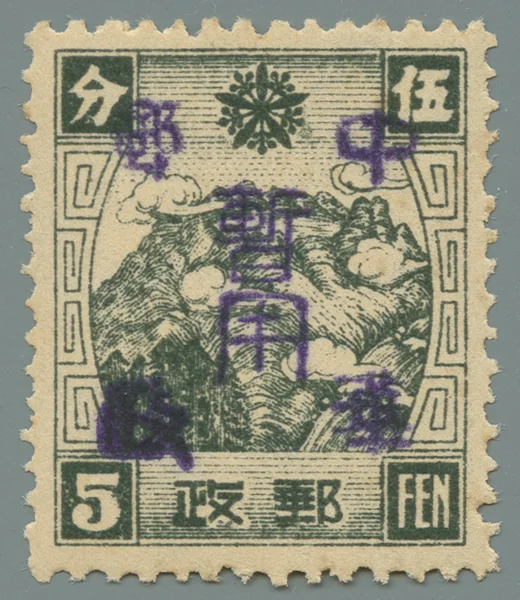
BM1
Stamps Overprinted “Chinese Post Temporarily Used”
Issued October 1945. Six-value provisional set hand-overprinted with wooden chop in dark blue violet on Manchukuo stamps of four different editions by the Bei’an Post Office.
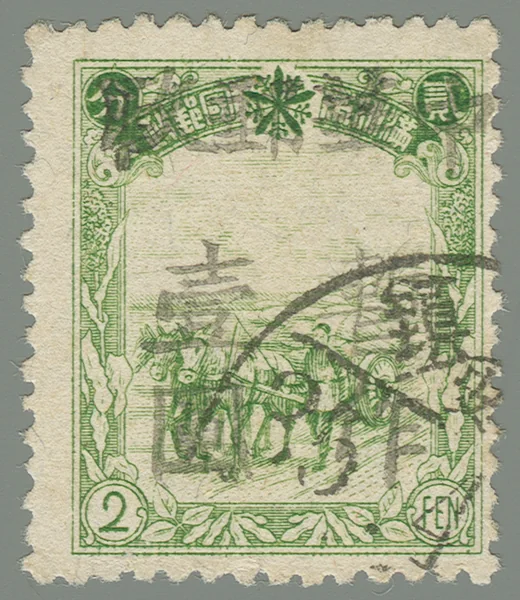
BM2
Stamps Overprinted “Chinese Post Temporarily Used” and Surcharged
Issued February 1946. Two-value provisional set hand-overprinted with a rubber chop on Manchukuo 4th ed. regular stamps, surcharged for use in the Bei’an postal district, by the Heilongjiang Provincial Capital Post Office.
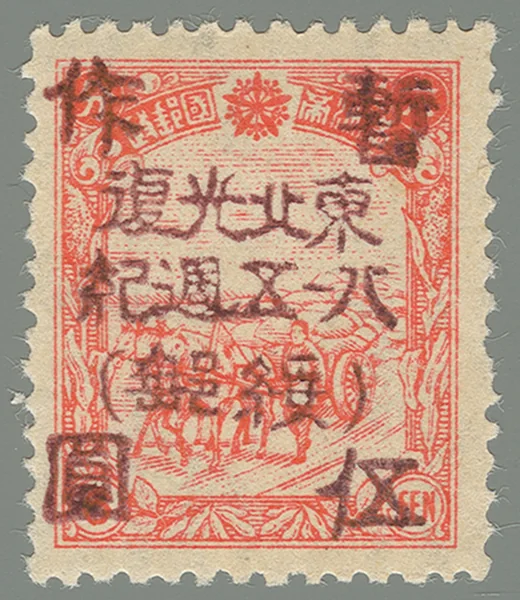
BM3
Stamps Overprinted “Chinese Post Temporarily Used” and Surcharged
Issued July 1946. Five-value provisional set hand-overprinted with a wooden chop in black or red on Manchukuo 4th ed. regular stamps by the Heilongjiang Provincial Capital Post Office.
哈爾濱郵政管理局
Harbin Postal Administration
Following the collapse of the Manchukuo administration in August 1945, postal operations in Harbin continued through a prolonged period of political and administrative transition. The Harbin postal service resumed business in October 1945. Postal operations were initially conducted through the Nangang, Daoli and Daowai offices, and communications with the West-Manchuria and North-Manchuria liberated areas were rapidly restored. Ordinary letters were charged 50 cents, single registration two yuan and double registration four yuan.¹
During the following months, postal operations continued through a succession of inherited and provisional administrative structures. On 11 February 1946, representatives of the Nationalist Government assumed administrative control of the Harbin postal service under the continuing Soviet occupation framework, and on 15 February established the Harbin City Post Office (哈爾濱市郵局). Only five postal offices were then operating in the city.²
The political situation changed again in April. Soviet forces withdrew from Harbin between 23 and 25 April 1946, and the Northeast Democratic United Army entered the city on 28 April. The Harbin Municipal Government was formally established on 3 May, while the Songjiang Provincial Democratic Government was established on 5 May under Feng Zhongyun (馮仲雲).³
Postal operations continued without an immediate replacement of the existing administrative structure. Before the Democratic Government formally reorganised the city’s postal administration, the postal organisation continued to use the designation Harbin Postal Administration (哈爾濱郵政管理局). On 18 July, Songjiang Provincial Government chairman Feng Zhongyun instructed local governments to assist actively in restoring postal services, and the Harbin Municipal Government directed the municipal Public Security Bureau to provide special assistance. During August and September, the Northeast Administrative Coalition (東北政聯) sent Meng Guimin (孟貴民), Cao Ming (草明) and Yu Jing (俞兢) to take over postal and telecommunications work in Harbin.⁴
The continuity of postal operations is also reflected in the stamps sold through Harbin postal counters. After the city came under Communist control on 28 April, previously overprinted Manchukuo stamps bearing 「中華民國」 continued to be sold because new postage stamps were not yet available.⁵ On 15 August 1946, the Harbin Postal Administration issued its first recognised Liberated Area commemorative overprint, the 「光復周年紀念」 issue marking the first anniversary of Japan’s surrender. The overprint was produced by the Harbin Dongji Printing Office (哈爾濱東記印刷所). A second commemorative overprint, 「勝利紀念」, followed on 2 September and was likewise overprinted by the same printing office.⁶
The decisive postal reorganisation took place at the beginning of October. Contemporary reporting states that the former Harbin Postal Administration was abolished as part of a reorganisation effective from 1 October 1946 and that its subordinate offices were transferred to the new administrative structure. On the same date, postal rates were revised to two yuan for an ordinary letter, ten yuan for single registration and fifteen yuan for double registration.⁷ The Harbin municipal gazetteer likewise dates the takeover and reorganisation of the city postal service to 1 October and records the appointment of Yu Jing as director of the reorganised Harbin Municipal Postal Bureau (哈爾濱市郵政局).⁸
The Northeast General Administration of Posts and Telecommunications (東北郵電管理總局) was formally established at Harbin on 9 October 1946. A Songjiang Office (松江辦事處) was established simultaneously to administer postal and telecommunications services throughout Songjiang Province.⁹ The sources therefore preserve two closely related dates: 1 October for the effective reorganisation of the Harbin postal service and 9 October for the formal establishment of the new central postal authority. Later accounts sometimes describe the 1 October reorganisation retrospectively in terms of institutions formally established on 9 October; the two dates should therefore not be conflated.
The institutional terminology used in contemporary and later sources is likewise not entirely uniform. The designation Harbin Postal Administration (哈爾濱郵政管理局) remained in use during the transitional period before the October reorganisation, while Harbin City Post Office / Harbin Municipal Postal Bureau (哈爾濱市郵局 / 哈爾濱市郵政局) appears at different stages of the administrative succession. This catalogue therefore follows the issuing authority stated for each individual issue wherever the contemporary or official postal record permits it to be identified.
References
¹ History of Postage Stamps of the Chinese Liberated Areas: Northeast Volume (《中國解放區郵票史·東北卷》), All-China Philatelic Federation, Anhui Education Publishing House, Hefei, 1995, pp. 56–57. The source records the resumption of postal operations at Harbin in October 1945 through the Nangang, Daoli and Daowai offices, the restoration of communications with the West-Manchuria and North-Manchuria liberated areas, and rates of 50 cents for an ordinary letter, two yuan for single registration and four yuan for double registration.
² Harbin Municipal Gazetteer, vol. 7: Posts and Telecommunications (《哈爾濱市志·郵政·電信》), p. 123. The Gazetteer records the Nationalist takeover of the Harbin postal service on 11 February 1946, the establishment of the Harbin City Post Office on 15 February and the five postal offices then operating in the city.
³ History of Postage Stamps of the Chinese Liberated Areas: Northeast Volume, pp. 54–55. The source records the Soviet withdrawal from Harbin on 23 April 1946, the entry of the Northeast Democratic United Army on 28 April, the establishment of the Harbin Municipal Government on 3 May and the formal establishment of the Songjiang Provincial Democratic Government on 5 May.
⁴ History of Postage Stamps of the Chinese Liberated Areas: Northeast Volume, p. 56. The source records the 18 July instruction by Songjiang Provincial Government chairman Feng Zhongyun, the special assistance ordered from the Harbin Municipal Public Security Bureau, the continued use of the Harbin Postal Administration designation before formal reorganisation, and the dispatch of Meng Guimin, Cao Ming and Yu Jing to take over postal and telecommunications work during August and September 1946.
⁵ History of Postage Stamps of the Chinese Liberated Areas: Northeast Volume, p. 57. The source records that after 28 April 1946 Harbin postal counters continued selling locally overprinted Manchukuo stamps bearing 「中華民國」 because new postage stamps had not yet been produced.
⁶ History of Postage Stamps of the Chinese Liberated Areas: Northeast Volume, pp. 58–59. The source records the issue by the Harbin Postal Administration of the 「光復周年紀念」 overprint on 15 August 1946 and the 「勝利紀念」 overprint on 2 September. The first issue was overprinted by the Harbin Dongji Printing Office and released through the principal Harbin post offices; the second was likewise produced in Harbin and placed on sale on 2 September.
⁷ History of Postage Stamps of the Chinese Liberated Areas: Northeast Volume, p. 206. The reproduced Northeast Daily report of 14 October 1946 states that, following the Northeast postal conference, the Harbin postal service had been reorganised and new operating arrangements introduced with effect from 1 October. It records the abolition of the former Harbin Postal Administration, the transfer of its subordinate offices to the new administrative structure and rates of two yuan for ordinary mail, ten yuan for single registration and fifteen yuan for double registration.
⁸ Harbin Municipal Gazetteer, vol. 7: Posts and Telecommunications, p. 123. The Gazetteer dates the takeover and reorganisation of the Harbin postal service to 1 October 1946, when the Harbin City Post Office was redesignated the Harbin Municipal Postal Bureau and Yu Jing was appointed director. It retrospectively describes the bureau as subordinate to the Northeast General Administration of Posts and Telecommunications, although that body was formally established on 9 October.
⁹ History of Postage Stamps of the Chinese Liberated Areas: Northeast Volume, p. 56. The source records the formal establishment of the Northeast General Administration of Posts and Telecommunications at Harbin on 9 October 1946 and the simultaneous establishment of the Songjiang Office to administer postal and telecommunications services in Songjiang Province.
¹⁰ Heilongjiang Provincial Gazetteer, vol. 1: General Survey (《黑龍江省志·第一卷·總述》), compiled by the Heilongjiang Provincial Local Gazetteer Compilation Committee, Heilongjiang People’s Publishing House, Harbin, 1999, pp. 72–74, 81. The Gazetteer records Harbin’s significance as the principal administrative centre of the Binjiang region and documents the entry of the Soviet Red Army on 19 August 1945 as the starting point of the postwar political transition. It further records the successive Chinese civil administrations established in the city — the Binjiang Provincial Government (from 1 October 1945), the Nationalist Songjiang and Harbin administrations (from late December 1945) and the Communist Harbin Municipal Government (from 3 May 1946) — each operating within a city whose decisive overriding authority initially rested with the Soviet military occupation. The North Manchuria Sub-Bureau of the Chinese Communist Party Central Committee (《中共中央北滿分局》), compiled by the Party History Research Office of the CPC Harbin Municipal Committee and the Party History Research Office of the CPC Binxian County Committee, Harbin: Heilongjiang People’s Publishing House, 1998, pp. 565–607, provides the detailed organisational and political chronology for the competing Chinese structures during the same period.
¹¹ Heilongjiang Provincial Gazetteer, vol. 1: General Survey (《黑龍江省志·第一卷·總述》), compiled by the Heilongjiang Provincial Local Gazetteer Compilation Committee, Heilongjiang People’s Publishing House, Harbin, 1999, p. 81. The Gazetteer records Japan’s surrender on 15 August 1945 and states that the Soviet Red Army entered Harbin on 19 August and imposed military administration.
¹² History of Postage Stamps of the Chinese Liberated Areas: Northeast Volume, p. 54. The source records that Li Zhaolin arrived in Harbin from the Soviet Union on 25 August 1945 with more than one hundred members of the Northeast Anti-Japanese United Army and began political and organisational work in the city.
¹³ Heilongjiang Provincial Gazetteer, vol. 1: General Survey (《黑龍江省志·第一卷·總述》), compiled by the Heilongjiang Provincial Local Gazetteer Compilation Committee, Heilongjiang People’s Publishing House, Harbin, 1999, p. 74; History of Postage Stamps of the Chinese Liberated Areas: Northeast Volume, p. 54. The Gazetteer states explicitly that the Binjiang Provincial Government was established at Harbin on 1 October 1945 under Soviet military administration, with former Manchukuo Binjiang Civil Affairs Department head Xie Yuqin as governor and Li Zhaolin as deputy governor. The specialised postal history independently records the same establishment date and leadership.
¹⁴ History of Postage Stamps of the Chinese Liberated Areas: Northeast Volume, p. 54. The source records that more than twenty cadres from Yan’an reached Harbin in mid-October, established the CPC Binjiang Regional Work Committee and the CPC Harbin Municipal Committee, and began organising local armed forces.
¹⁵ The North Manchuria Sub-Bureau of the Chinese Communist Party Central Committee, pp. 565, 567, 580. The organisational history dates Chen Yun’s arrival in Harbin and the formal establishment of the North Manchuria Sub-Bureau to 16 November 1945; it likewise dates the establishment of the CPC Songjiang Provincial Work Committee to 16 November and records the organisation of the Songjiang Military District and the new CPC Harbin Municipal Committee. History of Postage Stamps of the Chinese Liberated Areas: Northeast Volume, p. 54, instead gives 11 November for Chen Yun’s arrival and associates the same reorganisation with that date. The discrepancy between the two sources is retained; the more detailed organisational history is followed here for the timeline date.
¹⁶ The North Manchuria Sub-Bureau of the Chinese Communist Party Central Committee, pp. 580–581; see also p. 168. The chronological record states that on 17 November the Soviet authorities required Communist Party and military organisations to withdraw from Harbin, and that on 20 November the North Manchuria Sub-Bureau decided to move its principal Party and military organs to the Binxian area. A contemporary participant’s account records the Soviet commander’s insistence that the withdrawal be completed by 23 November. History of Postage Stamps of the Chinese Liberated Areas: Northeast Volume, p. 54, additionally records the removal of Xie Yuqin and Li Zhaolin from their provincial posts on 22 November.
¹⁷ Heilongjiang Provincial Gazetteer, vol. 1: General Survey (《黑龍江省志·第一卷·總述》), compiled by the Heilongjiang Provincial Local Gazetteer Compilation Committee, Heilongjiang People’s Publishing House, Harbin, 1999, p. 72; History of Postage Stamps of the Chinese Liberated Areas: Northeast Volume, pp. 54–55. The Gazetteer records that Guan Jiyu and Yang Chuo’an arrived in Harbin in late December 1945 and took over the Songjiang provincial and Harbin municipal administrations. The specialised postal history likewise places the arrival of Nationalist personnel in late December but states that the Nationalist Songjiang Provincial Government and Harbin Municipal Government were established successively in January 1946. The difference between takeover and formal establishment is retained rather than reduced to a single date.
¹⁸ The North Manchuria Sub-Bureau of the Chinese Communist Party Central Committee, pp. 606–607; Heilongjiang Provincial Gazetteer, vol. 1: General Survey (《黑龍江省志·第一卷·總述》), compiled by the Heilongjiang Provincial Local Gazetteer Compilation Committee, Heilongjiang People’s Publishing House, Harbin, 1999, p. 81; History of Postage Stamps of the Chinese Liberated Areas: Northeast Volume, p. 55. The North Manchuria chronology records that Guan Jiyu and Yang Chuo’an left Harbin under Soviet protection on 23 April 1946 and that Soviet forces withdrew from the city on 25 April. The provincial Gazetteer likewise dates the complete Soviet withdrawal to 25 April. The specialised postal history instead gives 23 April for the Soviet withdrawal. The timeline therefore uses 23–25 April to preserve the documented sequence and the source discrepancy.
¹⁹ The North Manchuria Sub-Bureau of the Chinese Communist Party Central Committee, p. 607; History of Postage Stamps of the Chinese Liberated Areas: Northeast Volume, p. 55; Heilongjiang Provincial Gazetteer, vol. 1: General Survey (《黑龍江省志·第一卷·總述》), compiled by the Heilongjiang Provincial Local Gazetteer Compilation Committee, Heilongjiang People’s Publishing House, Harbin, 1999, p. 81. The sources agree that Communist-led forces entered and took control of Harbin on 28 April 1946. The North Manchuria chronology identifies the Songjiang Military District, the 359th Brigade and Heilongjiang Military District forces and records the subsequent entry of the Songjiang Party, governmental and military organs into the city.
²⁰ History of Postage Stamps of the Chinese Liberated Areas: Northeast Volume, p. 55; Heilongjiang Provincial Gazetteer, vol. 1: General Survey (《黑龍江省志·第一卷·總述》), compiled by the Heilongjiang Provincial Local Gazetteer Compilation Committee, Heilongjiang People’s Publishing House, Harbin, 1999, p. 81. Both sources record the formal establishment of the Harbin Municipal Government on 3 May 1946. Together with the Communist military occupation of the city on 28 April, this supports the interpretation of 3 May as the point by which Communist-led authority in Harbin was established at both the effective military and municipal-government levels.
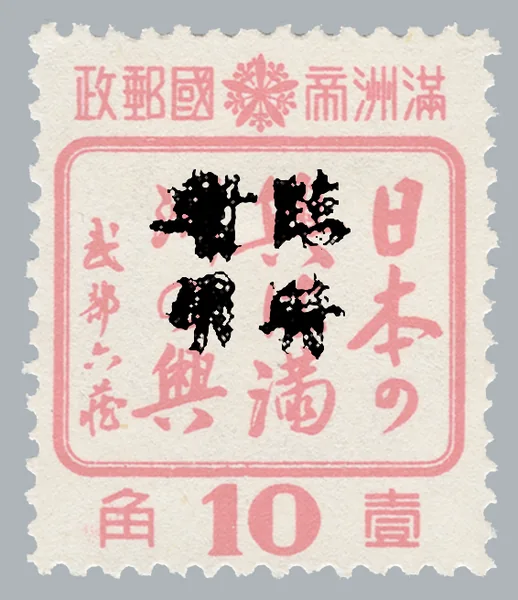
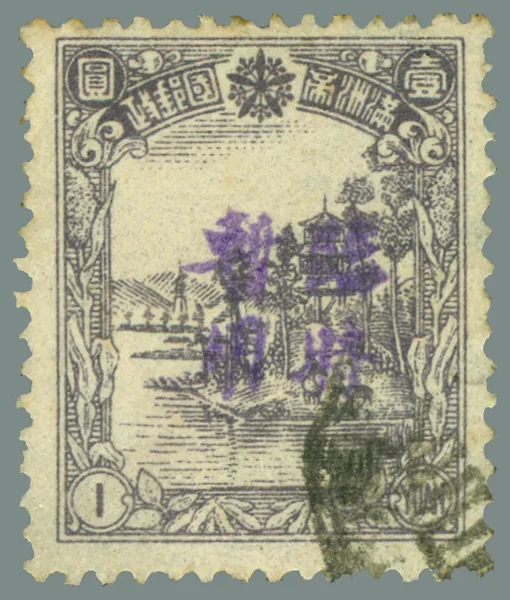
BM4
Stamps Overprinted “Republic of China” in Black
Issued April 1946. Four-value transitional set lithography-overprinted in black on Manchukuo stamps with unchanged denominations.
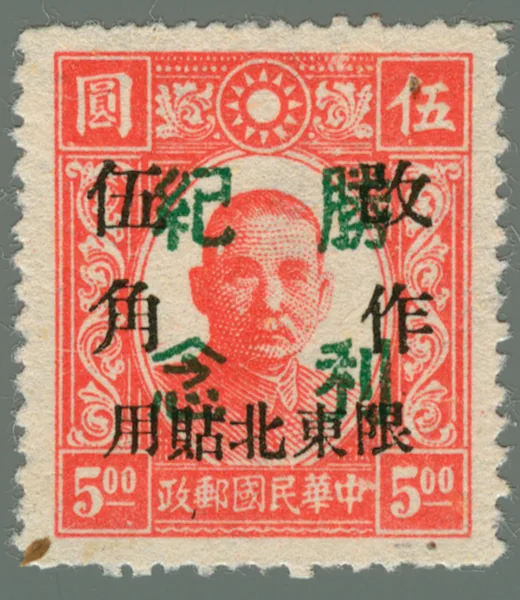
BM5
Stamps Overprinted “In Commemoration of 1st Anniversary of Recovery” and Surcharged
Issued 15 August 1946. Four-value commemorative surcharge set machine-overprinted in black on Manchukuo stamps to mark the first anniversary of the Liberation of the Northeast.
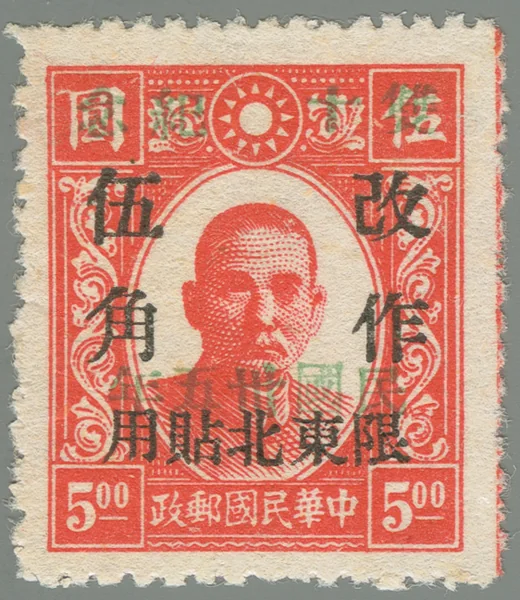
BM6
Stamps Overprinted “In Commemoration of Victory”
Issued 2 September 1946. Four-value surcharge set machine-overprinted in red or green on Republic of China Sun Yat-sen stamps to mark the first anniversary of the victory over Japan.
BM7
Stamps Overprinted “In Commemoration of Double Ten, 35th Year of the Republic of China”
Issued 10 October 1946. Four-value surcharge set machine-overprinted in red or green on Republic of China Sun Yat-sen stamps to mark National Day in the 35th Year of the Republic of China.
佳木斯郵政局 · 合江郵政管理局
Jiamusi Post Office and Hejiang Postal Administration
Following Japan’s surrender in August 1945, the Manchukuo administration in Jiamusi collapsed and postal communications were interrupted. Soviet vessels reached the Jiamusi waterfront on 15 August, and Soviet troops entered the city on the following day. On 3 September, more than forty cadres of the Northeast Anti-Japanese United Army arrived from the Soviet Far East under Peng Shilu (彭施魯), who subsequently served as deputy commander of the Soviet garrison headquarters.¹
Postal service resumed before a Communist civil administration had been formally established. The Jiamusi Post Office resumed the acceptance of ordinary letters on 13 September 1945.² Specialised postal histories record a provisional ordinary-letter rate of two yuan at the time of this initial restoration. The rate was changed to 10 cents on 5 November and again in early December to 50 cents, while registered mail was charged at two yuan. By the end of December, postal communications were gradually being restored elsewhere in Hejiang Province.³
The political administration of Jiamusi was reorganised during November. According to the Jiamusi Municipal Gazetteer, the Sanjiang People’s Autonomous Army (三江人民自治軍) entered the city on 7 November and the Sanjiang Regional Administrative Commissioner’s Office (三江地區行政專員公署) was established immediately thereafter. Other sources give different dates for related developments: one account dates the army’s entry to 5 November, while another places Sun Jingyu’s arrival and the organisation of the Sanjiang People’s Autonomous Army on 29 October and the formal establishment of the Sanjiang administrative office on 17 November. On 17 November, Li Fanwu (李范五), Li Yanlu (李延祿) and other cadres arrived to organise the CPC Hejiang Provincial Work Committee. On 21 November, the Sanjiang administrative office was abolished and the Hejiang Provincial Government (合江省政府) was formally established at Jiamusi, with Li Yanlu as chairman and Li Fanwu as vice-chairman. The Jiamusi Municipal Government was established on 25 December and formally began operations on 5 January 1946.⁴
During the first months of 1946, the postal system developed from this initial local service into a provincial organisation. The History of Postage Stamps of the Chinese Liberated Areas: Northeast Volume records that the Hejiang Postal Administration (合江郵政管理局) was established at Jiamusi in early 1946 under the Hejiang Provincial Department of Communications.⁵ The History of Postal Rates in Modern China gives the same general sequence, but the precise chronology remains uncertain: while it also places the creation of the provincial postal administration in early 1946, it elsewhere states that the Democratic Government took over the Jiamusi Post Office in April 1946. The same work explicitly notes that the institutional status of the Jiamusi Post Office before the establishment of the Hejiang Postal Administration requires further verification.⁶
The ordinary-letter rate in Hejiang was raised to two yuan in January 1946, with registered mail charged at five yuan. By February and March, postal communications had expanded sufficiently for mail to be exchanged between Hejiang and the Harbin, West-Manchuria and Mudanjiang regions.⁷
In June 1946, the local postal and telecommunications structure at Jiamusi was reorganised when the Jiamusi Post Office and the Telegraph and Telephone Office were merged to form the Jiamusi Posts and Telecommunications Bureau (佳木斯郵電局), under the Hejiang provincial communications administration.⁸ This local operating bureau should be distinguished from the Hejiang Postal Administration, which functioned at the provincial level.
On 9 October 1946, the Northeast General Administration of Posts and Telecommunications (東北郵電管理總局) was established, and a Hejiang Office (合江辦事處) was simultaneously created at Jiamusi to administer postal and telecommunications services throughout Hejiang.⁹ Most specialised postal sources date the abolition of this office and the establishment of the Hejiang Posts and Telecommunications Administration (合江郵電管理局), directly subordinate to the Northeast General Administration, to June 1947. The Jiamusi Municipal Gazetteer, however, dates the same reorganisation to July 1947. The difference should therefore be retained as a source discrepancy rather than silently harmonised.⁹
References
¹ Jiamusi Municipal Gazetteer (《佳木斯市志》), Jiamusi Municipal Local Gazetteer Compilation Committee, Zhonghua Book Company, Beijing, 1996, lower volume, pp. 1243–1244. The Gazetteer records the arrival of Soviet vessels at Jiamusi on 15 August 1945, the entry of the Soviet 632nd Infantry Regiment on 16 August, and the arrival on 3 September of Peng Shilu and more than forty cadres of the Northeast Anti-Japanese United Army; Peng served as deputy commander of the Soviet garrison headquarters. The chronological record in the upper volume likewise dates the entry of the Soviet 632nd Infantry Regiment to 16 August, while Peng Shilu’s later recollection gives 17 August for the Soviet entry into Jiamusi. The 16 August date is followed here on the basis of the municipal Gazetteer chronology, while the one-day discrepancy is retained as a source inconsistency.
² Jiamusi Municipal Gazetteer, upper volume, p. 545. The Gazetteer records that postal operations were briefly suspended in August 1945 and that the Jiamusi Post Office resumed the acceptance of ordinary letters on 13 September 1945; registered-letter service was added in 1946.
³ History of Postage Stamps of the Chinese Liberated Areas: Northeast Volume (《中國解放區郵票史·東北卷》), All-China Philatelic Federation, Anhui Education Publishing House, Hefei, 1995, pp. 51–52. The source records the September restoration, the change of the ordinary-letter rate to 10 cents on 5 November, the early-December rates of 50 cents for an ordinary letter and two yuan for registered mail, and the gradual restoration of postal communications elsewhere in Hejiang by the end of December. History of Postal Rates in Modern China (《中國近現代郵政資費史》), p. 484, gives the same tariff sequence and explicitly notes unresolved questions concerning the institutional status of the Jiamusi Post Office and the reasons for the early rate changes.
⁴ Jiamusi Municipal Gazetteer, lower volume, pp. 1244–1245; see also upper volume, pp. 28–29. The Gazetteer dates the entry of the Sanjiang People’s Autonomous Army into Jiamusi to 7 November 1945 and records the immediate establishment of the Sanjiang Regional Administrative Commissioner’s Office; it further records the arrival of Li Fanwu (李范五), Li Yanlu (李延祿) and more than twenty cadres on 17 November, the establishment of the CPC Hejiang Provincial Work Committee, the abolition of the Sanjiang office and establishment of the Hejiang Provincial Government on 21 November, and the establishment of the Jiamusi Municipal Government on 25 December. History of Postage Stamps of the Chinese Liberated Areas: Northeast Volume, p. 50, instead dates Sun Jingyu’s arrival with one battalion and the formation of the Sanjiang People’s Autonomous Army to 29 October. The 7 November date is followed here because it is consistently given in the detailed municipal chronology and administrative history, while the conflicting 29 October date is retained as a source discrepancy.
⁵ History of Postage Stamps of the Chinese Liberated Areas: Northeast Volume, p. 51. The source records that the Hejiang Postal Administration was established at Jiamusi in early 1946 under the Hejiang Provincial Department of Communications.
⁶ History of Postal Rates in Modern China, p. 484. The work states that the Hejiang Democratic Government established the Hejiang Postal Administration at Jiamusi in early 1946, but elsewhere on the same page refers to the Democratic Government having taken over the Jiamusi Post Office in April 1946. It also explicitly notes that the institutional status of the Jiamusi Post Office before the creation of the provincial postal administration remains uncertain. The chronology should therefore not be reconstructed more precisely than the surviving evidence permits.
⁷ History of Postage Stamps of the Chinese Liberated Areas: Northeast Volume, p. 52. The source records that by February and March 1946 Hejiang could exchange mail with the West-Manchuria, Harbin and Mudanjiang regions. It also records the January 1946 rates of two yuan for an ordinary letter and five yuan for registered mail.
⁸ Jiamusi Municipal Gazetteer, upper volume, p. 554. The Gazetteer records that in June 1946 the Jiamusi Post Office and Telegraph and Telephone Office were merged to form the Jiamusi Posts and Telecommunications Bureau under the Hejiang Provincial Department of Communications.
⁹ History of Postage Stamps of the Chinese Liberated Areas: Northeast Volume, p. 51. The source records the establishment on 9 October 1946 of the Northeast General Administration of Posts and Telecommunications and the simultaneous creation of the Hejiang Office at Jiamusi; it dates the abolition of the office and establishment of the Hejiang Posts and Telecommunications Administration to June 1947. History of Postal Rates in Modern China, p. 475, likewise dates the change to June 1947. Jiamusi Municipal Gazetteer, upper volume, p. 554, instead dates the reorganisation to July 1947 and records that the provincial administration thereafter shared offices with the Jiamusi Posts and Telecommunications Bureau.
¹⁰ Jiamusi Municipal Gazetteer, upper volume, pp. 27–30; lower volume, pp. 1243–1245. The Gazetteer records Jiamusi as the principal administrative centre of the Sanjiang region and documents the successive local, regional and provincial authorities established there after August 1945, including the Sanjiang Regional Administrative Commissioner’s Office and the Hejiang Provincial Government. History of Postage Stamps of the Chinese Liberated Areas: Northeast Volume, pp. 50–52, provides the corresponding institutional context.
¹¹ Jiamusi Municipal Gazetteer, upper volume, p. 27; lower volume, p. 1244. The chronological record states that the Jiamusi Local Public Security Maintenance Committee was established on 16 August 1945 with the former Manchukuo mayor as chairman and Qu Ziming as deputy chairman. The two volumes preserve different forms of the chairman’s name: the chronological record gives Duan Baosu (段寶塑), while the detailed political history gives Duan Baowang (段寶望). Jiamusi Party History Materials, no. 1 (《佳木斯黨史資料·第一輯》), compiled by the CPC Jiamusi Municipal Committee Party History Work Committee and the Office of the Jiamusi Municipal Gazetteer Review Committee, Jiamusi, July 1985, p. 10, preserves a third form, Duan Baokun (段寶坤), in Peng Shilu’s recollections. The main text follows Duan Baowang, the form used in the detailed Gazetteer account, while the conflicting forms are retained here rather than silently harmonised.
¹² Jiamusi Municipal Gazetteer, upper volume, p. 27; lower volume, pp. 1243–1244; see also p. 1463. The Gazetteer records the arrival of Soviet vessels at Jiamusi on 15 August and of the Soviet 632nd Infantry Regiment on 16 August, followed by the establishment of the Soviet garrison headquarters. The detailed military history likewise dates the entry of the 632nd Infantry Regiment to 16 August. Peng Shilu’s retrospective account elsewhere gives 17 August for the Soviet entry; the contemporary municipal chronology is followed here.
¹³ Jiamusi Municipal Gazetteer, upper volume, p. 27; lower volume, p. 1244. The Gazetteer records that on 25 August the Maintenance Committee was reorganised as the Jiamusi regional branch of the China Postwar Reconstruction Committee and explicitly describes the new body as being under Nationalist control. The detailed account states that it functioned in practice as a provisional local government, maintained public order, supplied the Soviet garrison and issued circulation vouchers used as currency in the local market. Peng Shilu’s recollections independently describe the organisation as effectively performing municipal-government functions but acting according to Soviet instructions.
¹⁴ Jiamusi Municipal Gazetteer, upper volume, p. 28; lower volume, p. 1243; see also p. 1463. The sources record that Peng Shilu and more than forty Northeast Anti-Japanese United Army cadres arrived from the Soviet Far East on 3 September 1945 and that Peng served as deputy commander of the Soviet garrison headquarters. The detailed account further states that accompanying cadres were dispatched to surrounding counties under the public designation of deputy commanders of Soviet garrisons while undertaking Party, military and mass-organisational work.
¹⁵ Jiamusi Municipal Gazetteer, upper volume, p. 28; lower volume, p. 1244. The chronological record states that the CPC Jiamusi Regional Committee was established in early September under Peng Shilu and records the establishment during September and October of the Nationalist Jiamusi organisation, the Northeast Party Affairs Commissioner’s Jiamusi office, the Nationalist Hejiang Special Commissioner’s organisation and additional Nationalist political and paramilitary bodies. The detailed political history likewise records extensive simultaneous Nationalist and Communist organisational activity during this period.
¹⁶ Jiamusi Municipal Gazetteer, upper volume, p. 28; lower volume, pp. 1244, 1463. The municipal chronology and detailed political and military histories date the entry of the Sanjiang People’s Autonomous Army into Jiamusi and the establishment of the Sanjiang Regional Administrative Commissioner’s Office to 7 November 1945. The North Manchuria Sub-Bureau of the Chinese Communist Party Central Committee (《中共中央北滿分局》), compiled by the Party History Research Office of the CPC Harbin Municipal Committee and the Party History Research Office of the CPC Binxian County Committee, Heilongjiang People’s Publishing House, Harbin, 1998, p. 239, instead dates the entry of the approximately 800-man force to 5 November. History of Postage Stamps of the Chinese Liberated Areas: Northeast Volume, p. 50, gives 29 October for Sun Jingyu’s arrival at Jiamusi and the organisation of the Sanjiang People’s Autonomous Army, while separately dating the formal establishment of the Sanjiang administrative office to 17 November. The 7 November date is followed in the timeline because it is consistently given by the detailed municipal political and military histories; the wider discrepancy is retained here.
¹⁷ Jiamusi Municipal Gazetteer, upper volume, p. 28; lower volume, p. 1244. The Gazetteer records that Li Fanwu, Li Yanlu and more than twenty cadres from Yan’an arrived in Jiamusi on 17 November and established the CPC Hejiang Provincial Work Committee, with Li Fanwu as secretary. The North Manchuria Sub-Bureau of the Chinese Communist Party Central Committee, p. 239, independently records their arrival and the establishment of the provincial Work Committee on the same date.
¹⁸ Jiamusi Municipal Gazetteer, upper volume, p. 28; lower volume, pp. 1244–1245. The Gazetteer dates the abolition of the Sanjiang Regional Administrative Commissioner’s Office and establishment of the Hejiang Provincial Government at Jiamusi to 21 November 1945, with Li Yanlu as chairman and Li Fanwu as vice-chairman. The North Manchuria Sub-Bureau of the Chinese Communist Party Central Committee, p. 569, gives the same date in its institutional history. A separate narrative account in the same work, p. 239, however, associates the announcement of both the CPC Hejiang Provincial Work Committee and the Hejiang Provincial Government with the cadres’ arrival on 17 November. The 21 November date is followed here because it is supported by the municipal chronology, the detailed Gazetteer account and the institutional overview of the North Manchuria history; the conflicting narrative date is retained as a source inconsistency.
¹⁹ Jiamusi Municipal Gazetteer, upper volume, p. 28. The chronological record states that on 24 November 1945 the Soviet garrison headquarters, citing diplomatic relations between the Soviet and Nationalist governments, required the more than 800 men of the Sanjiang People’s Autonomous Army to withdraw from Jiamusi and redeploy to Yilan County. This provides direct evidence that Soviet military authority remained capable of overriding the disposition of Communist-led armed forces after the establishment of the Hejiang Provincial Government.
²⁰ Jiamusi Municipal Gazetteer, upper volume, p. 29; lower volume, p. 1245; see also p. 1463. The chronological record dates the establishment of the CPC Jiamusi Municipal Committee to early December, the reorganisation of the Sanjiang People’s Autonomous Army and establishment of the Hejiang Military District to 18 December, and the establishment of the Jiamusi Municipal Government to 25 December. The detailed political history names Dong Xianqiao as mayor and Sun Xilin as deputy mayor and records that the municipal government began formal public operations on 5 January 1946. The Gazetteer also records the dissolution of the Nationalist-influenced Postwar Reconstruction Committee on 25 December.
²¹ Jiamusi Municipal Gazetteer, upper volume, p. 30; lower volume, p. 1243; see also p. 1463. The municipal chronology records the Soviet withdrawal on 5 April 1946 and the takeover by the CPC Hejiang Provincial Work Committee and Hejiang Military District of the vacated Soviet barracks, offices and warehouses. The detailed political history states more precisely that Soviet forces announced their departure for 5 April, that Hejiang security detachments occupied the vacated installations during the night, and that the Soviet troops had completely withdrawn by the early hours of 6 April. The military history records that the Hejiang Military District thereafter assumed full responsibility for the defence of the Hejiang region. The timeline therefore uses 5–6 April to represent the documented sequence rather than forcing the transfer into a single date.
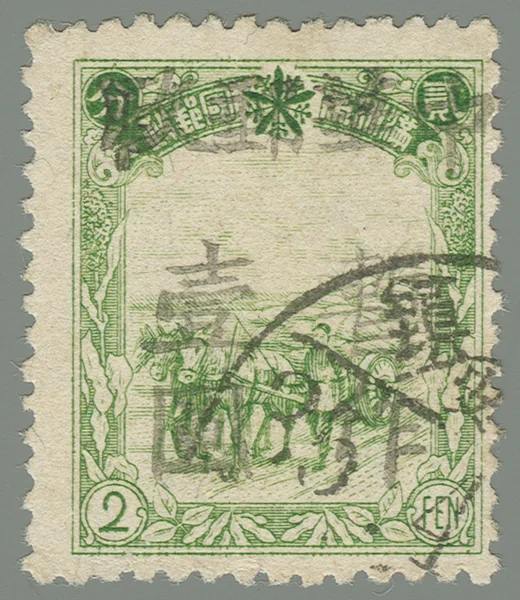
BM8
Changchun Provisional Used at Jiamusi
Used April 1946. Changchun provisional overprint on Manchukuo propaganda-slogan stamps, reissued for postal use by the Jiamusi Post Office without additional overprint.
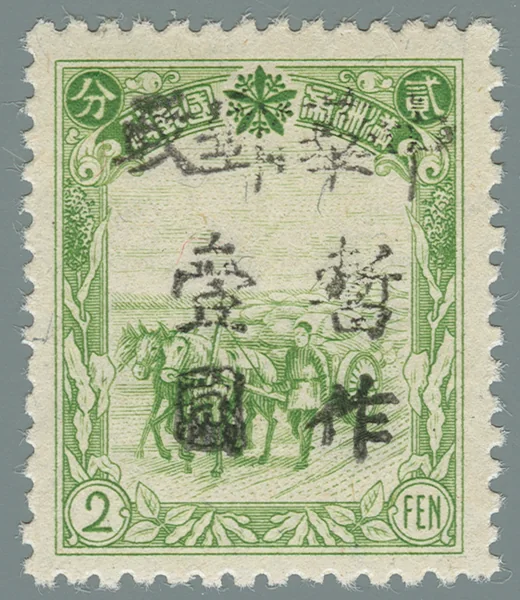
BM9
Stamps Overprinted “Chinese Republic Changed to” and Surcharged
Issued April 1946. Seven-value provisional surcharge issue machine-overprinted in dark blue on Manchukuo stamps, all revalued to 50 cents by the Jiamusi Post Office.
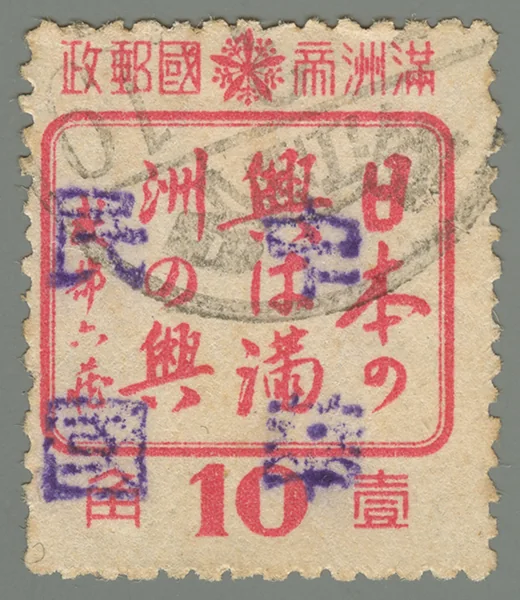
BM10
Stamps Overprinted “Chinese Post Temporarily Used” and Surcharged
Issued June 1946. Nineteen-value provisional surcharge issue hand-overprinted in vermilion or black on Manchukuo stamps, revalued to $1 or $2 by the Jiamusi Post Office.
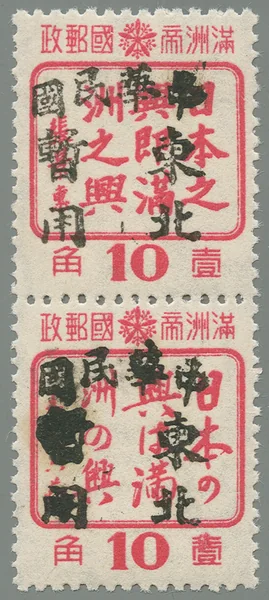
BM11
Stamps Overprinted “Chinese Post Temporarily Used for (Jia)” and Surcharged
Issued September 1946. Ten-value provisional surcharge issue hand-overprinted in black with a wooden chop on Manchukuo stamps, revalued to $1 or $5 by the Jiamusi Post Office.
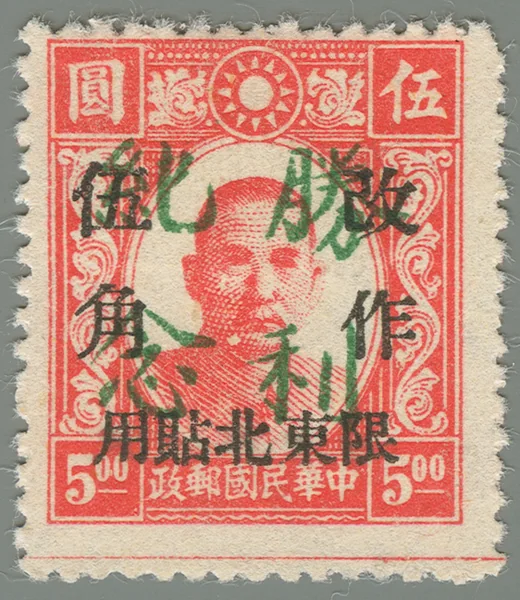
BM12
Stamps Overprinted “Chinese Post – The Chinese Nation Must Not Forget the September 18 Incident – Awaken from This Day (Jia)” and Surcharged
Issued September 1946. Eight-value provisional surcharge issue hand-overprinted in vermilion or black with a wooden chop on Manchukuo stamps, revalued to $1 or $5 by the Jiamusi Post Office.
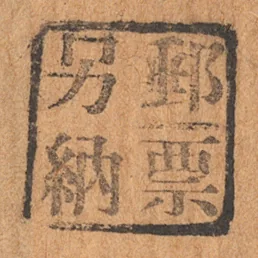
BMC1
Jiamusi Post Office Postage Paid Separately Handstamp
Used January 1946 (probable). Circular pale black postage-paid handstamp, 31.0 mm, applied in lieu of postage stamps at the Jiamusi Post Office, creating stampless covers.
牡丹江郵政局 · 綏寧省郵政管理局
Mudanjiang Post Office and Suining Provincial Postal Administration
The collapse of Manchukuo in August 1945 brought the former postal administration at Mudanjiang (牡丹江) to an end. Although the established postal organisation disintegrated, postal activity did not cease completely. During the following months a limited and irregular service continued, including an unreliable railway mail connection with Harbin and overland routes to Ning’an and Hailin. Provisional locally overprinted Manchukuo stamps were also used before the postal service was formally taken over by the new authorities.¹
On 23 February 1946, the Mudanjiang municipal authorities appointed Guo Ning (郭寧), a former postal worker and revolutionary cadre, to take charge of the postal service. Later sources differ slightly over the precise chronology of the takeover: one records Guo Ning’s appointment and the formal assumption of control on 23 February, while another places the formal takeover of the Mudanjiang City Post Office (牡丹江市郵政局) on 1 March. A notice published by the Mudanjiang City Post Office in the Mudanjiang Daily on 8 March stated that preparations had been completed and that postal communication had been scheduled to commence formally on 6 March.²
The Suining Provincial Government (綏寧省政府) was formally established in April 1946. The surviving sources differ on the exact date: the Mudanjiang Posts and Telecommunications Gazetteer gives 12 April, whereas another specialised postal history gives 15 April. Provincial Government Instruction No. 4 directed that the Mudanjiang City Post Office be redesignated the Suining Provincial Postal Administration (綏寧省郵政管理局) and placed directly under the provincial government with effect from 1 May. The local gazetteer dates the formal establishment of the provincial postal administration to 24 May. Guo Ning became director and Zhao Jinduo (趙金鐸) deputy director. On 21 June, the communications section formerly attached to the municipal Construction Bureau was transferred to the provincial postal administration and reorganised as its telecommunications section, thereby bringing postal and telecommunications functions under the same administration.³
On 7–8 October 1946, Suining Province was abolished and replaced by the Mudanjiang Commissioner’s Office. The surviving sources differ by one day on the precise date of this reorganisation. The Suining Provincial Postal Administration was consequently dissolved. The sources also describe the immediate postal reorganisation somewhat differently: one records the re-establishment of the Mudanjiang Municipal Post Office, while the local postal and telecommunications gazetteer records the establishment of the Mudanjiang Commissioner’s Office Posts and Telecommunications Office (牡丹江專員公署郵電辦事處). On 9 October, following the establishment of the Northeast General Administration of Posts and Telecommunications, a Mudanjiang regional office was established to supervise postal, telegraph, telephone and electrical services in the district.⁴
References
¹ Mudanjiang Posts and Telecommunications Gazetteer (《牡丹江郵電志》), ed. Mudanjiang Posts and Telecommunications Gazetteer Compilation Committee, Heilongjiang People’s Publishing House, Harbin, 1991, p. 58. The Gazetteer records that the Manchukuo postal institutions at Mudanjiang disintegrated in August 1945 and that the Mudanjiang City Post Office was subsequently established in the former Central Post Office building after Guo Ning had gathered the dispersed postal employees. History of Postage Stamps of the Chinese Liberated Areas: Northeast Volume (《中國解放區郵票史·東北卷》), pp. 62–63, records that before the formal takeover limited postal communications continued over the Mudanjiang–Harbin railway route and the Mudanjiang–Ning’an and Mudanjiang–Hailin overland routes, and that provisional overprinted Manchukuo stamps were used during this transitional period.
² Heilongjiang Provincial Gazetteer, vol. 20: Posts and Telecommunications (《黑龍江省志·第二十卷·郵電志》), p. 379, records that Guo Ning was appointed on 23 February 1946 and that the postal department was formally taken over at that time. History of Postage Stamps of the Chinese Liberated Areas: Northeast Volume, p. 62, records Guo Ning’s appointment on 23 February but dates the formal takeover of the Mudanjiang City Post Office to 1 March. It further reproduces a notice published by the Mudanjiang City Post Office in the Mudanjiang Daily on 8 March, which states that postal communication had been scheduled formally to commence on 6 March. The source thus itself presents the unusual sequence of an 8 March publication referring to 6 March as the scheduled commencement date; no attempt has been made here to correct or harmonise these dates.
³ Mudanjiang Posts and Telecommunications Gazetteer, pp. 58–59, gives 12 April 1946 for the establishment of the Suining Provincial Government, 24 May for the establishment of the Suining Provincial Postal Administration, and identifies Guo Ning as director and Zhao Jinduo as deputy director. It further records that on 21 June the communications section formerly attached to the Construction Bureau was transferred to the provincial postal administration. History of Postage Stamps of the Chinese Liberated Areas: Northeast Volume, pp. 61–62, gives 15 April for the formal establishment of the Suining Provincial Government and records that Provincial Government Instruction No. 4 redesignated the Mudanjiang City Post Office as the Suining Provincial Postal Administration, directly under the provincial government, with effect from 1 May. The difference between 1 May and 24 May may represent an effective administrative date and a later formal organisational establishment, but the surviving sources do not presently permit this interpretation to be demonstrated conclusively.
⁴ History of Postage Stamps of the Chinese Liberated Areas: Northeast Volume, pp. 62–63, records the abolition of Suining Province on 8 October 1946, the dissolution of the Suining Provincial Postal Administration and the re-establishment of the Mudanjiang Municipal Post Office; it further records the establishment on 9 October of a Mudanjiang office under the new Northeast postal administration to supervise postal, telegraph, telephone and electrical services. Mudanjiang Posts and Telecommunications Gazetteer, pp. 58–59, instead describes the post-Suining organisation as the Mudanjiang Commissioner’s Office Posts and Telecommunications Office. The two accounts therefore appear to describe overlapping or successive elements of the October reorganisation rather than an entirely identical institutional sequence.
⁵ Mudanjiang Municipal Gazetteer (《牡丹江市志》), compiled by the Mudanjiang Municipal Gazetteer Editorial Committee, Heilongjiang People’s Publishing House, Harbin, 1993, administrative history, pp. 1061–1062, records the city’s significance as the seat of the former East Manchuria Province under the Manchukuo system and documents the successive municipal and provincial political structures established at Mudanjiang after August 1945, from the initial transitional administration through to the Suining Provincial Government established in April 1946. History of Postage Stamps of the Chinese Liberated Areas: Northeast Volume (《中國解放區郵票史·東北卷》), All-China Philatelic Federation, Anhui Education Publishing House, Hefei, 1995, pp. 61–63, provides the corresponding postal and institutional context for the same period.
⁶ Mudanjiang Municipal Gazetteer, upper volume, pp. 26–28. The municipal chronology records the Soviet advance into the urban area on 14 August 1945, the completion of the occupation of Mudanjiang on 16 August and the establishment on 18 August of the Mudanjiang Local Public Security Maintenance Committee by local notables and former officials. The administrative history likewise records that the former East Manchuria provincial and Mudanjiang municipal administrations disintegrated with the Japanese collapse and that the Maintenance Committee subsequently exercised local governmental functions.
⁷ Mudanjiang Municipal Gazetteer, upper volume, p. 26. The chronology records the Soviet entry into Mudanjiang and the completion of military occupation on 16 August, followed two days later by the establishment of the local Maintenance Committee. The sequence provides the basis for distinguishing Soviet military control from the Chinese transitional civil administration.
⁸ Mudanjiang Municipal Gazetteer, upper volume, p. 976 and administrative history, pp. 1061–1062. The Gazetteer records Jin Guangxia as heading a CPC municipal organisation from 25 August 1945 and describes Communist cadres entering Mudanjiang during the immediate postwar period. The North Manchuria Sub-Bureau of the Chinese Communist Party Central Committee (《中共中央北滿分局》), compiled by the Party History Research Office of the CPC Harbin Municipal Committee and the Party History Research Office of the CPC Binxian County Committee, Heilongjiang People’s Publishing House, Harbin, 1998, p. 569, records that Jin Guangxia, Tao Yufeng and other cadres arrived from the Soviet Union on 15 September and established the CPC Mudanjiang Regional Committee. The two records appear to concern different organisational levels or successive stages of organisation.
⁹ Mudanjiang Municipal Gazetteer, administrative history, p. 1061. The source records that Li Jingpu took over the Mudanjiang Local Public Security Maintenance Committee in October and established a Communist-led democratic municipal government. Fourteen Years of Resistance against Japan in Mudanjiang (《牡丹江抗日十四年》), compiled by the Party History Research Office of the CPC Mudanjiang Municipal Committee, p. 214, independently records that Li Jingpu, Tan Wenbang, Zhang Jingzhi and three others arrived in Mudanjiang in October and, with Soviet Red Army support, took over the municipal government, with Li Jingpu becoming mayor.
¹⁰ The North Manchuria Sub-Bureau of the Chinese Communist Party Central Committee, pp. 569, 573–574. The organisational history records Li Dazhang’s appointment as secretary of the CPC Mudanjiang Regional Committee on 8 December, with Jin Guangxia as deputy secretary, and describes the development of the Mudanjiang regional military organisation. Fourteen Years of Resistance against Japan in Mudanjiang, p. 214, further records that by the end of 1945 Li Jingpu had organised a garrison battalion, the 14th and 15th Regiments, a security regiment and additional forces.
¹¹ Mudanjiang Municipal Gazetteer, administrative history, pp. 1061–1062. The Gazetteer describes the expansion of Communist municipal institutions and the simultaneous suppression of hostile armed formations around Mudanjiang during early 1946. The municipal chronology, upper volume, p. 27, also records the expansion of civil institutions and the beginning of extensive anti-bandit military operations during February.
¹² The North Manchuria Sub-Bureau of the Chinese Communist Party Central Committee, pp. 569–570, 573–574. The work records the meeting of the first Suining Provincial Provisional Consultative Council from 8 to 10 April 1946, with 76 delegates approving the formation of the province and provincial government and Zhang Jingzhi becoming chairman; it dates the formal establishment of the Suining Provincial Government to 15 April. The organisational history dates the establishment of the CPC Suining Provincial Committee to 18 April, with Li Dazhang as secretary and Jin Guangxia as deputy secretary, and records that on 20 April the Mudanjiang Military District was redesignated the Northeast Democratic United Army Suining Military District on instructions from the North Manchuria Sub-Bureau.
¹³ Mudanjiang Municipal Gazetteer, upper volume, pp. 27–28. The municipal chronology records that on 28 April 1946 representatives of the city and more than 50,000 people gathered at the railway station square to farewell the Soviet Red Army as it returned home. This provides the clearest locally documented point for the termination of the Soviet military presence in Mudanjiang.
¹⁴ Mudanjiang Municipal Gazetteer, pp. 1210–1211. The detailed military history describes the “15 May” counter-revolutionary uprising and the attacks on the military district headquarters, security organs and other strategic installations. It records the mobilisation of the local garrison and the defeat of the attacking forces. The chronology likewise places the outbreak of the attack in the early hours of 15 May. The account is independently supported by contemporary regional historical material describing approximately 700 attackers and their attempt to seize Mudanjiang.
¹⁵ Mudanjiang Municipal Gazetteer, pp. 1061–1062, 1210–1212. The administrative and military histories describe continued operations against Nationalist-affiliated and other armed groups in the surrounding districts after the consolidation of municipal government. These sources distinguish the relatively secure political position within Mudanjiang from the continuing military contest in parts of the wider Suining region.
¹⁶ Mudanjiang Municipal Gazetteer, administrative history, p. 1061, dates the abolition of Suining Province and establishment of the Mudanjiang Administrative Commissioner’s Office to 7 October 1946. The North Manchuria Sub-Bureau of the Chinese Communist Party Central Committee, p. 570, instead dates the abolition of the Suining Provincial Government and its reorganisation as the Mudanjiang Administrative Commissioner’s Office to 8 October. History of Postage Stamps of the Chinese Liberated Areas: Northeast Volume, pp. 62–63, likewise gives 8 October for the abolition of Suining Province. The 7/8 October difference is therefore retained as a source discrepancy rather than harmonised.
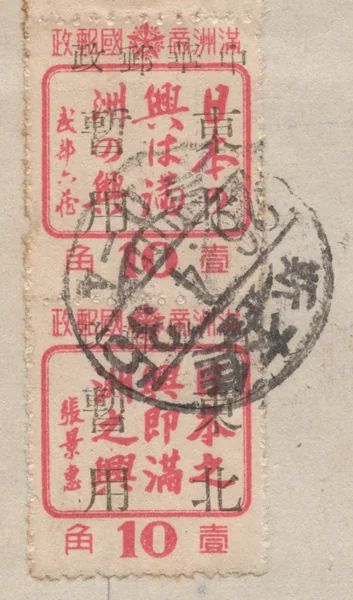
BM13
Stamps Overprinted “Chinese Post Temporarily Used for (Mu)” and Surcharged
Issued September 1945. Two-value surcharge set machine-overprinted in black on Manchukuo stamps by the Mudanjiang local postal service.
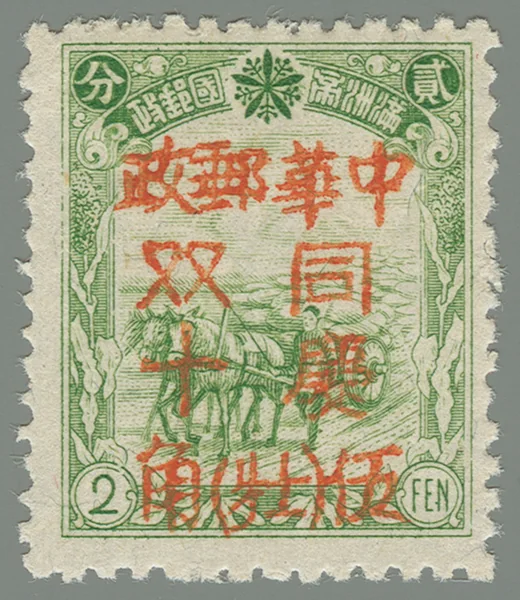
BM14
Stamps Overprinted “Chinese Post Double 10 Commemoration (Mu)” and Surcharged
Issued 10 October 1945. Eight-value surcharge set hand-overprinted in four overprint types on Manchukuo stamps by the Mudanjiang local postal service.
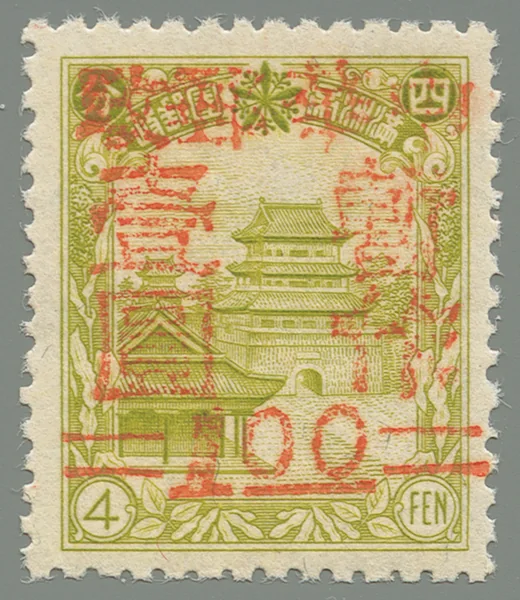
BM15
Stamps Overprinted “Commemorating 1st Anniversary of Recovering Northeast on August 15 (Sui You)” and Surcharged
Issued 15 August 1946. Single-value surcharge hand-overprinted in dark purplish red on a Manchukuo stamp by the Suining Provincial Postal Administration.
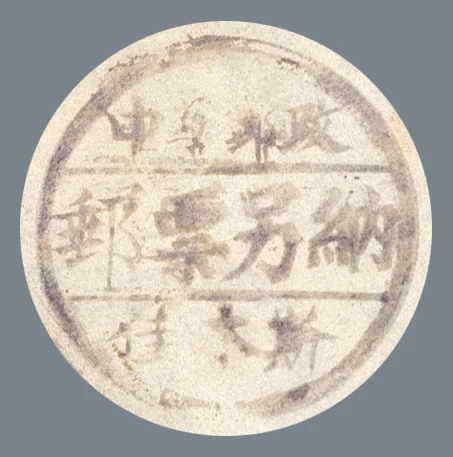
BMC2
Square Postage Paid Separately Handstamp
Used in April 1946. Small square black postage-paid handstamp, 17.5 mm, applied in lieu of postage stamps at the Ning'an Post Office, creating stampless covers.
地方郵政局所
Local Postal Offices
City, county, branch and other local post offices for which no supra-local postal administrative responsibility has been demonstrated for the period from August 1945 to the end of 1946. Their issues are catalogued according to the place of issue or use.
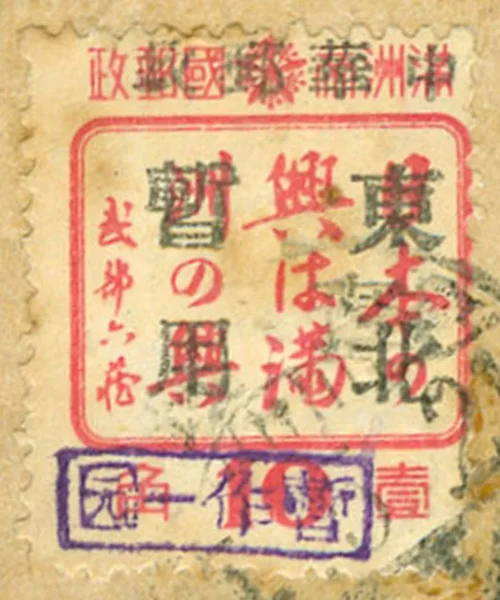
BML1
Aihui (璦琿)
Stamps Overprinted “Temporarily Used” and Surcharged
Issued May 1946. Single-value surcharge hand-overprinted in blue with a wooden chop on Manchukuo propaganda slogan stamps bearing Changchun overprint, by the Aihui Post Office.
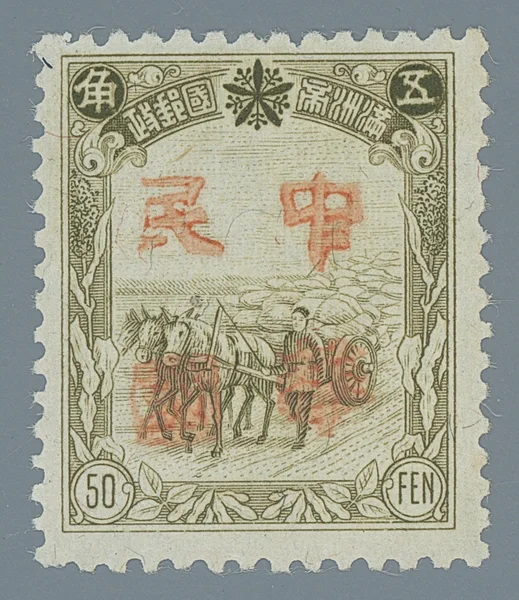
BML2
Ang’angxi (昂昂溪)
Stamps Overprinted “Republic of China”
Issued April 1946. Seven-value provisional set hand-overprinted with rubber chop in reddish orange, dark rose red, or violet on Manchukuo stamps by the Ang’angxi Post Office.
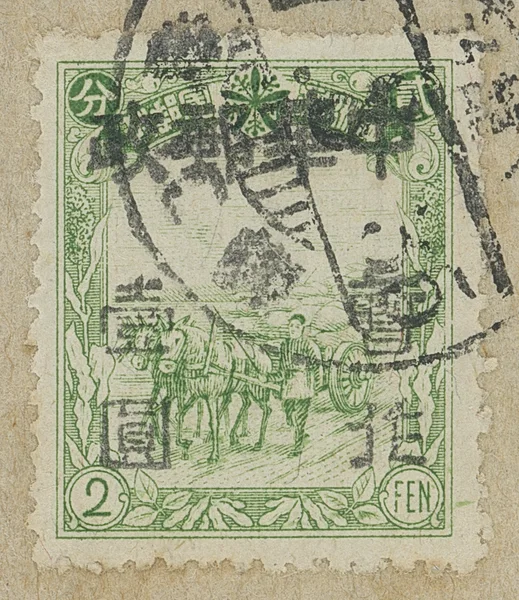
BML3
Ang’angxi (昂昂溪)
Stamps Overprinted “Chinese Post Temporarily Used” and Surcharged
Issued August 1946. Two-value surcharge set hand-overprinted with wooden chop in black on Manchukuo 4th ed. regular stamps by the Ang’angxi Post Office.
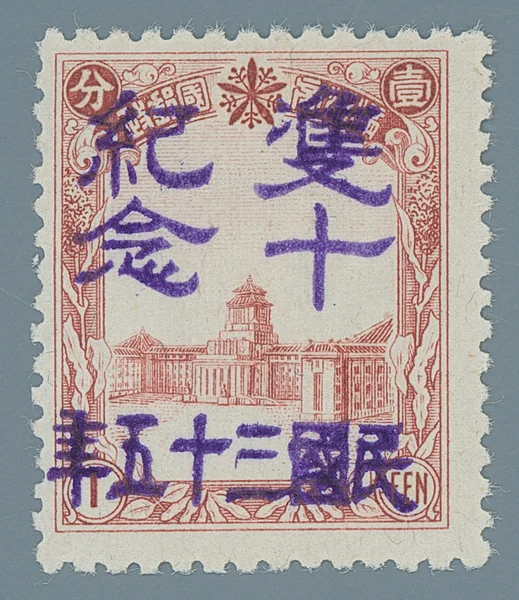
BML4
Ang’angxi (昂昂溪)
Stamps Overprinted “Double Ten Commemoration, 35th Year of the Republic”
Issued 10 October 1946. Fourteen-value commemorative overprint hand-applied in dark blue violet with a rubber chop on Manchukuo stamps, by the Ang’angxi Post Office.
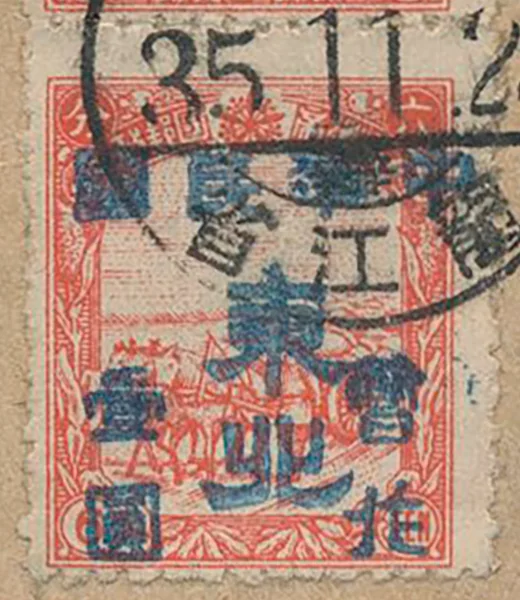
BML5
Ang’angxi (昂昂溪)
Stamps Overprinted “Republic of China Temporarily Used Northeast” and Surcharged
Issued November 1946. Single-value surcharge hand-overprinted in dark blue with a rubber chop on Manchukuo 5th ed. regular stamps, by the Ang’angxi Post Office.
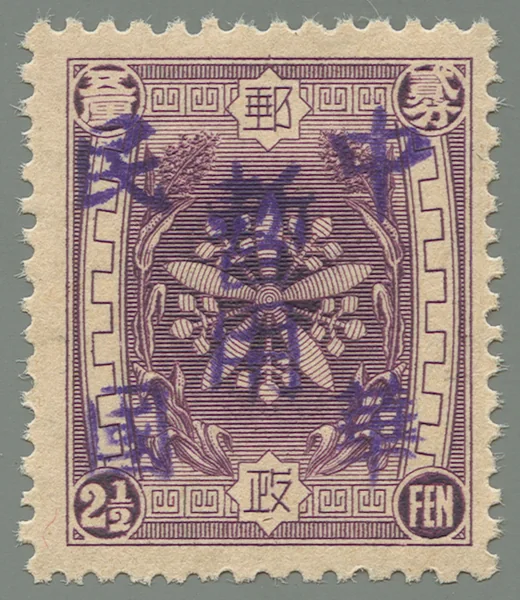
BML6
Baiquan (拜泉)
Stamps Overprinted “Republic of China Temporarily Used”
Issued October 1945. Nine-value provisional overprint hand-applied in violet-blue with a wooden chop on Manchukuo stamps, by the Baiquan Post Office.
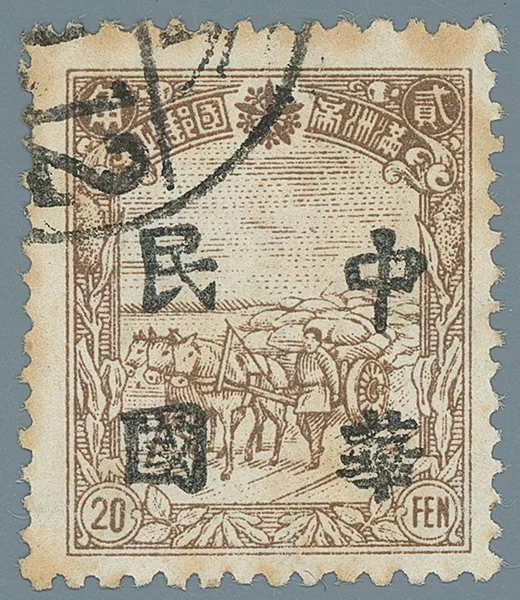
BML7
Bayan (巴彥)
Stamps Overprinted “Republic of China”
Issued October 1945. Twenty-one-value set hand-overprinted with wooden chop in black or red on Manchukuo definitive stamps by the Bayan Post Office.
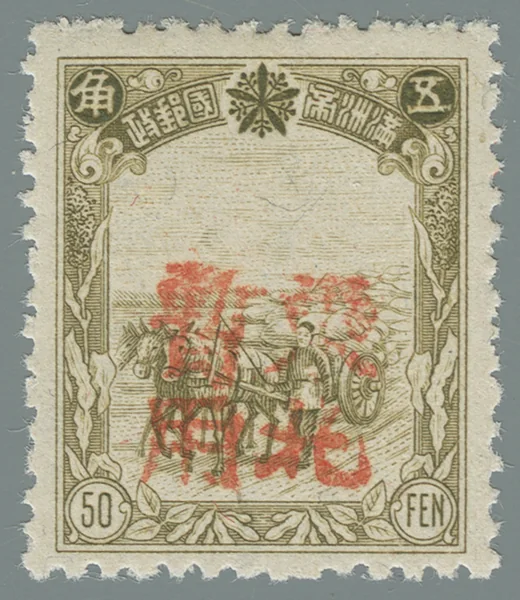
BML8
Bayan (巴彥)
Stamps Overprinted “Temporary Use North East”
Issued May 1946. Two-value set hand-overprinted with wooden chop in red on Manchukuo definitive stamps by the Bayan Post Office.
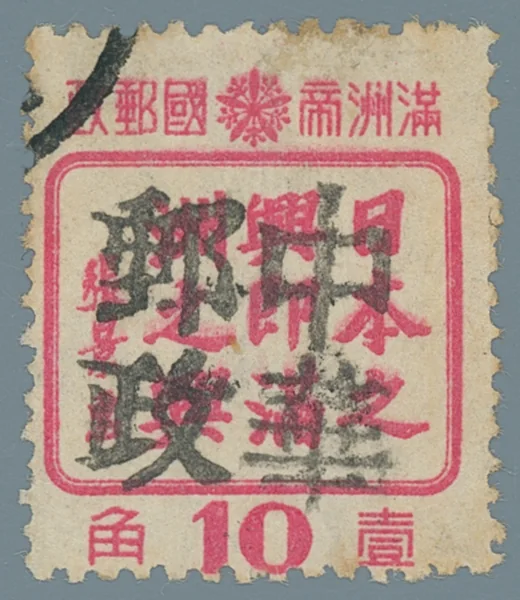
BML9
Beixingzhen (北興鎮)
Stamps Overprinted “Chinese Post”
Issued April 1946. Single-value overprint hand-applied with rubber chop in black on Manchukuo propaganda slogan stamps by the Beixingzhen Post Office.
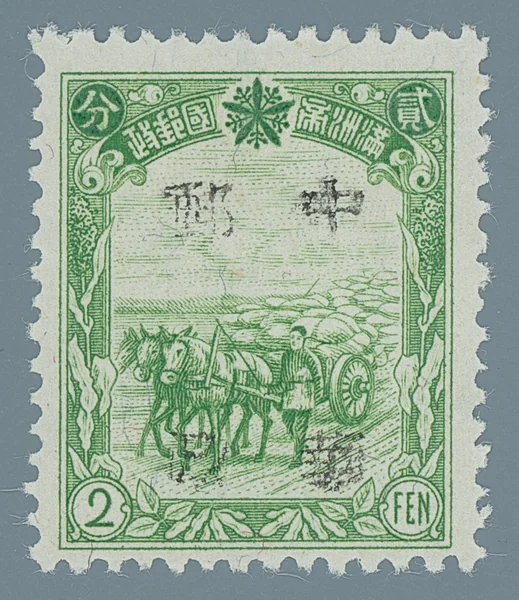
BML10
Binzhou (賓州)
Stamps Overprinted “Chinese Post”
Issued March 1946. Fourteen-value set hand-overprinted with wooden chop in black on Manchukuo definitive stamps by the Binxian Post Office.
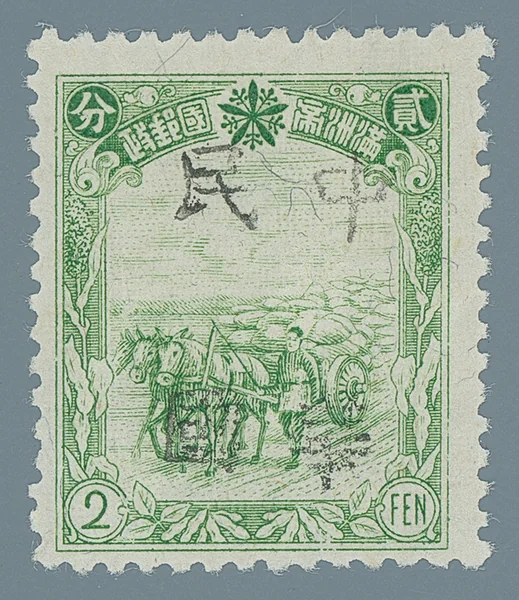
BML11
Binzhou (賓州)
Stamps Overprinted “Republic of China”
Issued April 1946. Twelve-value set hand-overprinted with wooden chop in black on Manchukuo definitive stamps by the Binxian Post Office.
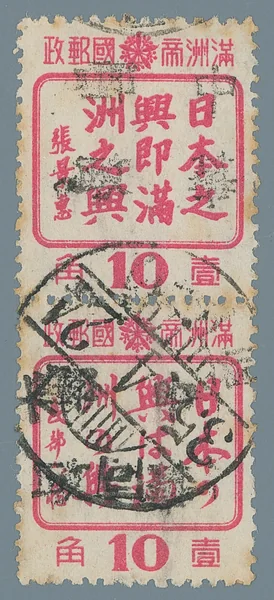
BML12
Datong (大同)
Stamps Overprinted “Chinese Post”
Issued April 1946. Four-value set hand-overprinted with wooden chop in black on Manchukuo definitive stamps by the Datong Post Office.
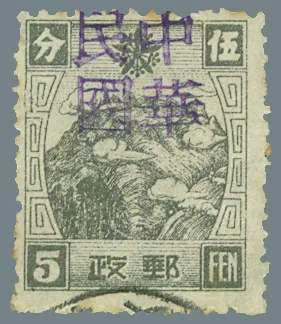
BML13
Dedou (德都)
Stamps Overprinted “Chinese Republic”
Issued February 1946. Two-value set hand-overprinted with rubber chop in red violet or violet on Manchukuo interpostal stamps by the Dedou Post Office.
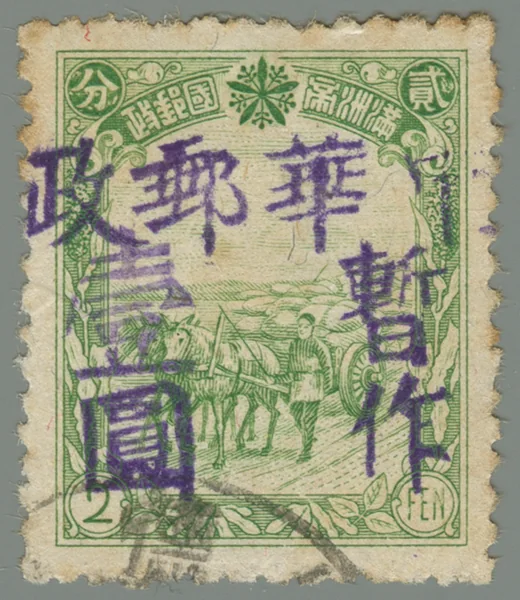
BML14
Dedou (德都)
Stamps Overprinted “Chinese Post Temporarily Used” and Surcharged
Issued March 1946. Five-value set hand-overprinted and surcharged with rubber chop in black or dark blue on Manchukuo definitive stamps by the Dedou Post Office.
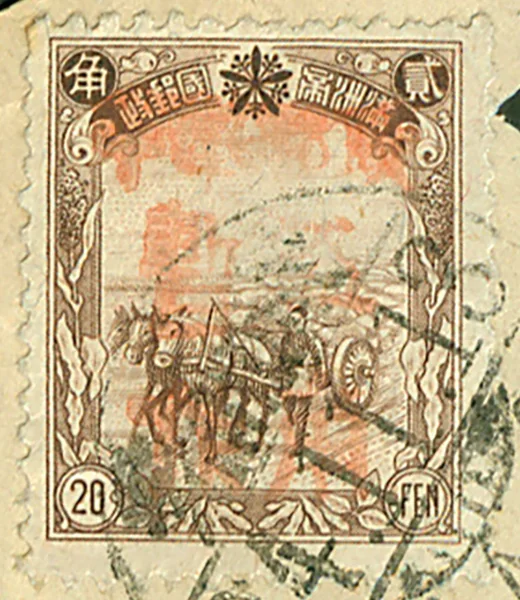
BML15
Dong'an (東安)
Stamps Overprinted “Chinese Post Temporarily Used” and Surcharged
Issued October 1945. Five-value set hand-overprinted and surcharged with rubber chop in vermilion on Manchukuo definitive stamps by the Dong'an Post Office.
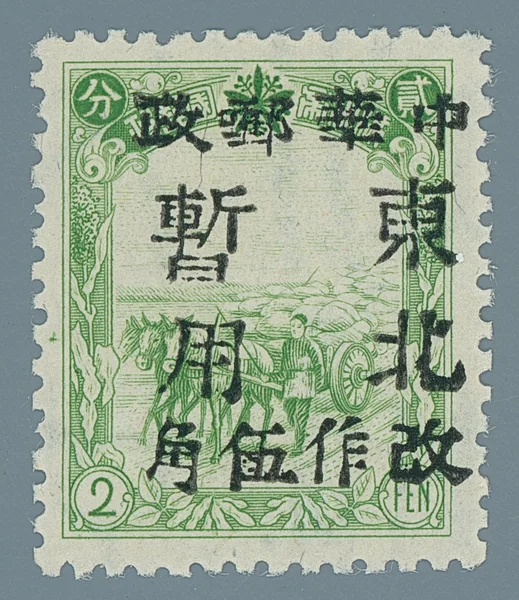
BML16
Fujin (富錦)
Stamps Overprinted “Chinese Post Temporarily Used for North East Changed to” and Surcharged
Issued April 1946. Sixteen-value set hand-overprinted and surcharged with type in black on Manchukuo definitive stamps by the Fujin Post Office.
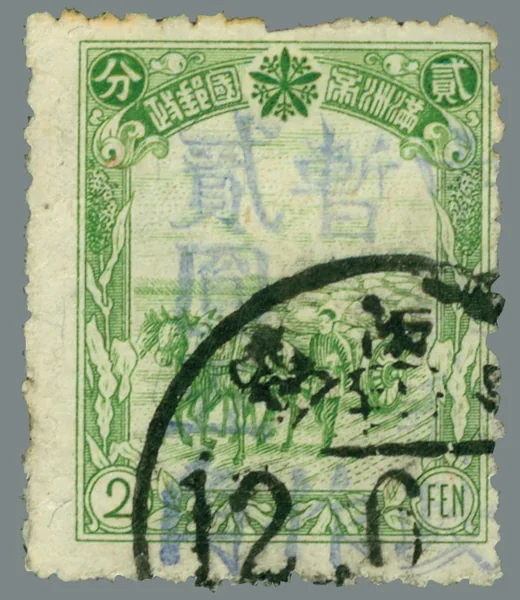
BML17
Fuyu (富裕)
Stamps Overprinted “Chinese Post Temporarily Used” and Surcharged
Issued May 1946. Three-value set hand-overprinted and surcharged with rubber chop in dark blue or red on Manchukuo definitive stamps by the Fuyu County Post Office.
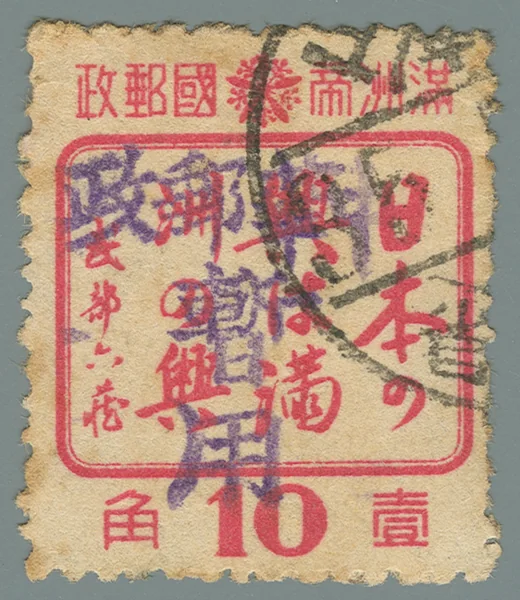
BML18
Gannan (甘南)
Stamps Overprinted “Chinese Post Temporarily Used”
Issued April 1946. Ten-value set hand-overprinted with rubber chop in violet or red on Manchukuo stamps by the Gannan Post Office.
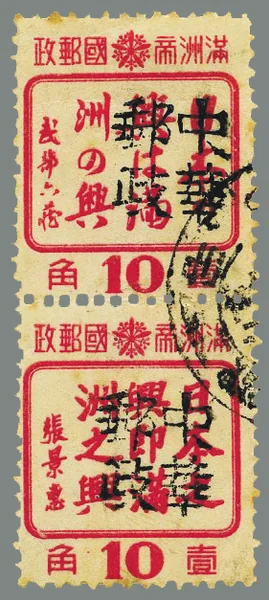
BML19
Gucheng (古城)
Stamps Overprinted “Chinese Post”
Issued March 1946. Single-value hand-overprint in black reading Chinese Post on Manchukuo propaganda slogan stamps by the Gucheng Post Office.
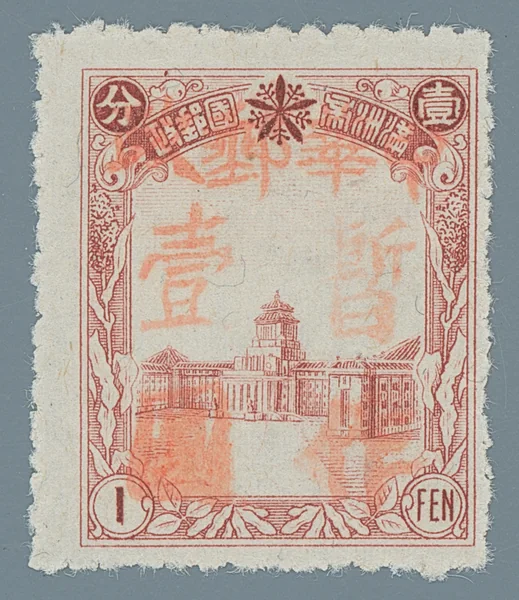
BML20
Haibei (海北)
Stamps Overprinted “Chinese Post Temporarily Used” and Surcharged
Issued March 1946. Sixteen-value set hand-overprinted and surcharged in pale red or violet on Manchukuo stamps by the Haibei Post Office.
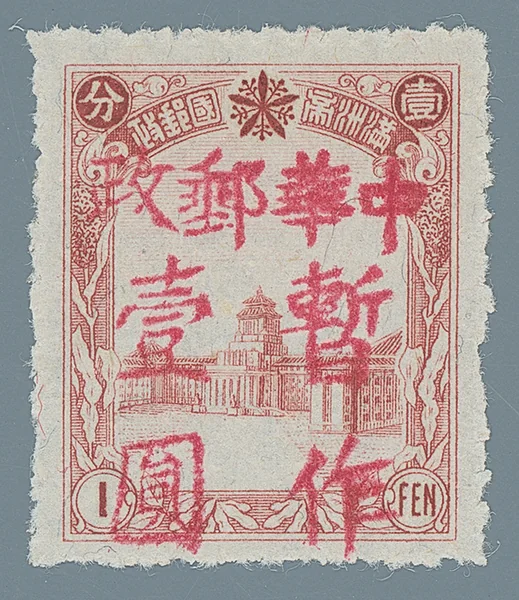
BML21
Haibei (海北)
Stamps Overprinted “Chinese Post Temporarily Used” and Surcharged
Issued July 1946. Nine-value set hand-overprinted and surcharged in red on Manchukuo stamps by the Haibei Post Office.
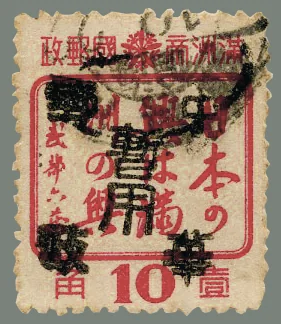
BML22
Hailun (海倫)
Stamps Overprinted “Chinese Post Temporarily Used for”
Issued October 1945. Two-value set hand-overprinted with a wooden chop in red or black on Manchukuo stamps by the Hailun Post Office.
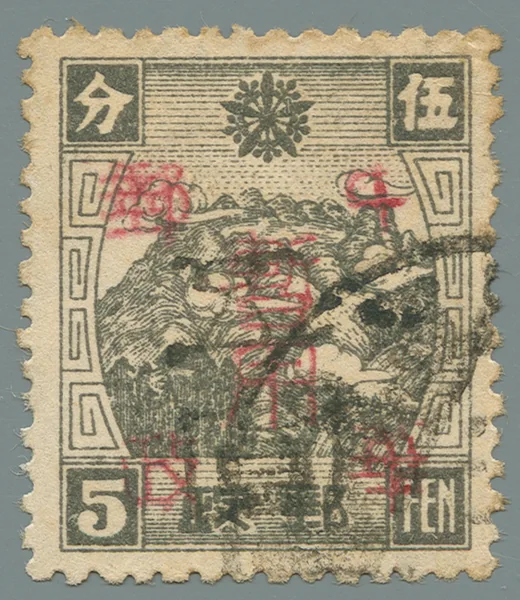
BML23
Hailun (海倫)
Stamps Overprinted and Surcharged (1st Issue)
Issued March 1946. Single-value issue hand-overprinted and surcharged with a wooden chop in black on the previous Hailun 5c stamp by the Hailun Post Office.
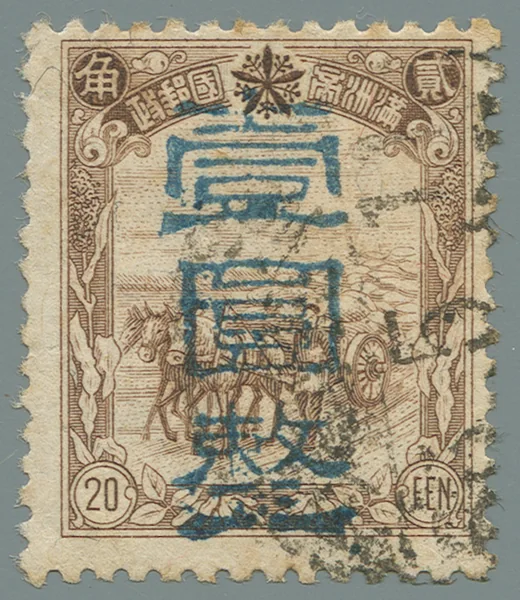
BML24
Hailun (海倫)
Stamps Overprinted and Surcharged (2nd Issue)
Issued March 1946. Seven-value set hand-overprinted and surcharged in blue green or black on Manchukuo stamps; the $1/10c values on stamps previously overprinted in Changchun. Surcharge in two versions: with or without the character 整 (exact).
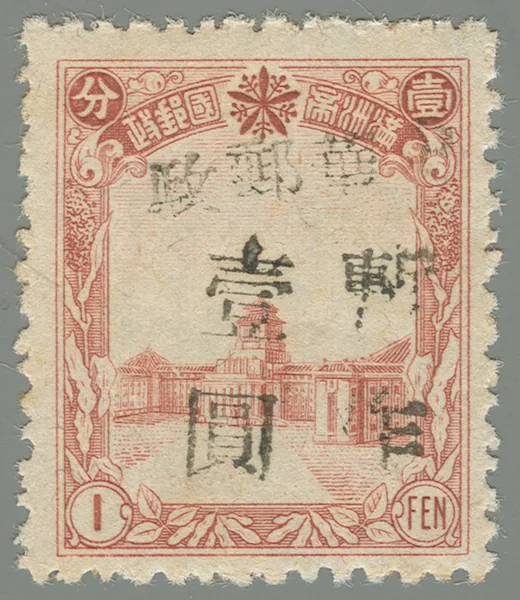
BML25
Hegang (鶴崗)
Stamps Overprinted “Chinese Post Temporarily Used” and Surcharged
Issued March 1946. Three-value surcharge set hand-overprinted in black or violet on Manchukuo 4th ed. regular stamps by the Hegang Postal Administration.
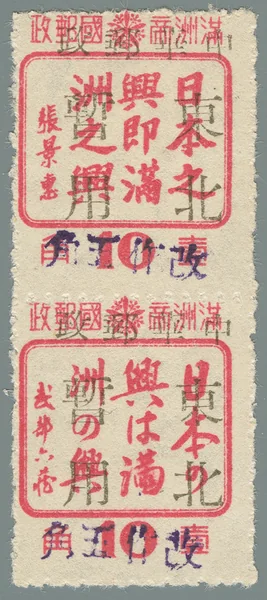
BML26
Hegang (鶴崗)
Stamps Overprinted “Changed to” and Surcharged
Issued June 1946. Two-value surcharge set hand-overprinted in violet on Manchukuo propaganda slogan stamps previously overprinted in Changchun, applied with two handstamp types: wide (14 mm) and narrow (13 mm).
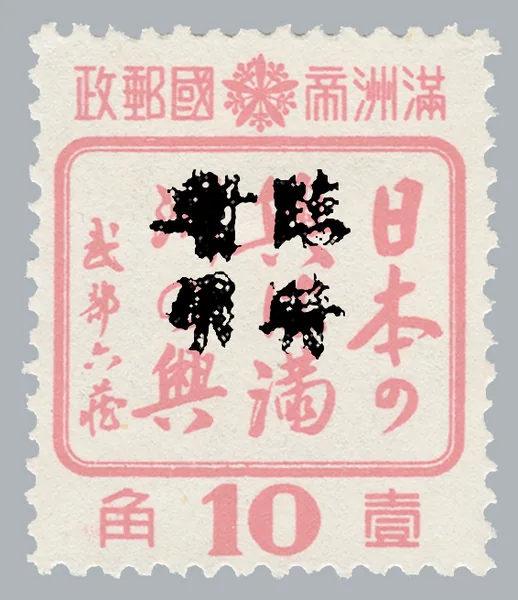
BML27
Heihe (黑河)
Stamps Overprinted “Provisional Temporarily Used” (1st Issue)
Issued September 1945. Single-value provisional set hand-overprinted in black with a rubber chop on Manchukuo propaganda slogan stamps.
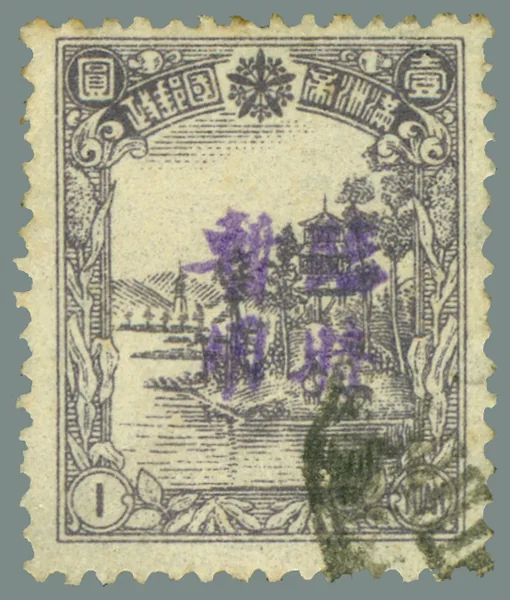
BML28
Heihe (黑河)
Stamps Overprinted “Provisional Temporarily Used” (2nd Issue)
Issued April 1946. Single-value provisional set hand-overprinted in blue-violet with a rubber chop on Manchukuo 5th ed. regular stamps. Same overprint chop as the first issue, differing only in colour.
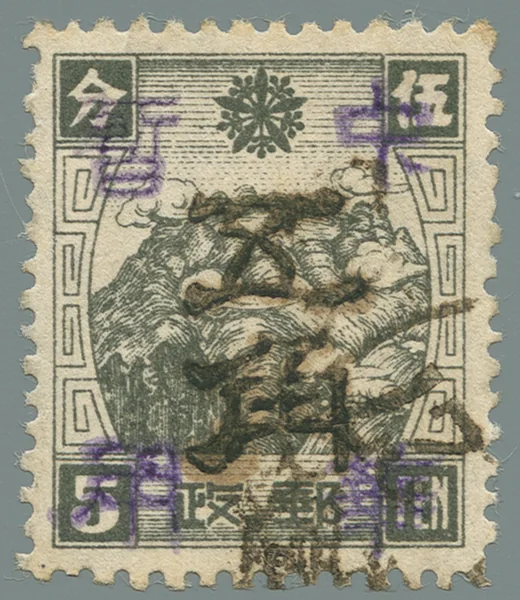
BML29
Heihe (黑河)
Stamps Overprinted “China Temporarily Used” and Surcharged
Issued 9 April 1946. Six-value surcharge set hand-overprinted in violet and surcharged in black on Manchukuo definitive stamps.
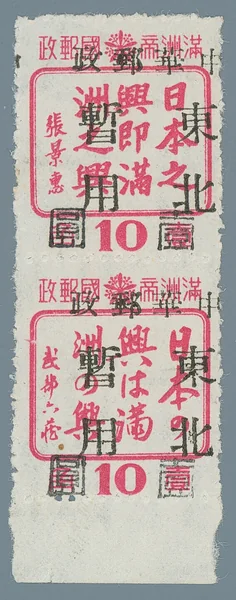
BML30
Heli (鶴立)
Stamps Surcharged “One Yuan” and “Five Yuan”
Issued June 1946. Two-denomination surcharge set hand-overprinted with wooden chop in dark blue or black on Manchukuo propaganda slogan stamps previously overprinted in Changchun, by the Heli Post Office.
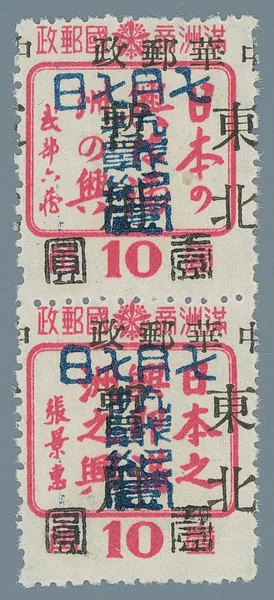
BML31
Heli (鶴立)
Stamps Overprinted “July 7 War of Resistance Commemoration”
Issued July 1946. Commemorative overprint in dark blue on stamps of the previous Heli issue, adding the inscription 日七月七抗戰紀念 to all four stamp types.
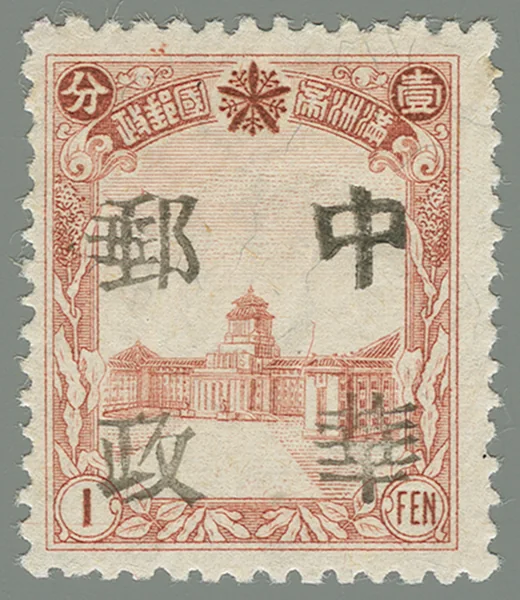
BML32
Heli (鶴立)
Stamps Overprinted “Republic of China Post – Commemorating August 15, Return of Our National Territory” and Surcharged
Issued August 1946. Two-denomination surcharge set hand-overprinted with wooden chop in dark blue or black on Manchukuo 4th ed. regular stamps, marking the first anniversary of the restoration of Chinese sovereignty on 15 August 1945.
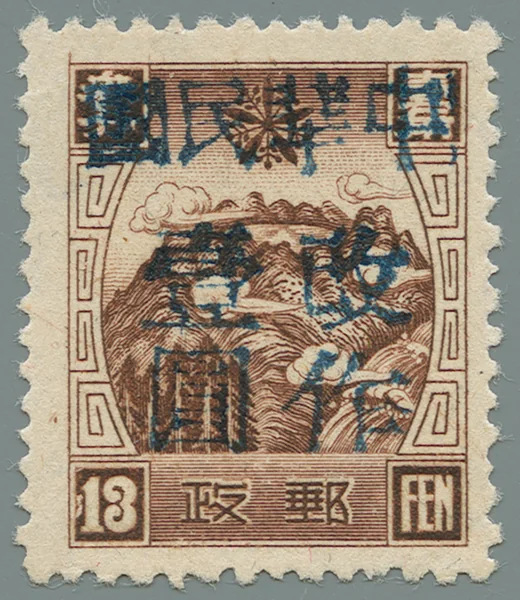
BML33
Heli (鶴立)
Stamps Overprinted “Republic of China – Changed to” and Surcharged
Issued October 1946. Two-denomination surcharge set hand-overprinted with wooden chop in dark blue on Manchukuo 4th ed. interpostal stamps (13c dark siena).
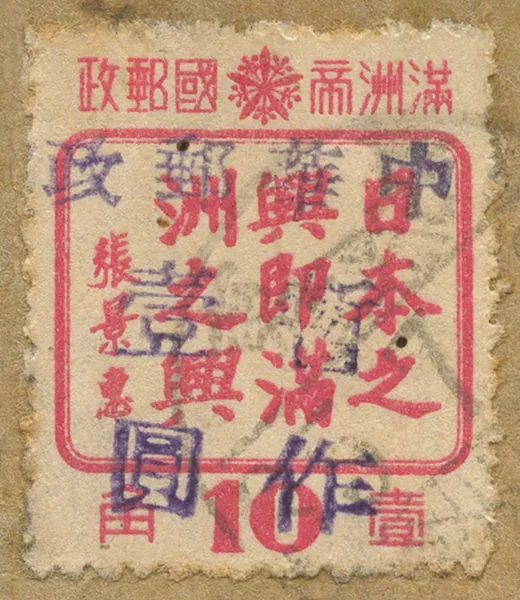
BML34
Hulan (呼蘭)
Stamps Overprinted and Surcharged
Issued April 1946. Provisional surcharge hand-overprinted in black on Manchukuo propaganda slogan stamps previously overprinted in Changchun, by the Hulan Post Office.
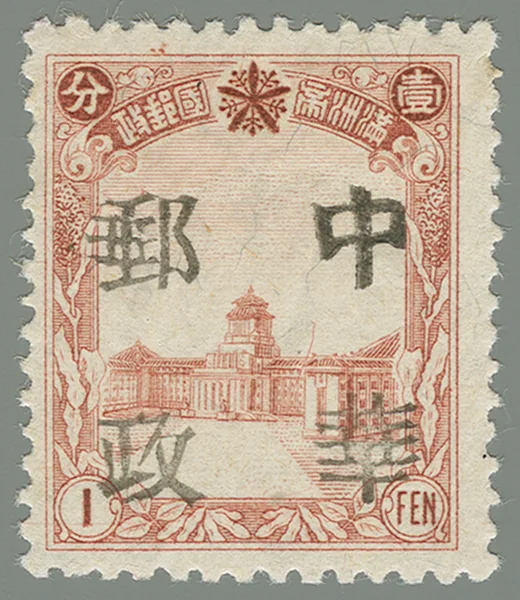
BML35
Hulan (呼蘭)
Stamps Overprinted “Chinese Post”
Issued May 1946. Multi-denomination set hand-overprinted with rubber chop in black, violet, or red, adding the inscription 中華郵政 (Chinese Post) on Manchukuo stamps of various series.
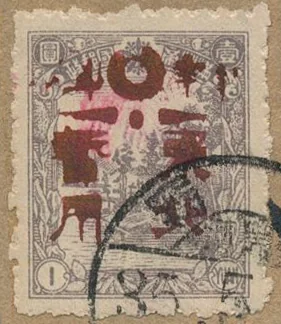
BML36
Huma (呼瑪)
Stamps Overprinted “China Posts Northeast Temporarily Used”
Issued May 1946. Overprint set hand-applied with wooden chop in dark red or black on Manchukuo 5th ed. regular stamps by the Huma Post Office.
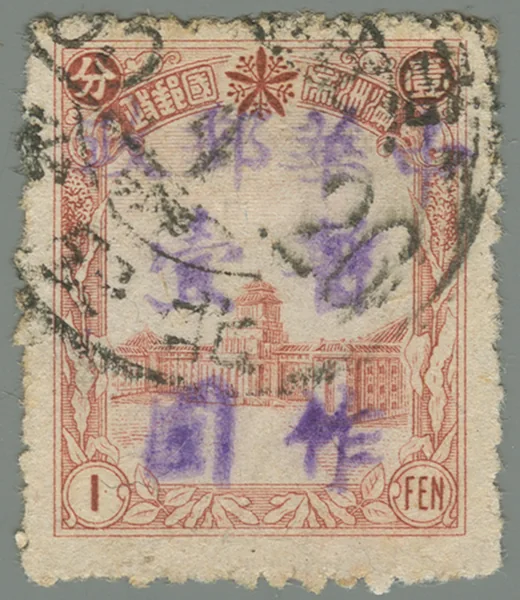
BML37
Kedong (克東)
Stamps Overprinted “Chinese Post Temporarily Used” and Surcharged
Issued July 1946. Provisional surcharge hand-overprinted with rubber chop in dark blue on Manchukuo propaganda slogan stamps by the Kedong County Posts and Telecommunications Bureau.
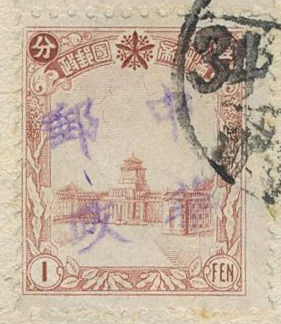
BML38
Keshan (克山)
Stamps Overprinted “Republic of China”
Issued October 1945. Overprint hand-applied with rubber chop in black on Manchukuo 5th ed. interpostal stamps by the Keshan Post Office. No unused copies are known.
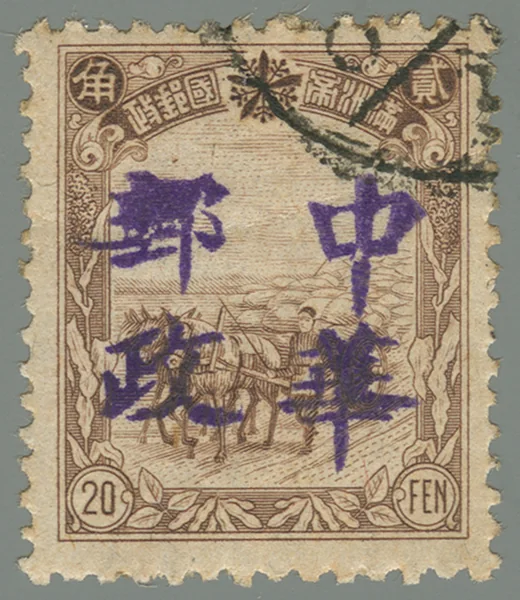
BML39
Keshan (克山)
Stamps Overprinted “Chinese Post”
Issued November 1945. Overprint hand-applied with wooden chop in blue on Manchukuo propaganda slogan and 4th ed. regular stamps by the Keshan Post Office. No unused copies are known.
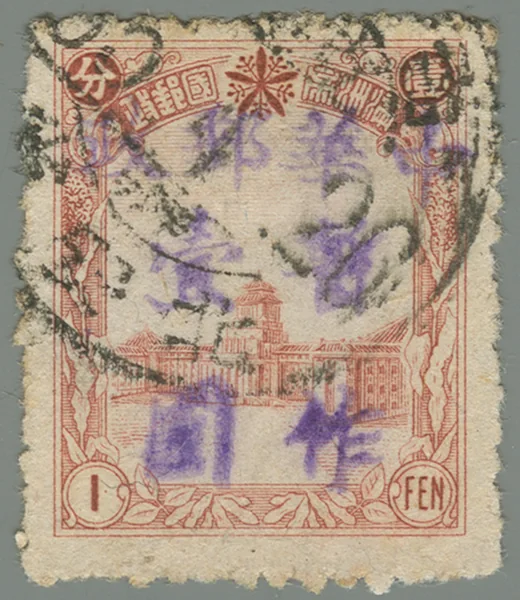
BML40
Keshan (克山)
Stamps Overprinted “Chinese Post Temporarily Used” and Surcharged
Issued March 1946. Provisional surcharge hand-overprinted with rubber chop in blue-violet on Manchukuo 4th ed. regular and 5th ed. regular stamps by the Keshan Post Office. No unused copies are known.
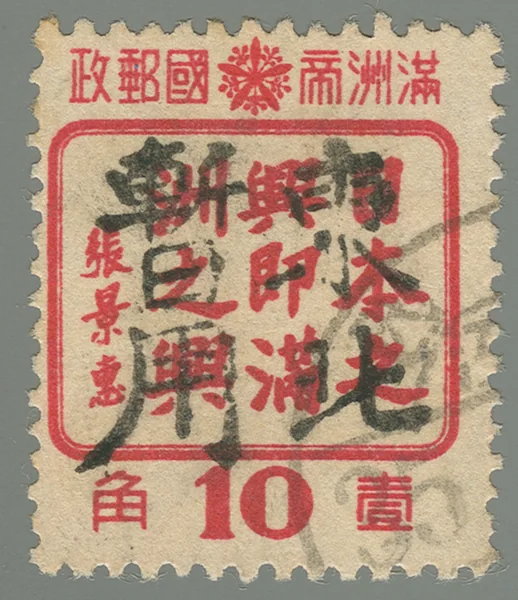
BML41
Laha (拉哈)
Stamps Overprinted “Chinese Post”
Issued October 1945. Overprint hand-applied with wooden chop in violet-blue on Manchukuo 3rd ed. regular, 4th ed. regular, and 5th ed. regular stamps by the Laha Post Office. No unused copies are known.
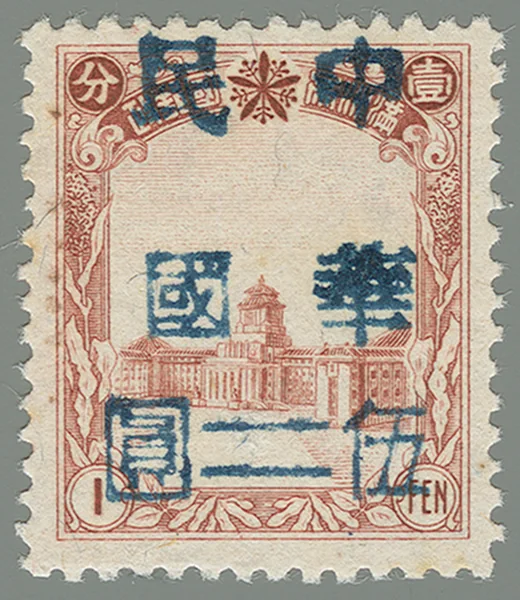
BML42
Lanxi (蘭西)
Stamps Overprinted “Republic of China”
Issued March 1946. Overprint hand-applied with rubber chop in violet on Manchukuo 4th ed. regular and 5th ed. regular stamps by the Lanxi Post Office. No unused copies are known.
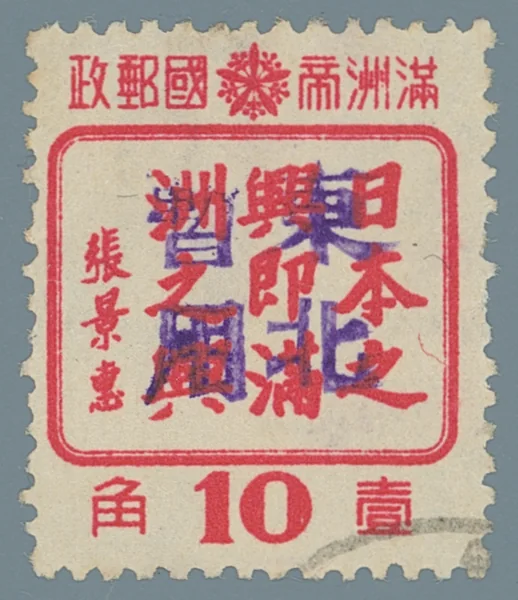
BML43
Lanxi (蘭西)
Stamps Overprinted “Temporarily Used in North East”
Issued March 1946. Overprint hand-applied with wooden chop in violet on Manchukuo Labour Service, propaganda slogan, 10th anniversary, and 4th ed. regular stamps by the Lanxi Post Office. No unused copies are known.
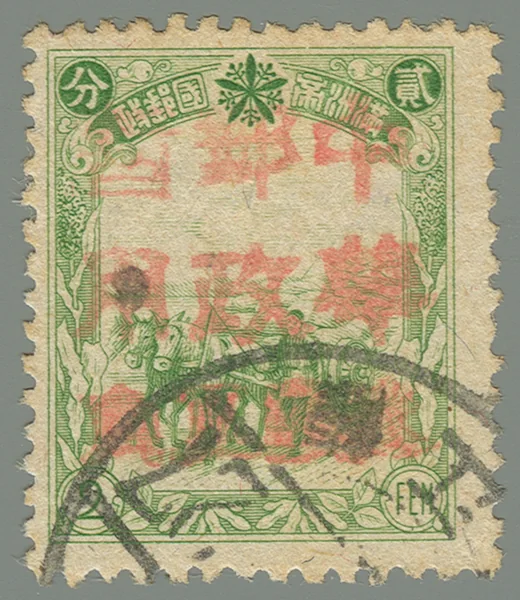
BML44
Lanxi (蘭西)
Stamps Overprinted “Temporarily Used in North East”
Issued April 1946. Overprint hand-applied with wooden chop in black on Manchukuo propaganda slogan stamps by the Lanxi Post Office.
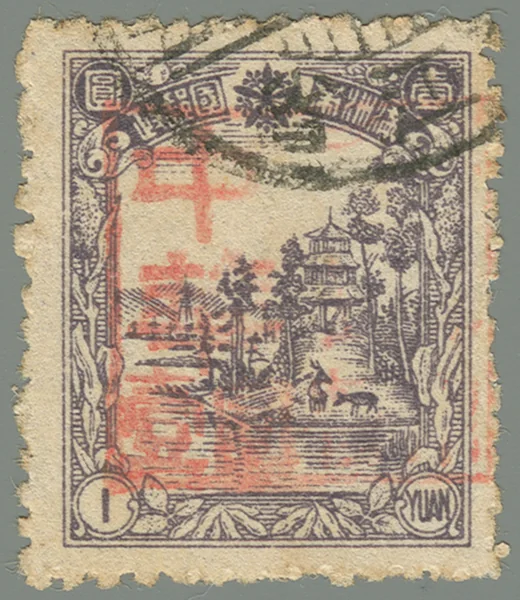
BML45
Lianjiangkou (蓮江口)
Stamps Overprinted “Republic of China” and Surcharged
Issued March 1946. Provisional surcharge hand-overprinted with wooden chop in dark blue on Manchukuo 4th ed. regular stamps by the Lianjiangkou Post Office.
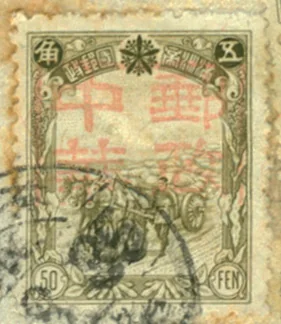
BML46
Lianjiangkou (蓮江口)
Stamps Overprinted “Chinese Republic Postal Service Changed to” and Surcharged
Issued October 1946. Provisional surcharge hand-overprinted with wooden chop in black on Manchukuo 4th ed. interpostal and 4th ed. regular stamps by the Lianjiangkou Post Office.
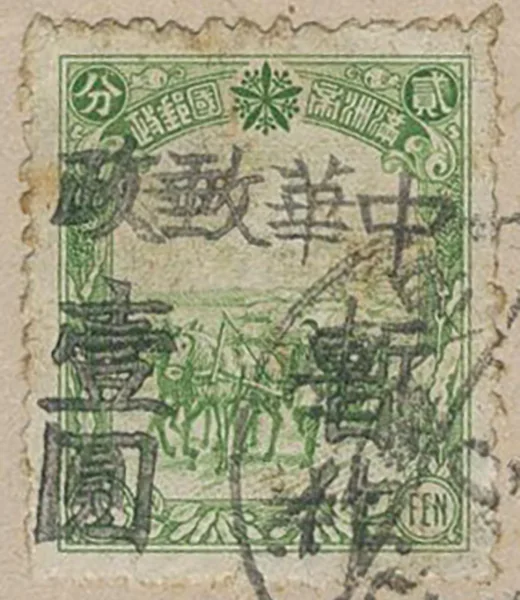
BML47
Lindian (林甸)
Stamps Overprinted “Chinese Post Temporarily Used” and Surcharged
Issued May 1946. Provisional surcharge hand-overprinted with rubber chop in orange red on Manchukuo 4th ed. regular and 5th ed. interpostal stamps by the Lindian Post Office.
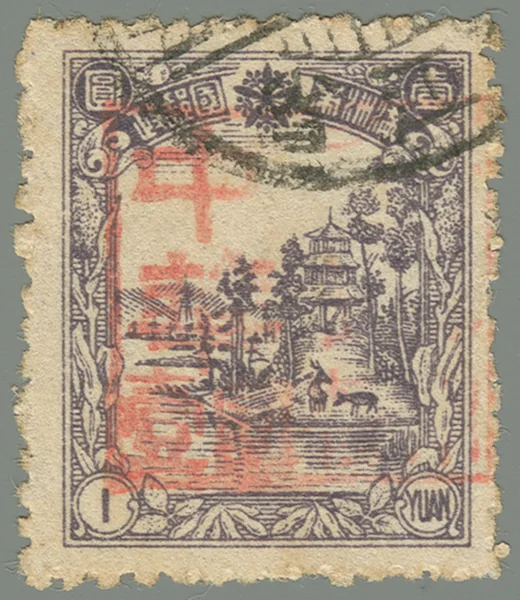
BML48
Lindian (林甸)
Stamps Overprinted “Chinese Post Temporarily Used” and Surcharged
Issued August 1946. Provisional surcharge hand-overprinted with rubber chop in orange red on Manchukuo 5th ed. regular stamps by the Lindian Post Office. No unused copies are known.
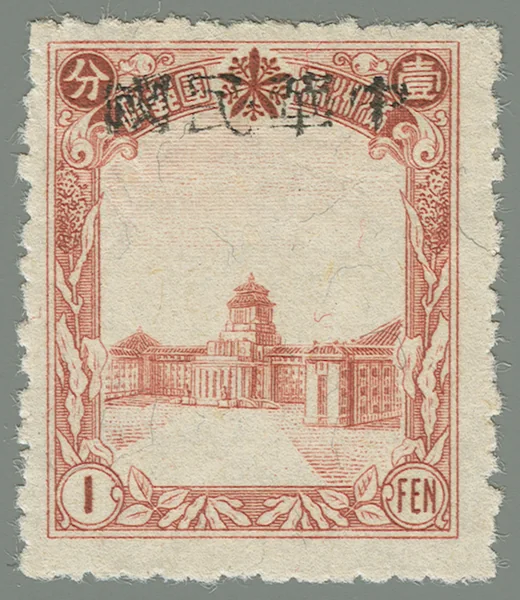
BML49
Lindian (林甸)
Stamps Overprinted “Chinese Post Temporarily Used”
Issued August 1946. Provisional overprint hand-overprinted with rubber chop in orange red on Manchukuo 4th ed. regular stamps by the Lindian Post Office. No unused copies are known.
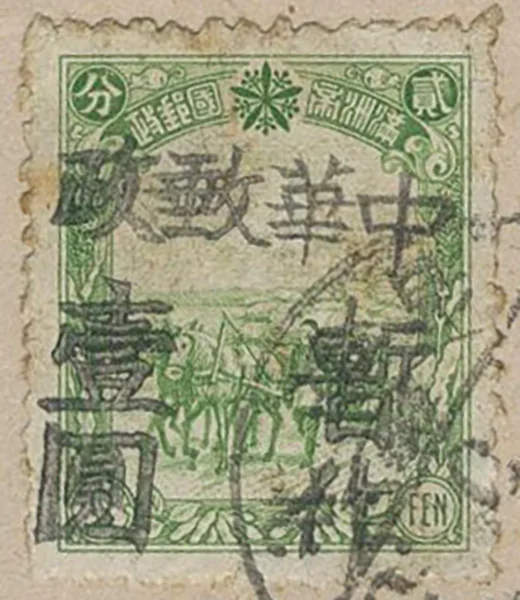
BML50
Longzhen (龍鎮)
Stamps Overprinted “Chinese Post Temporarily Used for” and Surcharged
Issued May 1946. Provisional surcharge hand-overprinted with rubber chop in black on Manchukuo 4th ed. regular stamps by the Longzhen Post Office. No unused copies are known.
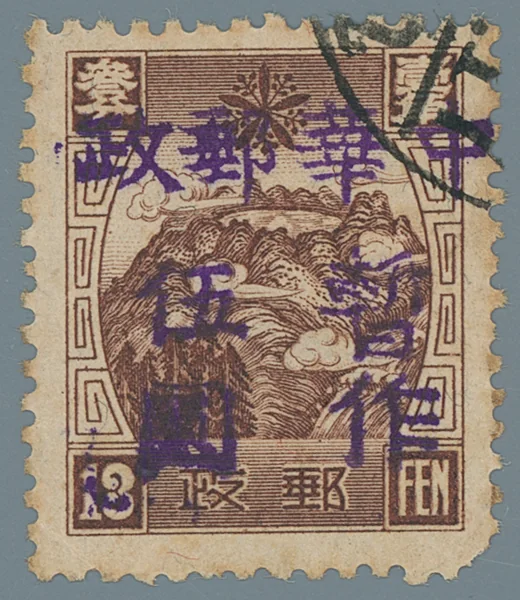
BML51
Mingshui (明水)
Stamps Overprinted “Chinese Post Temporarily Used for” and Surcharged
Issued March 1946. Provisional surcharge hand-overprinted with wooden chop in violet on Manchukuo 4th ed. interpostal, 4th ed. regular, and propaganda slogan stamps by the Mingshui Post Office. No unused copies are known.
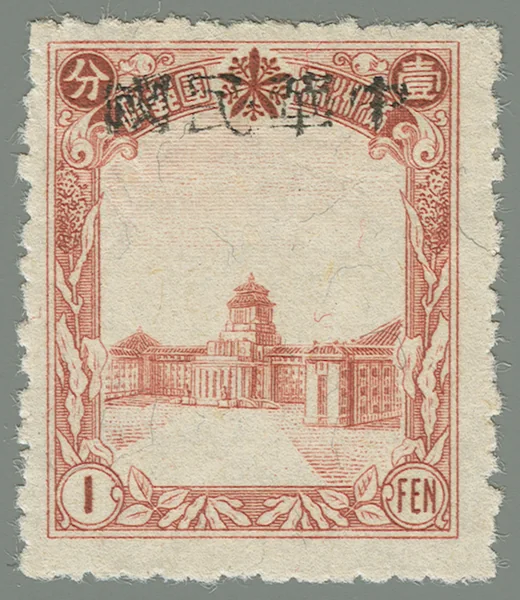
BML52
Mulan (木蘭)
Stamps Overprinted “Chinese Republic”
Issued October 1945. Nine-value provisional set hand-overprinted with wooden chop in black on Manchukuo stamps by the Mulan Post Office.
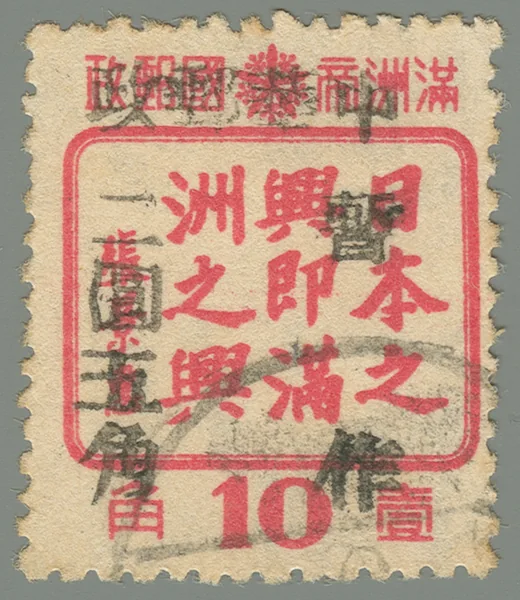
BML53
Nehe (訥河)
Stamps Overprinted “Chinese Post Temporarily Used for” and Surcharged
Issued March 1946. Provisional surcharge hand-overprinted with rubber chop in black or blue-violet on Manchukuo propaganda slogan stamps by the Nehe Post Office. No unused copies are known.
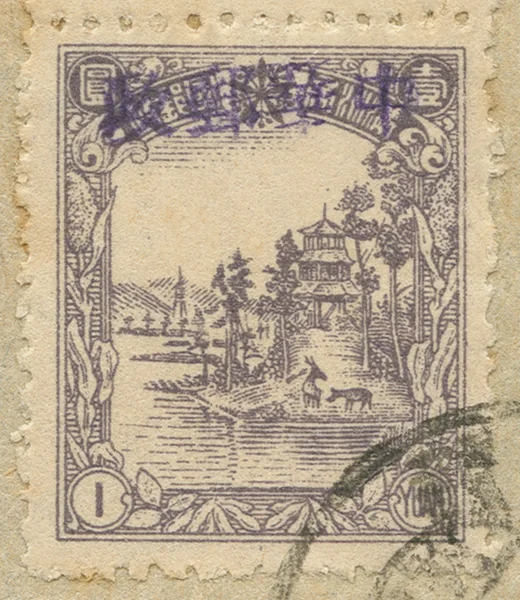
BML54
Nehe (訥河)
Stamps Overprinted “Chinese Post”
Issued July 1946. Provisional set hand-overprinted with rubber chop in black or blue-violet on Manchukuo 4th ed. regular and 5th ed. regular stamps by the Nehe Post Office. No unused copies are known.
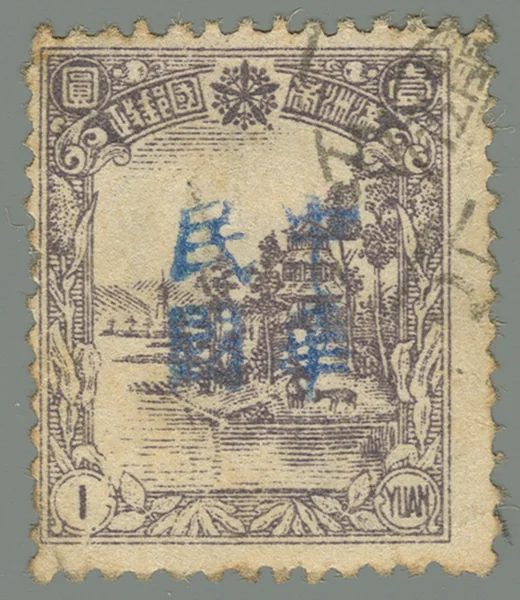
BML55
Nenjiang (嫩江)
Stamps Overprinted “Republic of China”
Issued November 1945. Provisional set hand-overprinted with rubber chop in black or dark-blue on Manchukuo stamps by the Nenjiang Post Office. No unused copies are known.
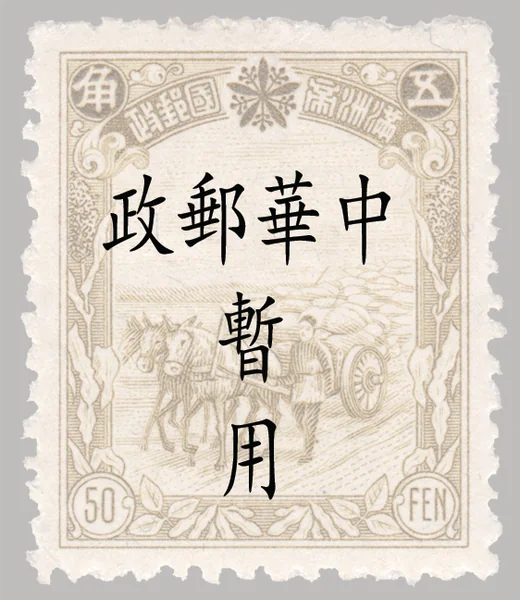
BML56
Nenjiang (嫩江)
Stamps Overprinted “Chinese Post Temporarily Used for”
Issued July 1946. Single-value provisional overprint hand-overprinted with rubber chop in black on Manchukuo 4th ed. regular stamps by the Nenjiang Post Office. No unused copies are known.
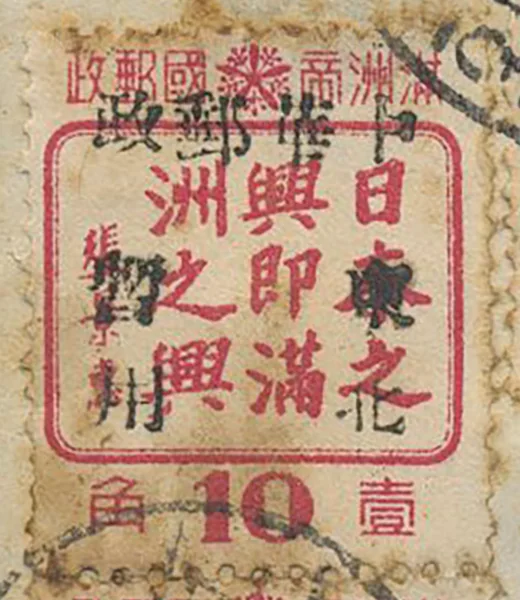
BML57
Pingshan (平山)
Stamps Overprinted “Republic of China”
Issued April 1946. Eleven-value provisional set hand-overprinted with wooden chop in blue or red on Manchukuo stamps by the Pingshan Post Office.
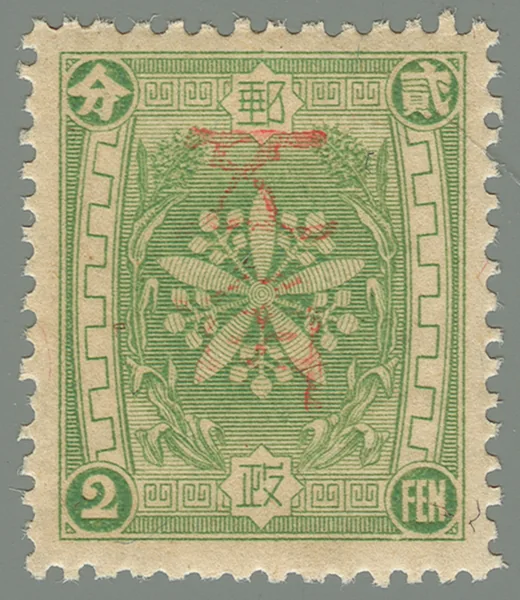
BML58
Pingshan (平山)
Stamps Overprinted and Surcharged
Issued July 1946. Two-value provisional surcharge hand-overprinted with rubber chop in red on Manchukuo interpostal stamps by the Pingshan Post Office.
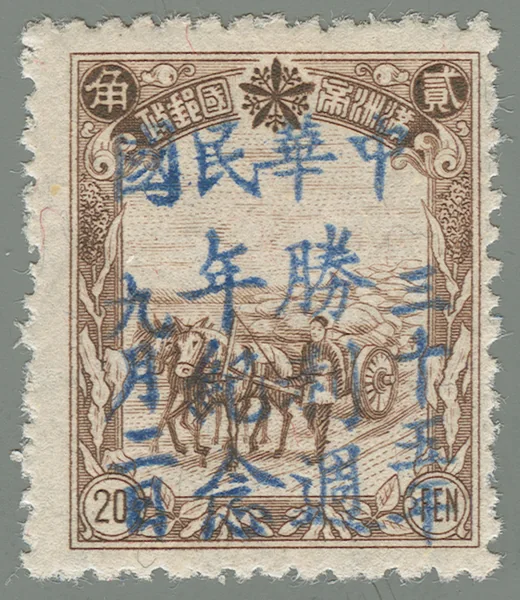
BML59
Pingshan (平山)
Stamps Overprinted “35th Anniversary of Victory”
Issued September 1946. Ten-value commemorative set hand-overprinted with wooden chop in blue or red on Manchukuo stamps by the Pingshan Post Office.
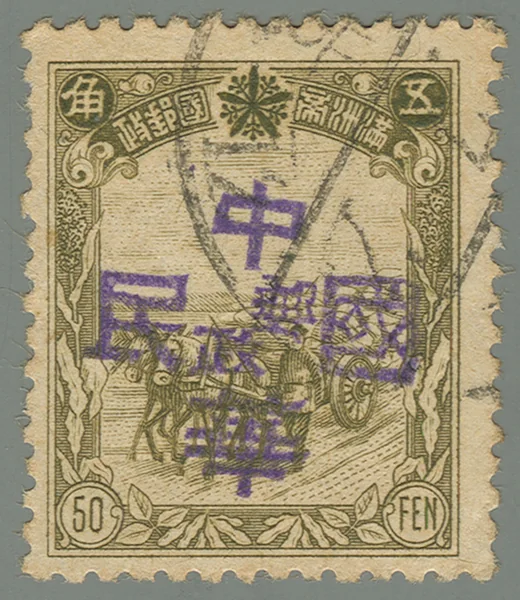
BML60
Qianzhen (千振)
Stamps Overprinted “China Posts Northeast Temporarily Used”
Issued May 1946. Two-value provisional overprint hand-overprinted with rubber chop in black on Manchukuo stamps by the Qianzhen Post Office. No unused copies are known.
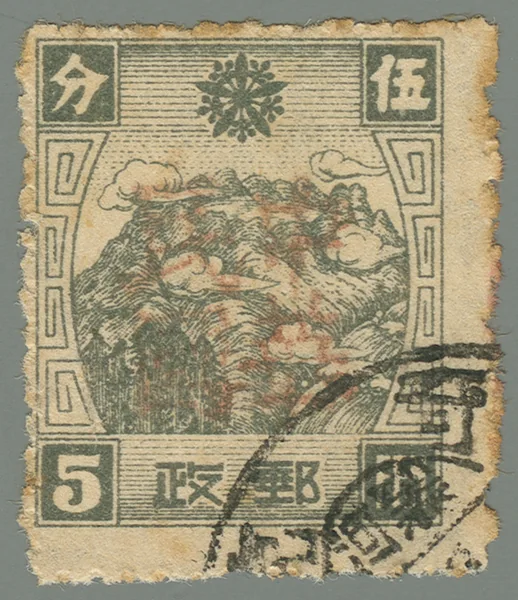
BML61
Qike (奇克)
Stamps Overprinted “Republic of China”
Issued approximately end of 1945. Two-value provisional overprint hand-overprinted with rubber chop in red on Manchukuo stamps by the Qike Post Office. No unused copies are known.
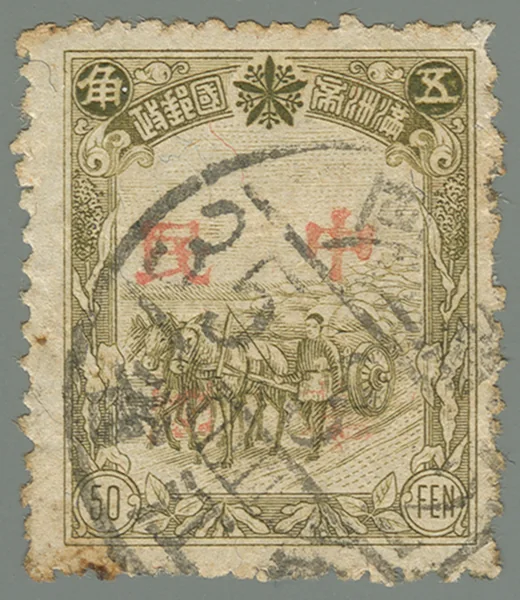
BML62
Qing’an (慶安)
Stamps Overprinted “Chinese Post Temporarily Used” and Surcharged
Issued March 1946. Two-value provisional surcharge hand-overprinted with rubber chop in greenish blue on Manchukuo 4th ed. regular stamps by the Qing’an Post Office.
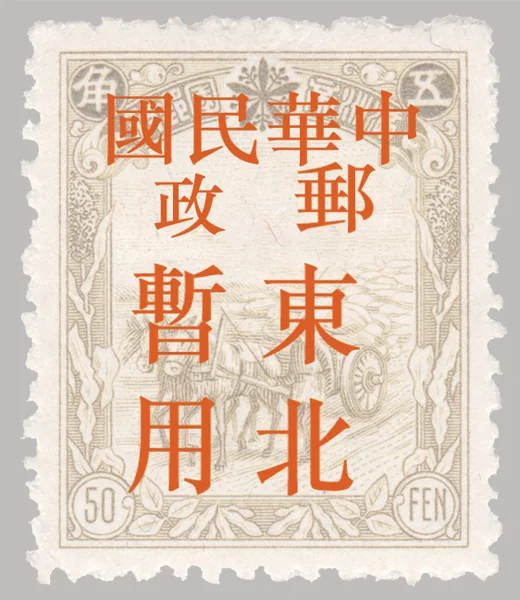
BML63
Qing’an (慶安)
Stamps Overprinted “Chinese Republic Postal Service”
Issued July 1946. One-value provisional overprint hand-overprinted with rubber chop in blue on a Manchukuo 4th ed. regular stamp by the Qing’an Post Office.
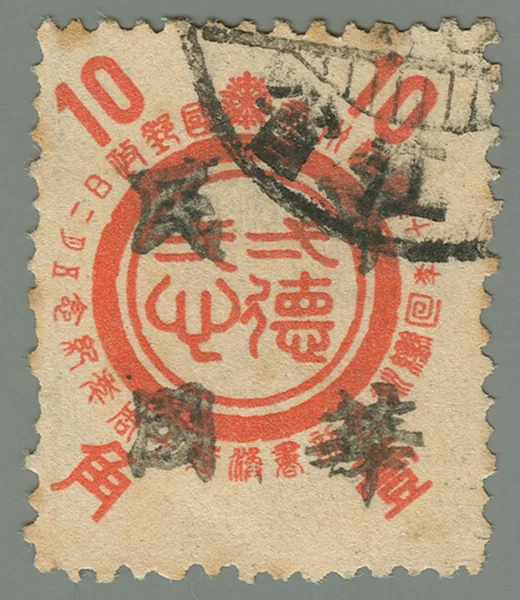
BML64
Qinggang (青岡)
Stamps Overprinted “Republic of China” (1st Issue)
Issued October 1945. Eleven-value provisional overprint hand-overprinted with rubber chop in black or red on various Manchukuo stamps by the Qinggang Post Office. Unused copies are not yet known.
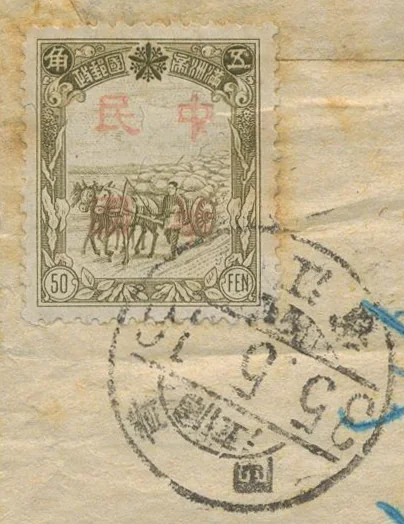
BML65
Qinggang (青岡)
Stamps Overprinted “Republic of China” (2nd Issue)
Issued March 1946. One-value provisional overprint hand-overprinted with wooden chop in red on a Manchukuo 4th ed. regular stamp by the Qinggang Post Office. Unused copies are not yet known.
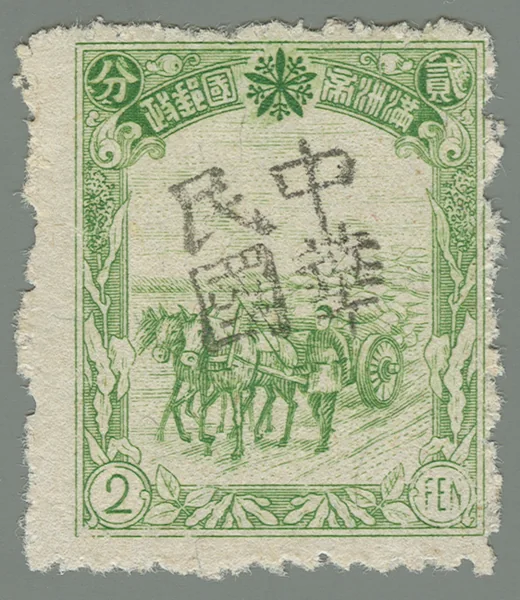
BML66
Qinggang (青岡)
Stamps Overprinted “Republic of China Postal Service Temporary Used for North East”
Issued March 1946. One-value provisional overprint hand-overprinted with wooden chop in red on a Manchukuo 4th ed. regular stamp by the Qinggang Post Office. Unused copies are not yet known.
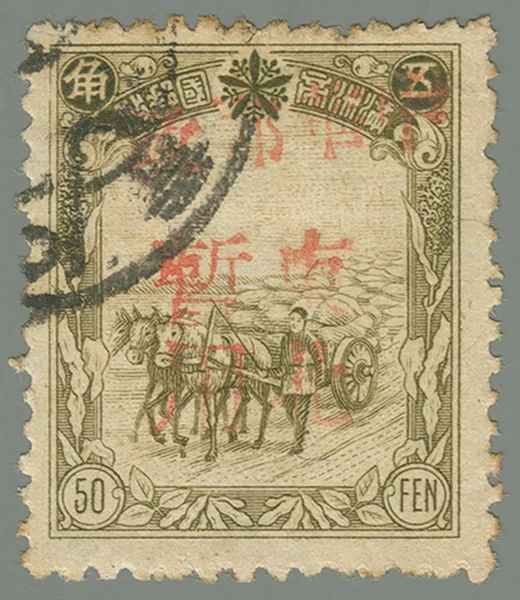
BML67
Qinggang (青岡)
Stamps Overprinted “Chinese Post Temporary Used for North East”
Issued March 1946. Two-value provisional overprint hand-overprinted with wooden chop in red on Manchukuo stamps by the Qinggang Post Office. Applied in two steps, resulting in variable spacing between the two overprint rows. Unused copies are not yet known.
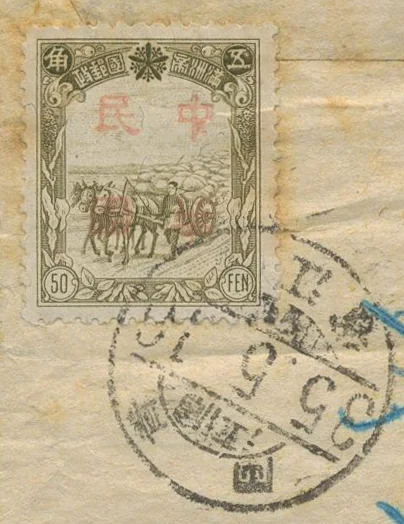
BML68
Qinggang (青岡)
Stamps Overprinted “Republic of China” (3rd Issue)
Issued April 1946. One-value provisional overprint hand-overprinted with wooden chop in red on a Manchukuo 4th ed. regular stamp by the Qinggang Post Office. Unused copies are not yet known.
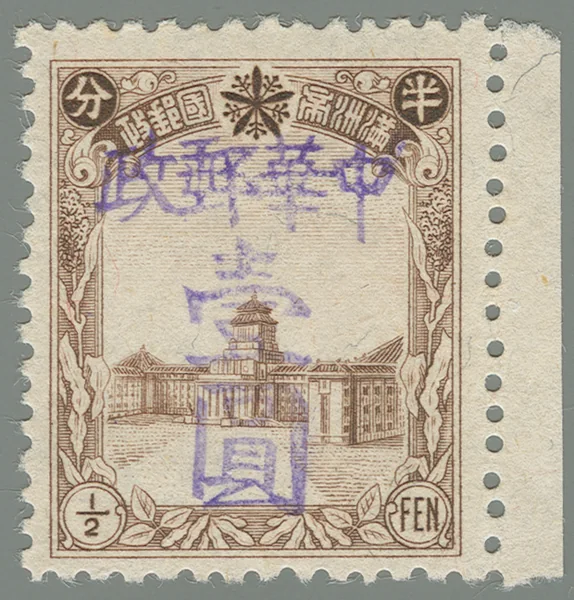
BML69
Sandaozhen (三道鎮)
Stamps Overprinted “Republic of China”
Issued October 1945. Seven-value provisional overprint hand-overprinted with wooden chop in black on various Manchukuo definitives by the Sandaozhen Post Office.
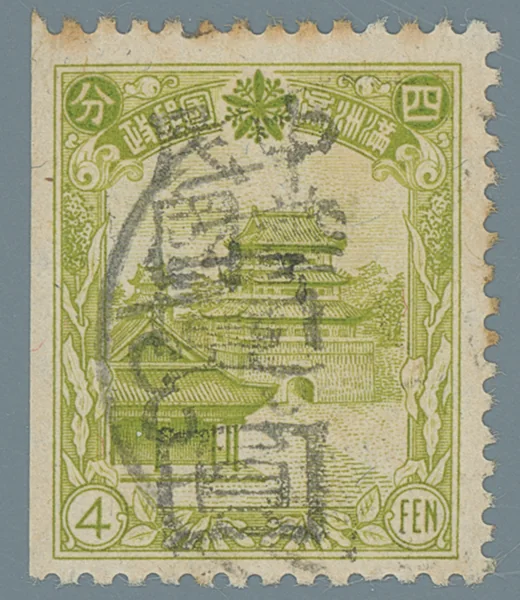
BML70
Sandaozhen (三道鎮)
Stamps Overprinted “Republic of China” and Surcharged
Issued May 1946. Six-value surcharge hand-overprinted with wooden chop in black on various Manchukuo definitives and booklet stamps by the Sandaozhen Post Office.
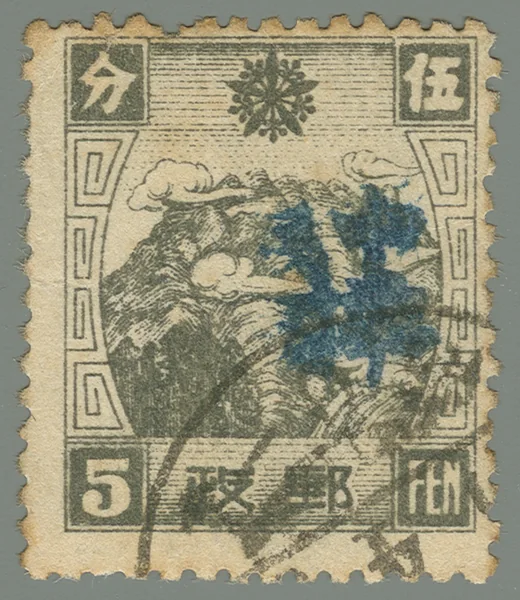
BML71
Shitouhezi (石頭河子)
Stamps Overprinted “Republic of China”
Issued April 1946. Eight-value provisional overprint hand-overprinted with wooden chop in gray blue or dark blue on various Manchukuo stamps by the Shitouhezi Post Office.
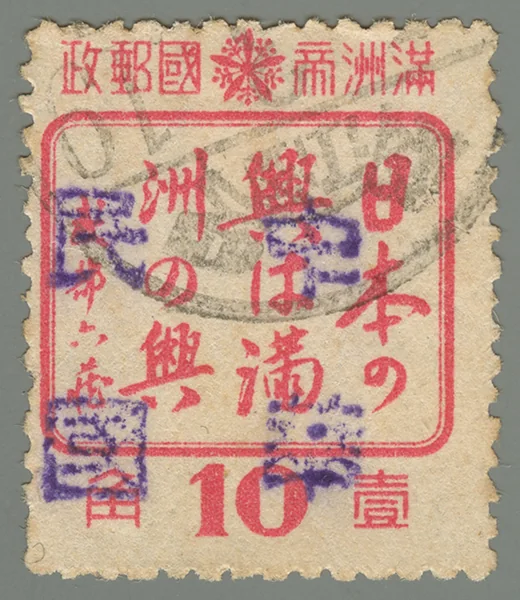
BML72
Shuangcheng (雙城)
Stamps Overprinted “Republic of China”
Issued January 1946. Five-value provisional set hand-overprinted in black or blue violet on Manchukuo stamps by the Shuangcheng Post Office.
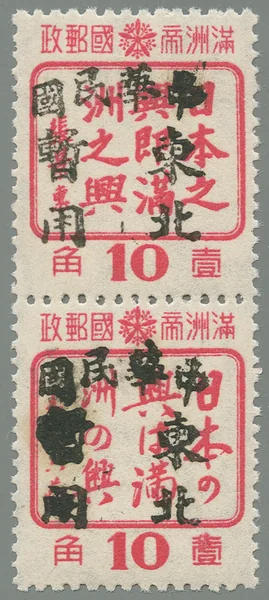
BML73
Shuangcheng (雙城)
Stamps Overprinted “Republic of China – Temporarily Used for the Northeast”
Issued April 1946. Four-value provisional set hand-overprinted in black on Manchukuo stamps.
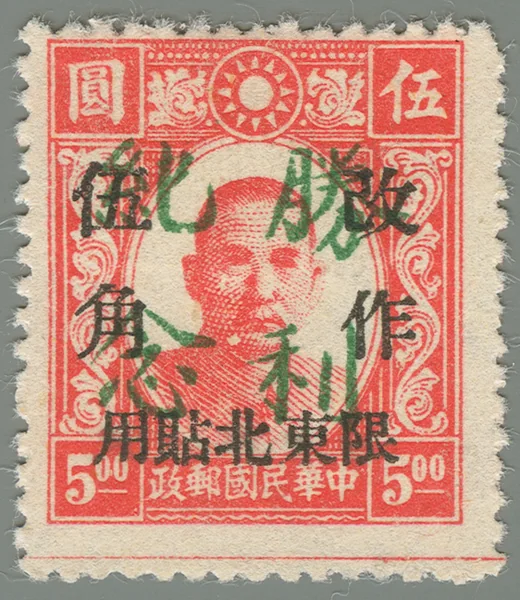
BML74
Shuangcheng (雙城)
Stamps Overprinted “In Commemoration of Victory”
Issued 2 September 1946. Four-value surcharge set lithography-overprinted in green or red on Republic of China Sun Yat-sen stamps overprinted “Restricted to Northeast Use”.
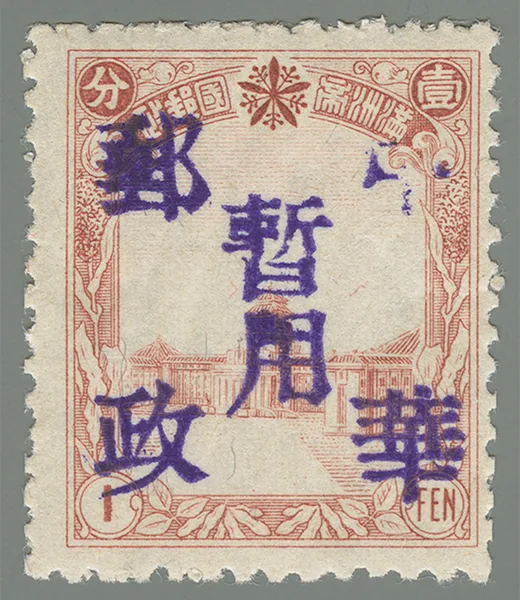
BML75
Sifangtai (四方臺)
Stamps Overprinted “Chinese Post” and Surcharged
Issued March 1946. Eighteen-value surcharge hand-overprinted with rubber chop in dark violet or black on various Manchukuo stamps by the Sifangtai Post Office.
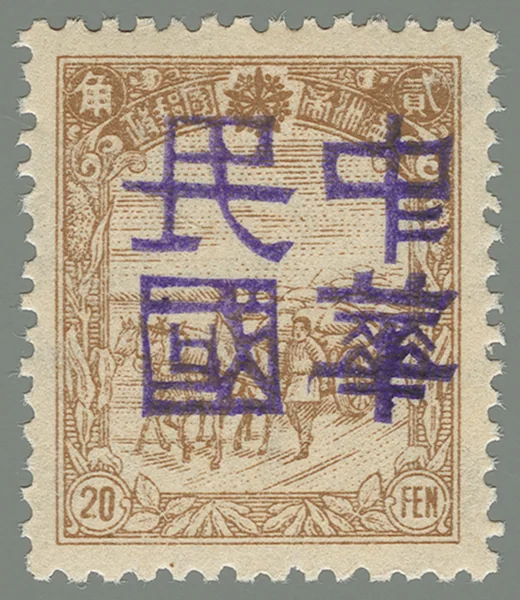
BML76
Sifangtai (四方臺)
Stamps Overprinted “Chinese Republic”
Issued July 1946. Three-value provisional overprint hand-overprinted with rubber chop in dark violet on Manchukuo stamps by the Sifangtai Post Office.
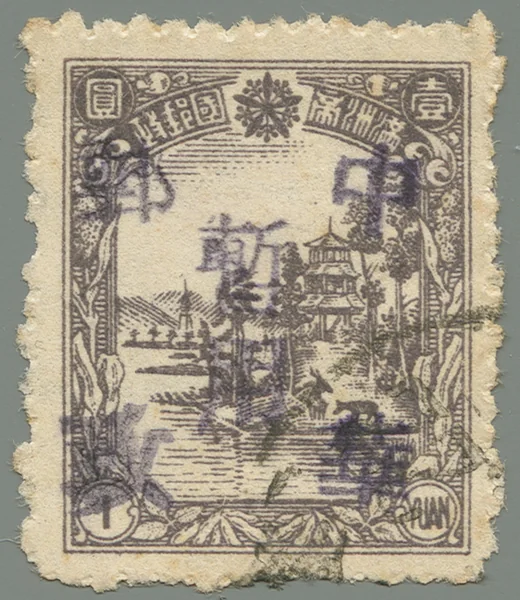
BML77
Suihua (綏化)
Stamps Overprinted “Chinese Post Temporarily Used” (1st Issue)
Issued March 1946. Three-value overprint in dark violet or orange red on Manchukuo stamps by the Suihua Post Office, with two additional values prepared but not issued.
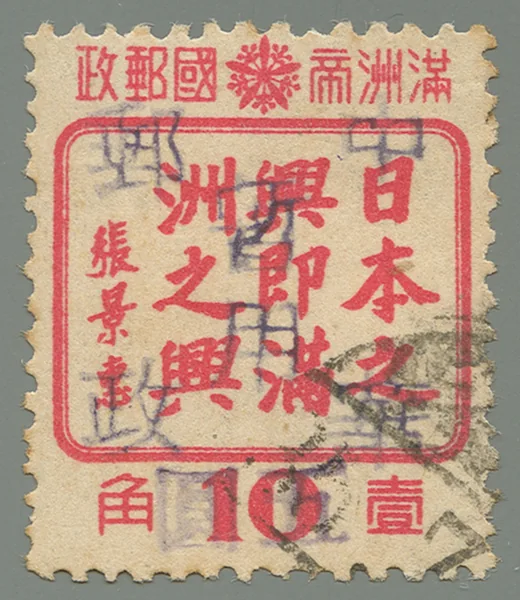
BML78
Suihua (綏化)
Stamps Overprinted “Chinese Post Temporarily Used” and Surcharged (1st Issue)
Issued April 1946. Four-value surcharge issue in blue-violet or orange red on Manchukuo propaganda slogan stamps by the Suihua Post Office, in two surcharge writing directions.
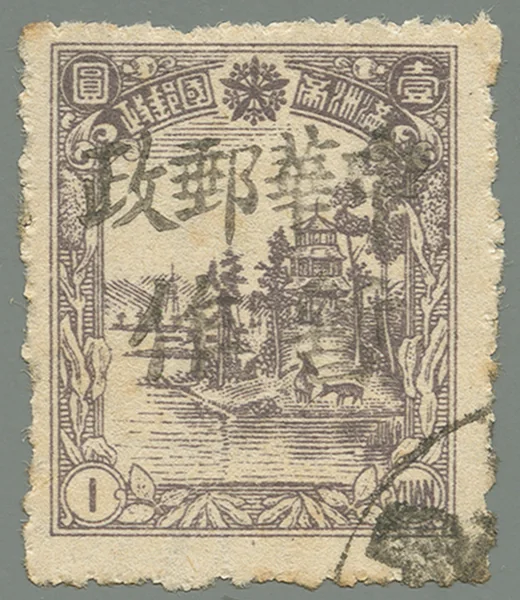
BML79
Suihua (綏化)
Stamps Overprinted “Chinese Post Temporarily Used” (2nd Issue)
Issued April 1946. Two-value overprint in black or violet on Manchukuo 5th ed. regular stamps by the Suihua Post Office.
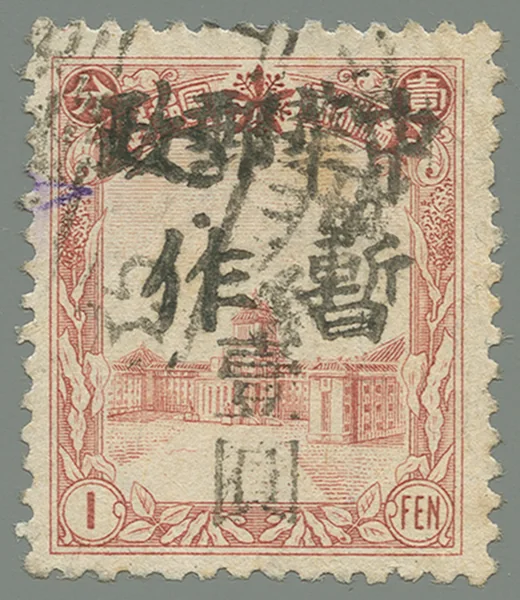
BML80
Suihua (綏化)
Stamps Overprinted “Chinese Post Temporarily Used” and Surcharged (2nd Issue)
Issued May 1946. Five-value surcharge in black or violet on Manchukuo 4th ed. regular and propaganda slogan stamps by the Suihua Post Office, in vertical and horizontal orientations.
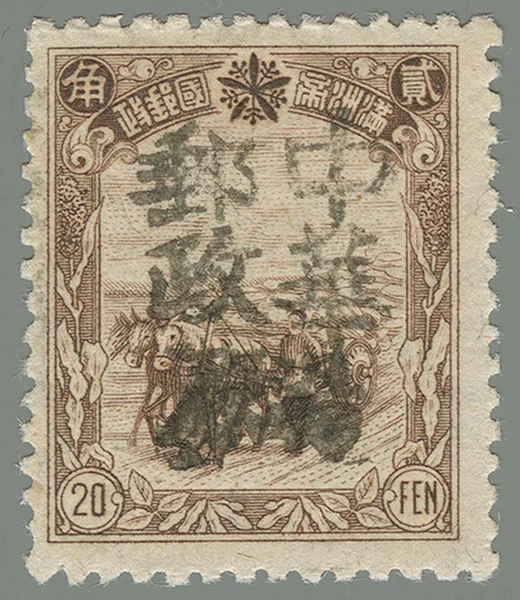
BML81
Suiling (綏稜)
Stamps Overprinted “Chinese Post Temporarily Used”
Issued October 1945. Five-denomination overprint in dark violet or black on Manchukuo stamps by the Suiling Post Office, with an inverted overprint variety on the $1.
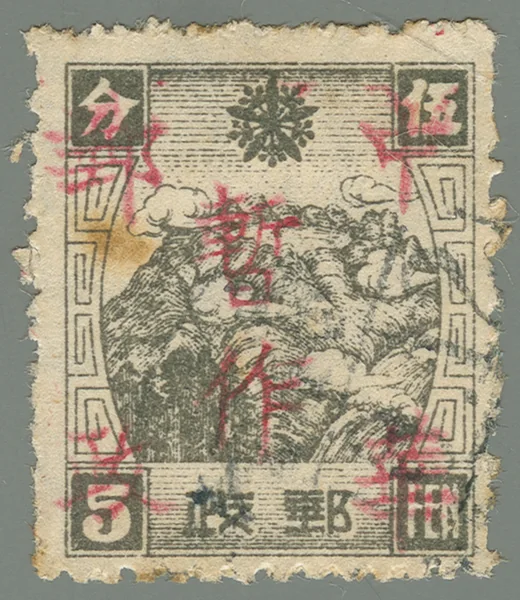
BML82
Sunwu (孫吳)
Stamps Overprinted “Chinese Post Temporarily Used”
Issued October 1945. Two-value overprint in red or dark violet on Manchukuo 5th ed. interpostal stamps by the Sunwu Post Office.
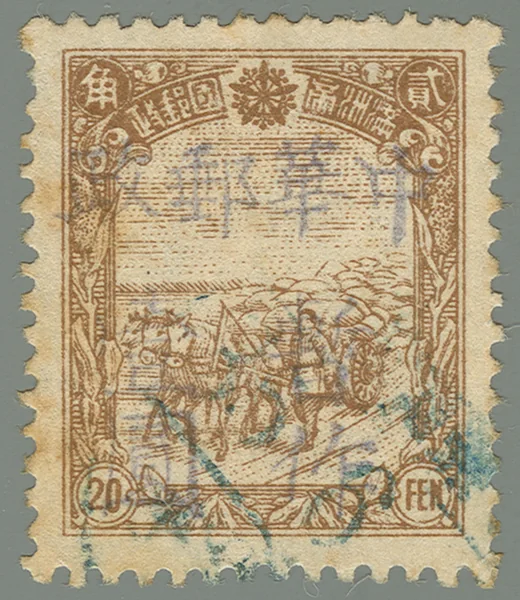
BML83
Sunwu (孫吳)
Stamps Overprinted “Chinese Post Temporarily Used” and Surcharged
Issued May 1946. Six-value surcharge in black, blue, or violet on Manchukuo stamps by the Sunwu Post Office.
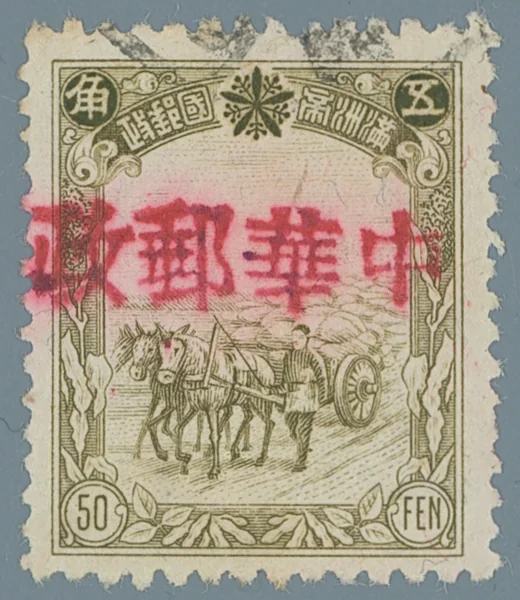
BML84
Tai’an (泰安)
Stamps Overprinted “Chinese Post”
Issued March 1946. Four-value overprint in red or violet on Manchukuo stamps by the Tai’an Post Office, with a double overprint variety on the 50c.
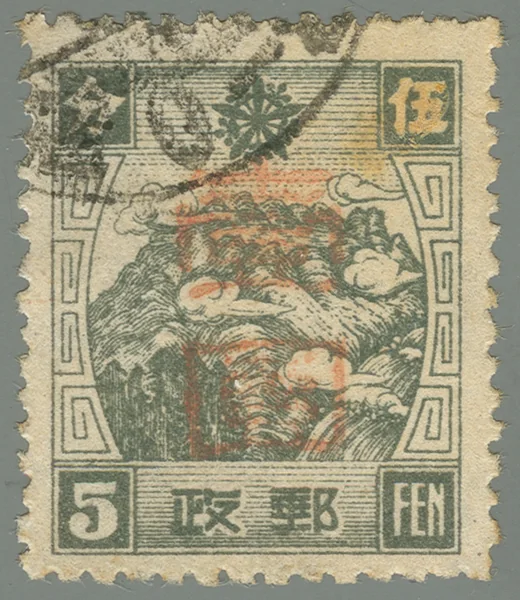
BML85
Tai’an (泰安)
Stamps Overprinted and Surcharged
Issued March 1946. Single-value black surcharge on Manchukuo propaganda stamps previously overprinted in Changchun, applied by the Tai’an Postal Administration.
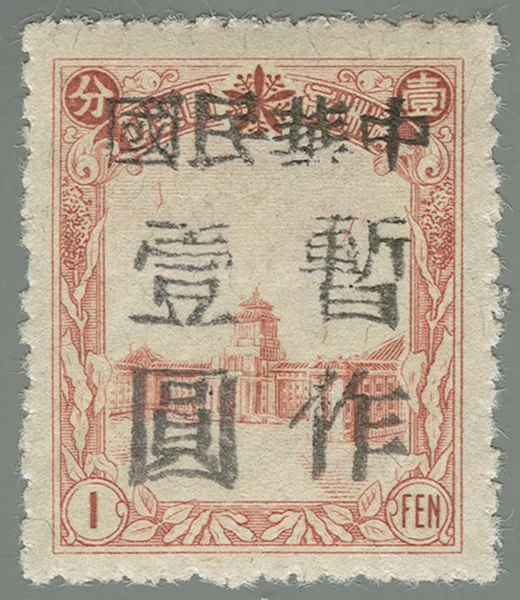
BML86
Tai’an (泰安)
Stamps Overprinted “Chinese Post Temporarily Used” and Surcharged
Issued July 1946. Two-value black rubber-chop overprint and surcharge on Manchukuo definitives by the Tai’an Postal Administration.
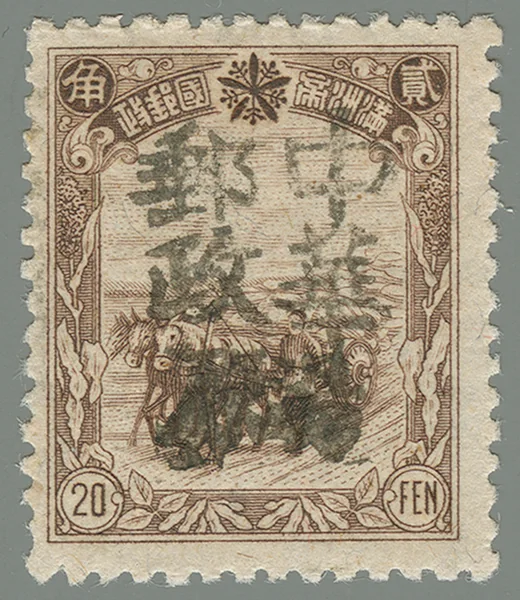
BML87
Tangyuan (湯原)
Stamps Overprinted “Chinese Post Tangyuan”
Issued April 1946. Five-value black wooden-chop overprint on Manchukuo definitives by the Tangyuan Post Office.
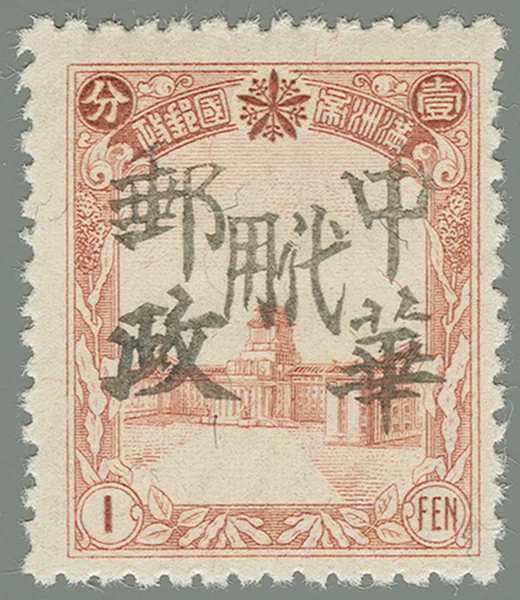
BML88
Tangyuan (湯原)
Stamps Overprinted “Chinese Post Temporarily Used for Tangyuan” and Surcharged
Issued August 1946. Single-value orange-red wooden-chop surcharge on previously issued Tangyuan overprint stamps, adding a new $5 denomination.
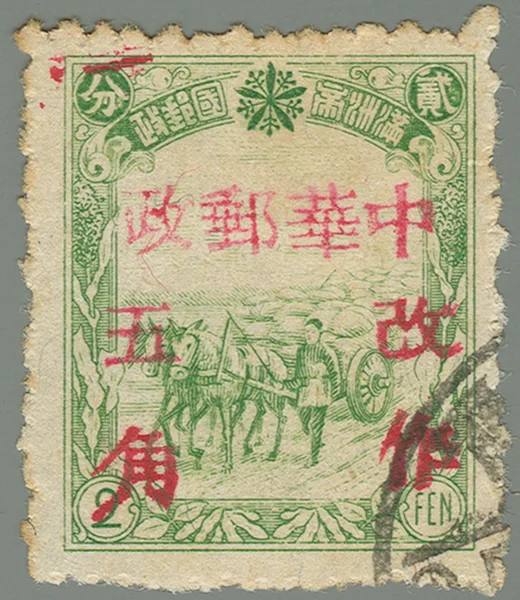
BML89
Tieli (鐵驪)
Stamps Overprinted “Chinese Post Temporarily Used” and Surcharged
Issued April 1946. Two-value rubber-chop surcharge on Manchukuo definitives by the Tieli Post Office, with black overprint on the $1 value and violet on the $5.
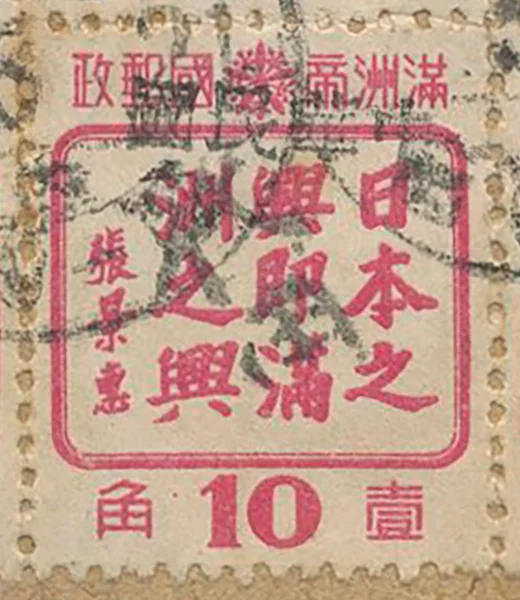
BML90
Tonghe (通河)
Stamps Overprinted “Chinese Post Change to” and Surcharged
Issued October 1946. Ten-value orange-red rubber-chop surcharge to $5 on Manchukuo definitives by the Tonghe Post Office.
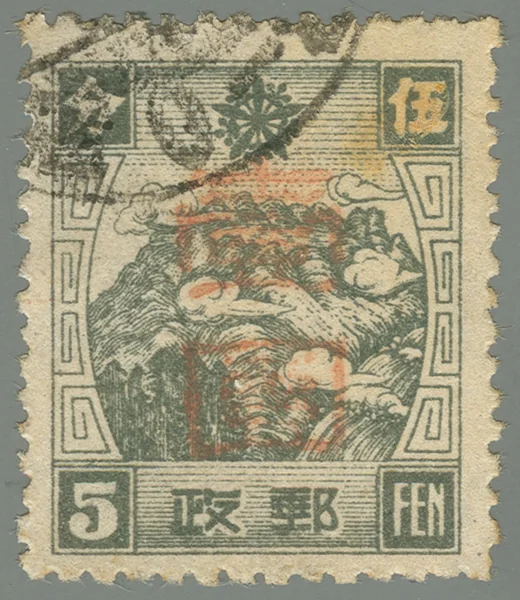
BML91
Tongxing (通興)
Stamps Overprinted and Surcharged
Issued May 1946. Two-value pale orange-red rubber chop surcharge to $1 and $5 on Manchukuo definitives by the Tongxing Post Office.
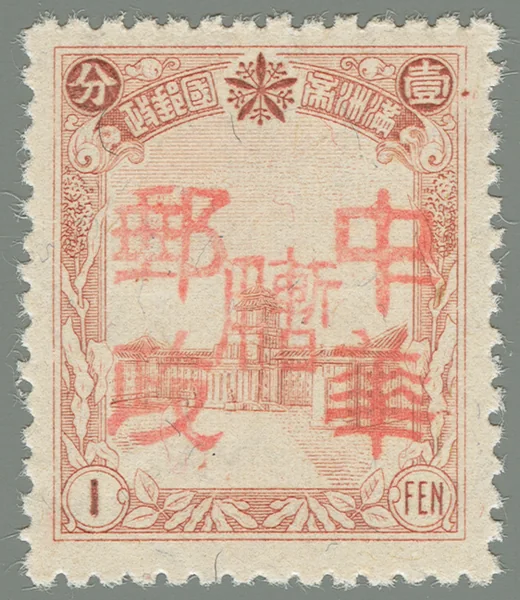
BML92
Tongxing (通興)
Stamps Overprinted “Chinese Republic Temporarily Used for” and Surcharged
Issued August 1946. Nine-value dark grey-black rubber chop surcharge to $1 on Manchukuo definitives by the Tongxing Post Office.
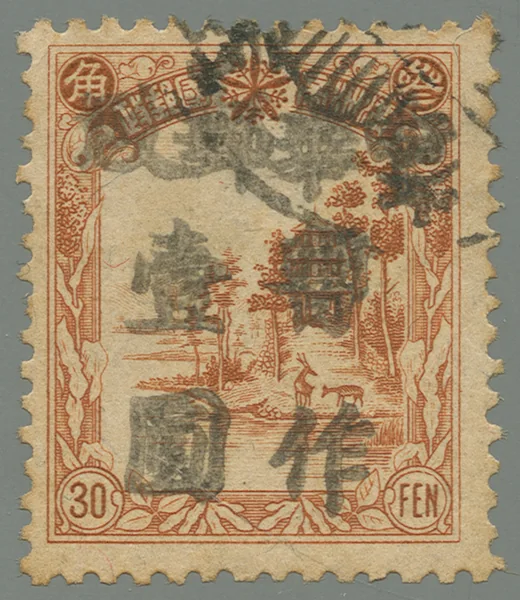
BML93
Wangkui (望奎)
Stamps Overprinted “Chinese Post Temporarily Used” and Surcharged
Issued March 1946. Five-value black rubber chop surcharge to $1, $5, and $10 on Manchukuo definitives by the Wangkui Post Office.
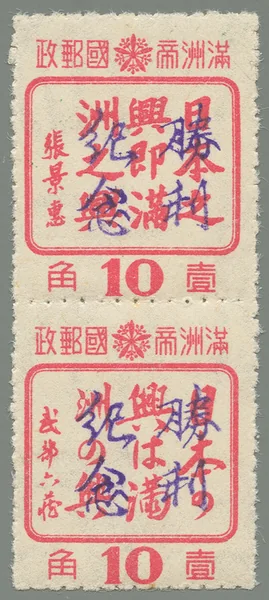
BML94
Weihe (葦河)
Stamps Overprinted “Chinese Post Alternatively Used”
Issued August 1946. Eight-value black rubber chop overprint on Manchukuo definitives by the Weihe Post Office.
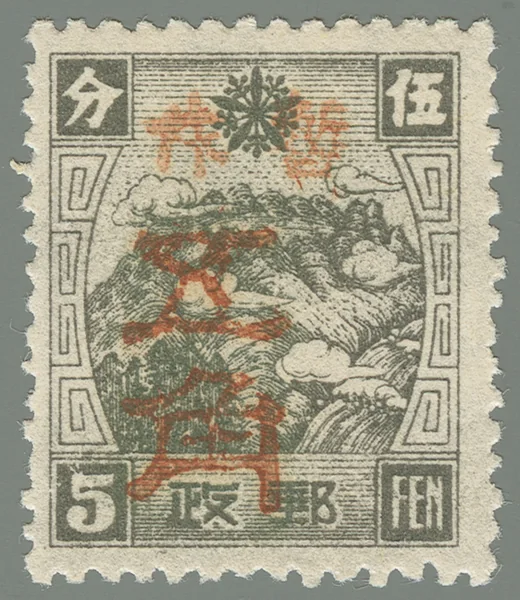
BML95
Weihe (葦河)
Stamps Overprinted “Chinese Post Change to” and Surcharged
Issued August 1946. Single-value red rubber chop surcharge to 50c on Manchukuo definitives by the Weihe Post Office.
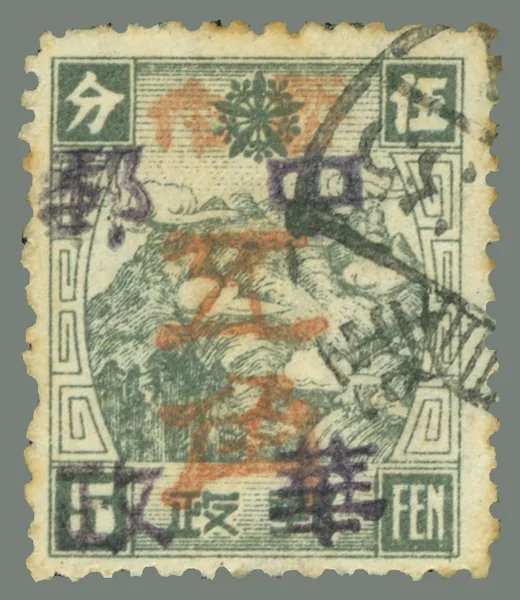
BML96
Wuzhan (五站)
Stamps Overprinted “Chinese Republic / Substitute”
Issued May 1946. Single-value black overprint on Manchukuo propaganda slogan stamps by the Wuzhan Post Office.
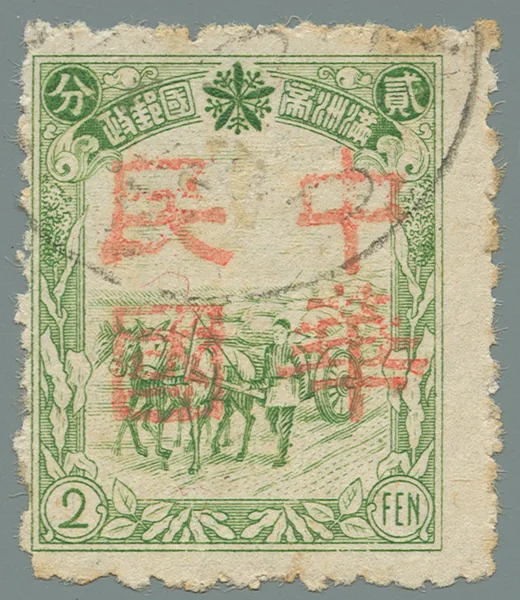
BML97
Xiji (西集)
Stamps Overprinted "Republic of China"
Issued October 1945. Four-value provisional set hand-overprinted with a wooden chop in orange red or black, reading Republic of China on Manchukuo definitives.
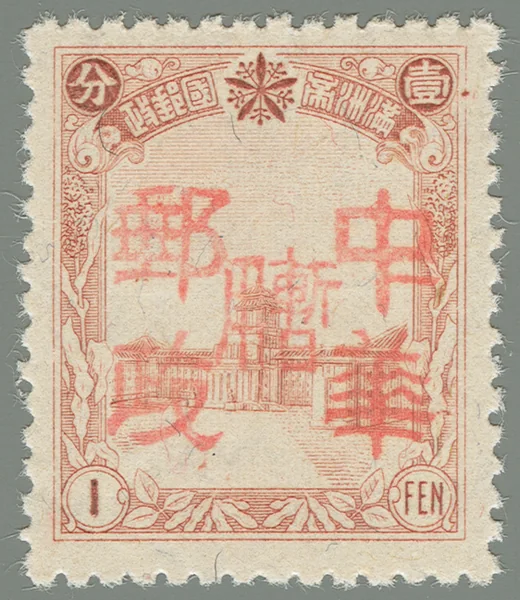
BML98
Yabuli (亞布力)
Stamps Overprinted “Chinese Post Temporarily Used”
Issued August 1946. Nine-value red rubber chop overprint on Manchukuo definitives by the Yabuli Post Office.
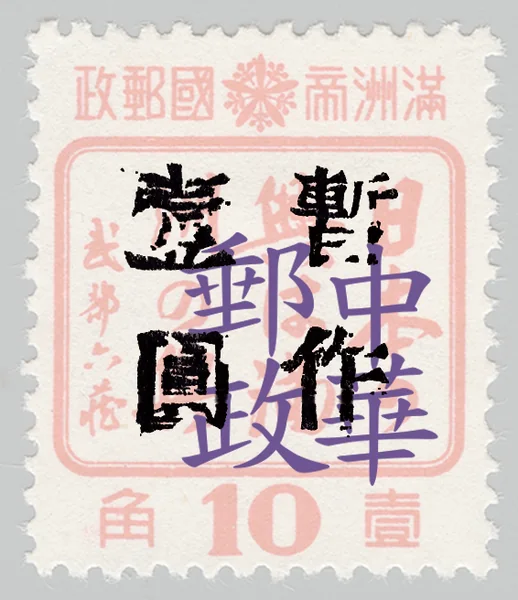
BML99
Yabuli (亞布力)
Stamps Overprinted “Commemorate Recovery”
Issued August 1946. Five-value green rubber chop overprint on Manchukuo definitives by the Yabuli Post Office.
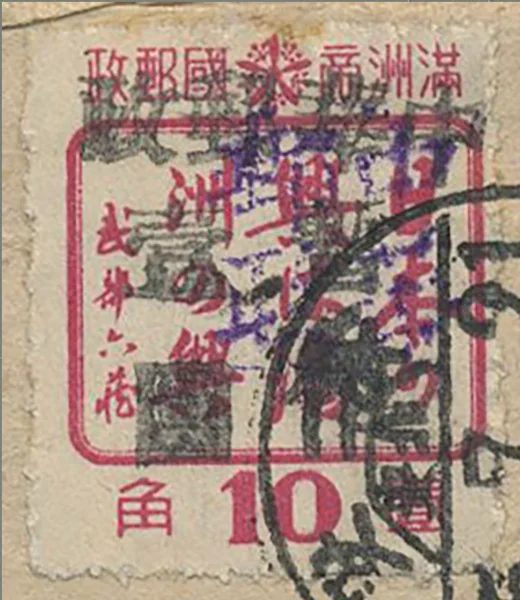
BML100
Yabuli (亞布力)
Stamps Overprinted “Commemorate Victory”
Issued August 1946. Five-value violet rubber chop overprint on Manchukuo definitives by the Yabuli Post Office.
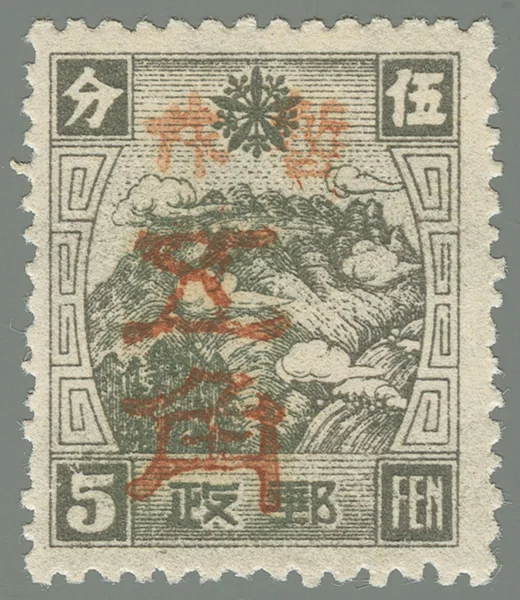
BML101
Yanshou (延壽)
Stamps Overprinted “Temporarily Used for” and Surcharged
Issued March 1946. Five-value red or black rubber chop surcharge to 50c and $1 on Manchukuo definitives by the Yanshou Post Office.
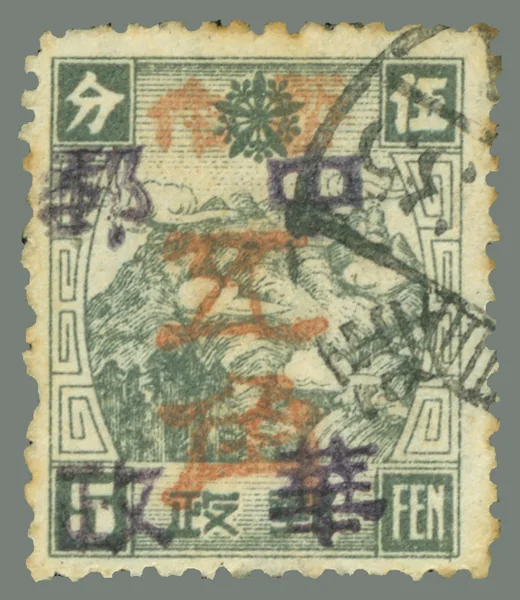
BML102
Yanshou (延壽)
Stamps Overprinted “Chinese Post” / “Temporarily Used for” and Surcharged
Issued April 1946. Two-value violet and red double-chop surcharge on Manchukuo 5th ed. interpostal stamps by the Yanshou Post Office.
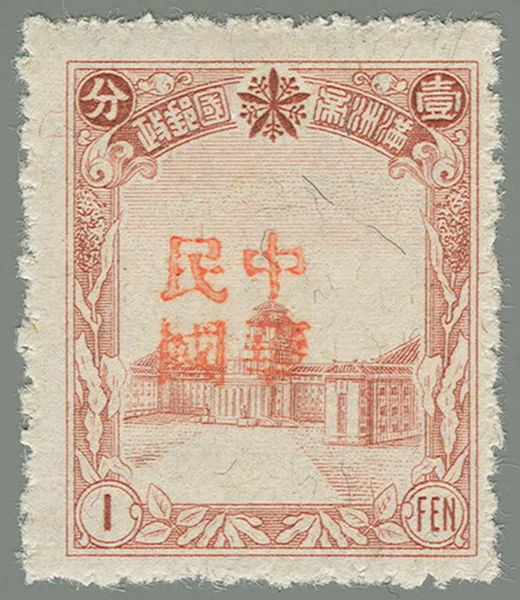
BML103
Yanshou (延壽)
Stamps Overprinted “Chinese Post” and Surcharged
Issued April 1946. Five-value red rubber chop surcharge applied in two stages on Manchukuo 5th ed. interpostal stamps by the Yanshou Post Office.
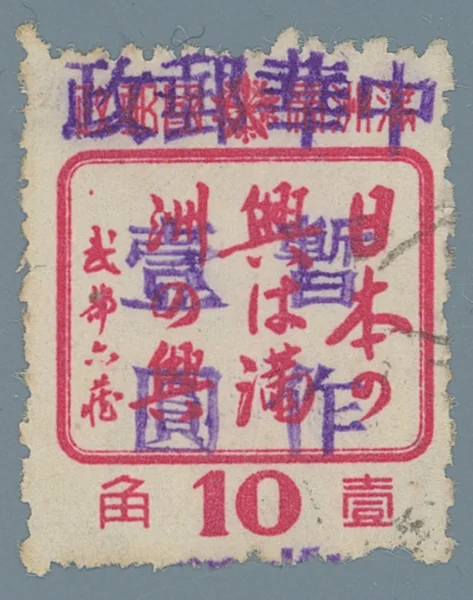
BML104
Yi’an (依安)
Stamps Overprinted “Chinese Post Temporarily Used” and Surcharged
Issued March 1946. Five-value violet wooden chop surcharge on Manchukuo regular and propaganda slogan stamps by the Yi’an Post Office.
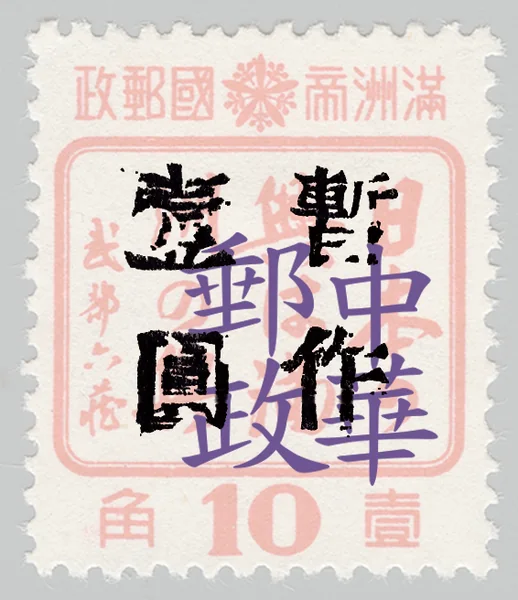
BML105
Yi’an (依安)
Stamps Overprinted “Temporarily Used” / “Chinese Post” and Surcharged
Issued May 1946. Single-value provisional rubber-chop overprinted in black with Temporarily Used and a $1 surcharge on Manchukuo propaganda slogan stamps bearing the violet Chinese Post overprint of the KMT Yi’an issue of October 1945.
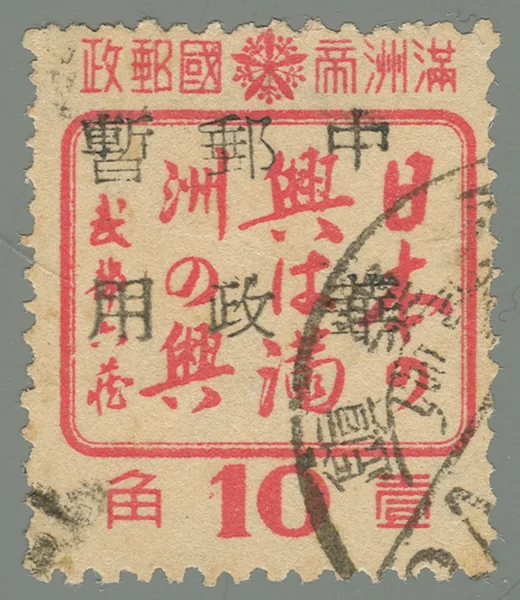
BML106
Yi'an (依安)
Stamps Overprinted "Chinese Post Temporarily Used" / "Chinese Post" and Surcharged
Issued July 1946. Single-value provisional double-overprinted on Manchukuo propaganda slogan stamps: rubber-chop in black with Chinese Post Temporarily Used and a $1 surcharge, and wooden-chop in violet with Chinese Post.
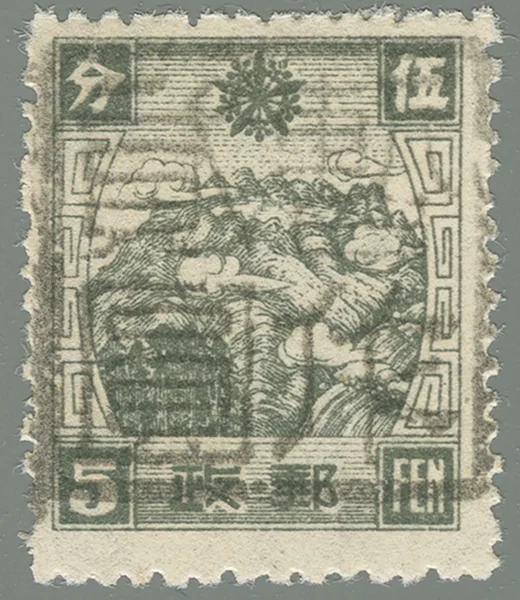
BML107
Yilan (依蘭)
Stamps Overprinted “Temporarily Used for” and Surcharged and/or “Chinese Post”
Issued November 1946. Six-type provisional set hand-overprinted with wooden chop in black and/or red on Manchukuo stamps by the Yilan Post Office, surcharged to $2.
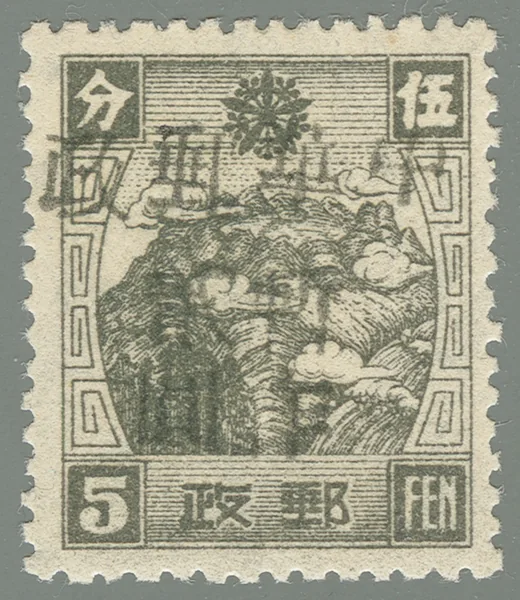
BML108
Yilan (依蘭)
Stamps Overprinted “Chinese Post” / “Temporarily Used for” and Surcharged
Issued August 1946. Six-type provisional set double-overprinted in black or red on Manchukuo stamps by the Yilan Post Office, surcharged to $2 or $5.
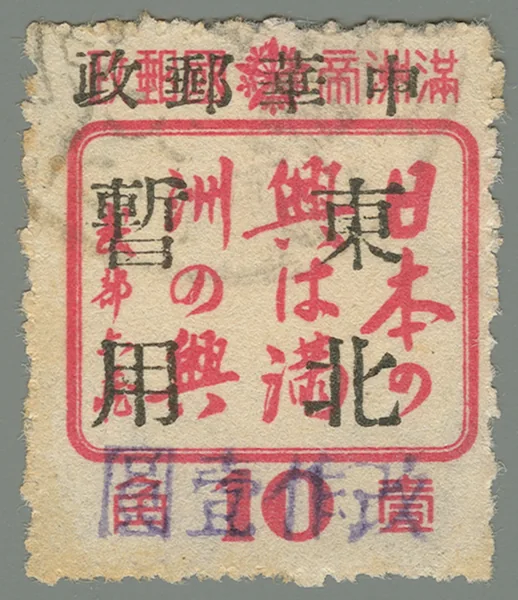
BML109
Yimianpo (一面坡)
Stamps Overprinted “Chinese Republic” (1st Issue)
Issued October 1945. Eleven-value provisional set hand-overprinted in pale red using a wooden chop reading Chinese Republic on various Manchukuo definitives, issued by the Yimianpo Post Office.
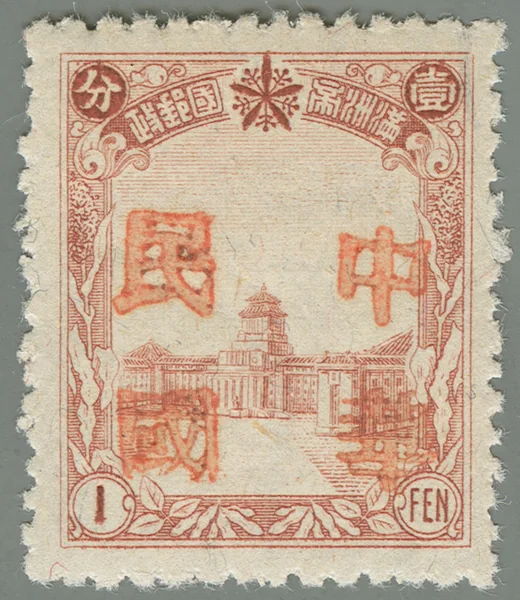
BML110
Yimianpo (一面坡)
Stamps Overprinted “Chinese Republic” (2nd Issue)
Issued March 1946. Nine-value provisional set hand-overprinted in pale red with a rubber chop reading Chinese Republic, with 2c and 4c values only as booklet stamps and panes.
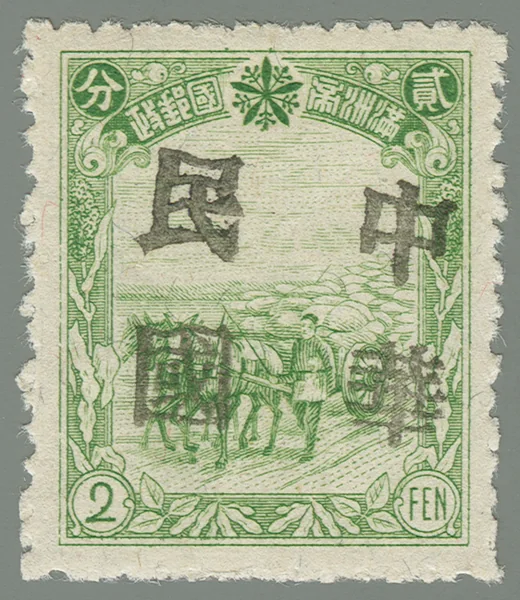
BML111
Yimianpo (一面坡)
Stamps Overprinted “Chinese Republic” (3rd Issue)
Issued April 1946. Eleven-value provisional set hand-overprinted in black with a rubber chop reading Chinese Republic, with 4c value only as booklet stamps and panes.
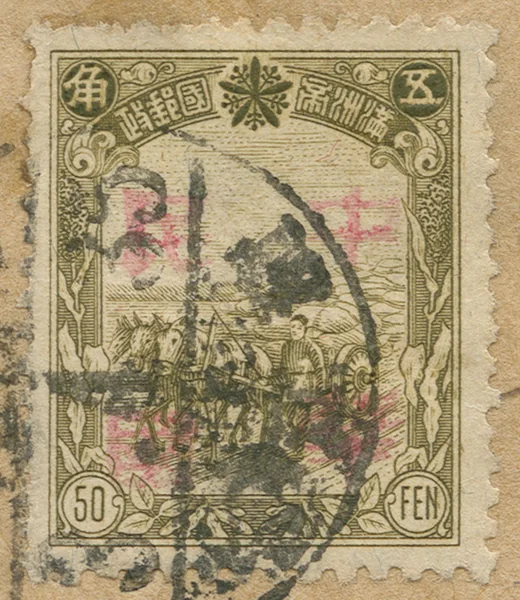
BML112
Yonglezhen (永樂鎮)
Stamps Overprinted “Chinese Post Temporarily Used”
Issued December 1945. Three-value provisional set hand-overprinted with types in black or red, reading Chinese Post Temporarily Used on Manchukuo propaganda slogan stamps.
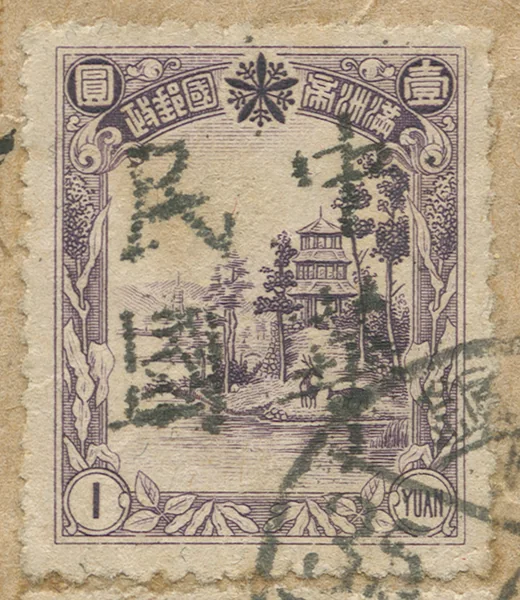
BML113
Yonglezhen (永樂鎮)
Stamps Overprinted "Chinese Republic"
Issued around June 1946. Two-value provisional set with a mimeographed black overprint reading Chinese Republic on Manchukuo definitives.
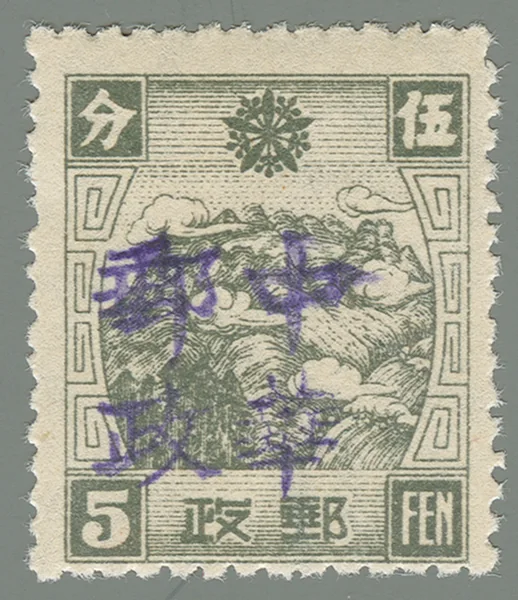
BML114
Yuelaizhen (悅來鎮)
Stamps Overprinted “Northeast China”
Issued April 1946. Single-value provisional set hand-overprinted with a wooden chop in violet, reading Northeast China on a Manchukuo definitive.
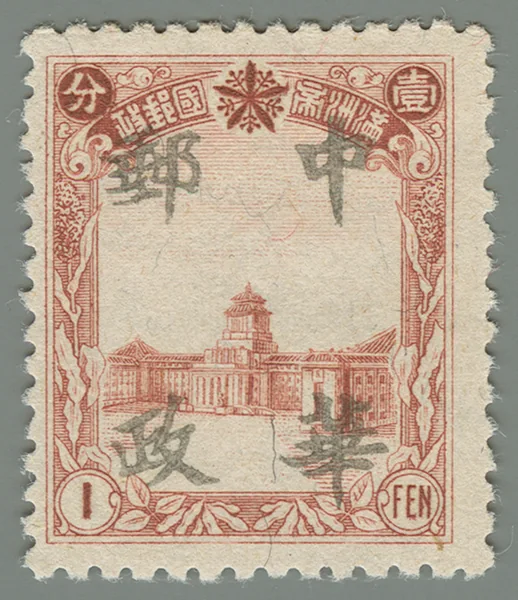
BML115
Yuelaizhen (悅來鎮)
Stamps Overprinted “Changed to” and Surcharged
Issued May 1946. Single-value provisional set hand-overprinted in violet with a wooden chop reading Changed to, on Manchukuo propaganda slogan stamps previously overprinted in Changchun.
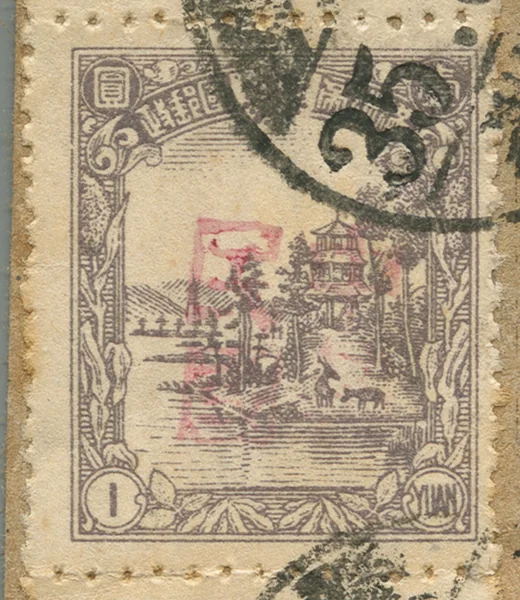
BML116
Zhaozhou (肇州)
Stamps Overprinted “Chinese Republic”, 1st Issue
Issued March 1946. Two-value provisional set hand-overprinted with a rubber chop in red, reading Chinese Republic on Manchukuo definitives.
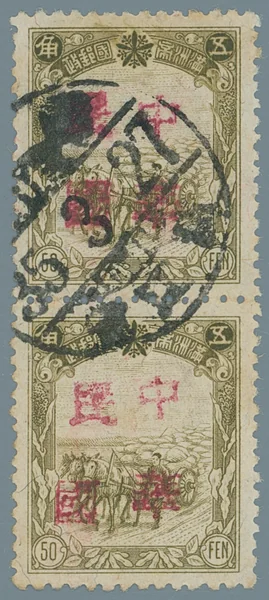
BML117
Zhaozhou (肇州)
Stamps Overprinted “Chinese Republic”, 2nd Issue
Issued March 1946. Three-value provisional set (two overprint type variants) hand-overprinted with types in red, reading Chinese Republic on Manchukuo definitives.
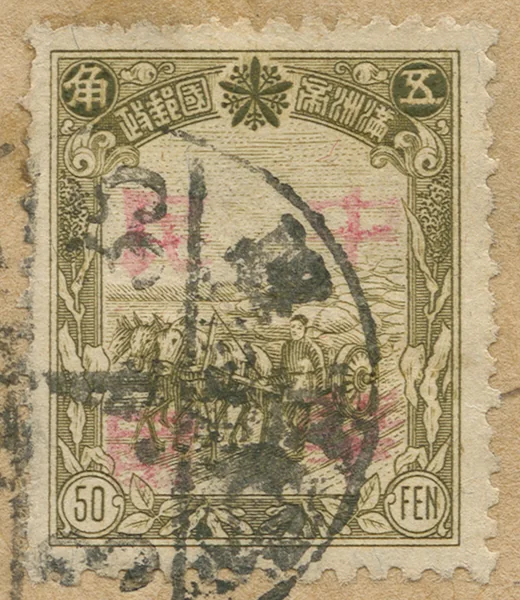
BML118
Zhaozhou (肇州)
Stamps Overprinted “Chinese Republic”, 3rd Issue
Issued March 1946. Two-value provisional set hand-overprinted with a rubber chop in red, reading Chinese Republic on Manchukuo definitives.
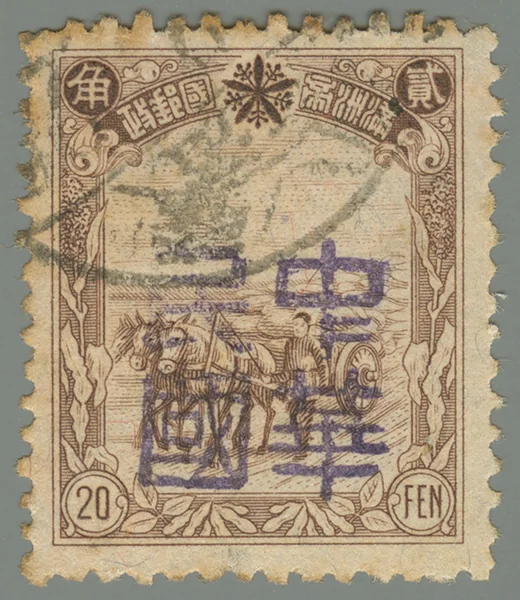
BML119
Zhaozhou (肇州)
Stamps Overprinted “Chinese Republic”, 4th Issue
Issued May 1946. Four-value provisional set hand-overprinted with a rubber chop in violet, reading Chinese Republic on Manchukuo definitives.
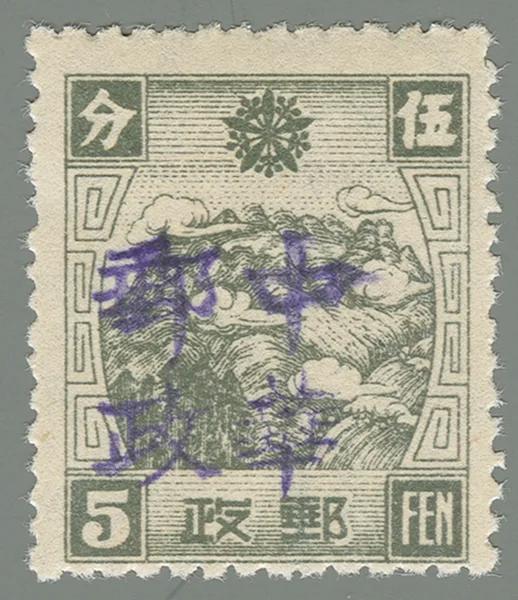
BML120
Zhuhe (珠河)
Stamps Overprinted “Chinese Post”
Issued March 1946. Four-value provisional set hand-overprinted with a rubber chop in violet, reading Chinese Post on Manchukuo definitives. Includes inverted overprint variety.
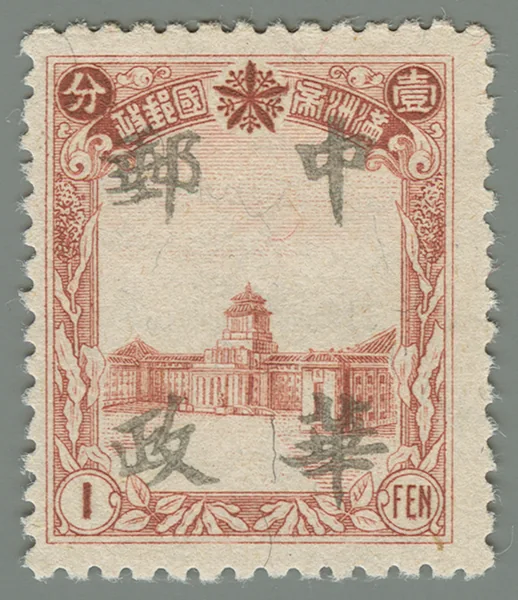
BML121
Zhujiakan (朱家坎)
Stamps Overprinted “Chinese Post”
Issued April 1946. Fourteen-value provisional set hand-overprinted with a rubber chop in black, reading Chinese Post on Manchukuo definitives.
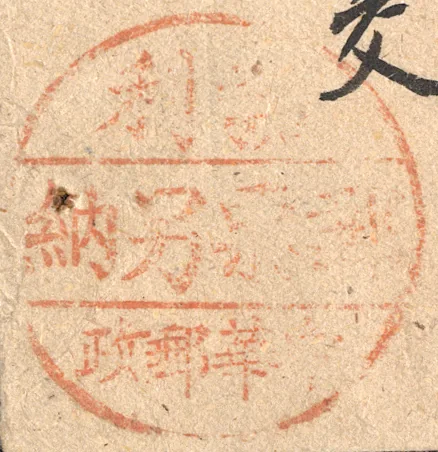
BMLC1
Boli (勃利)
Postage Paid Separately Handstamp
Used probably March to April 1946. Large circular red postage-paid handstamp, 35.5 mm, applied in lieu of postage stamps at Boli, creating stampless covers.
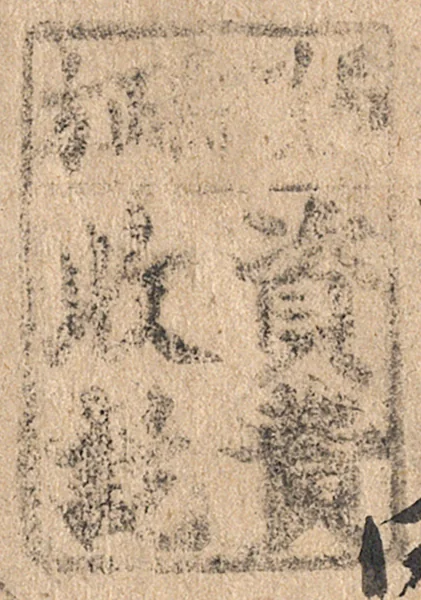
BMLC2
Fangzheng (方正)
Rectangular Postage-Paid Handstamp
Used April 1946. Rectangular black postage-paid handstamp, 22.0 × 32.5 mm, applied in lieu of postage stamps at Fangzheng, creating stampless covers.
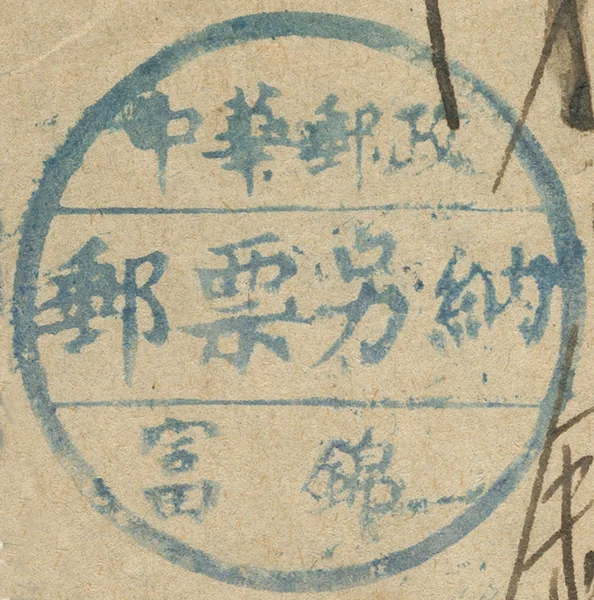
BMLC3
Fujin (富錦)
Postage Paid Separately Handstamp
Used around 1946. Large circular blue or violet postage-paid handstamp, 31.0 mm, applied in lieu of postage stamps at Fujin, creating stampless covers.
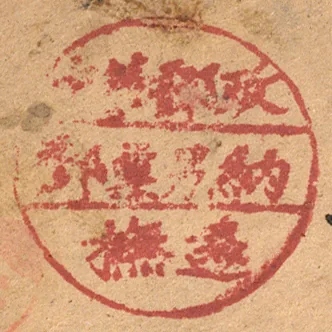
BMLC4
Fuyuan (撫遠)
Postage Paid Separately Handstamp
Used probably end of 1945. Circular red to red-violet postage-paid handstamp, 25.5 mm, applied in lieu of postage stamps at Fuyuan, creating stampless covers.
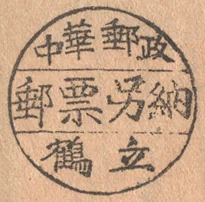
BMLC5
Heli (鶴立)
Postage Paid Separately Handstamp
Used around late 1945 to early 1946. Large circular black postage-paid handstamp applied in lieu of postage stamps at Heli, creating stampless covers.
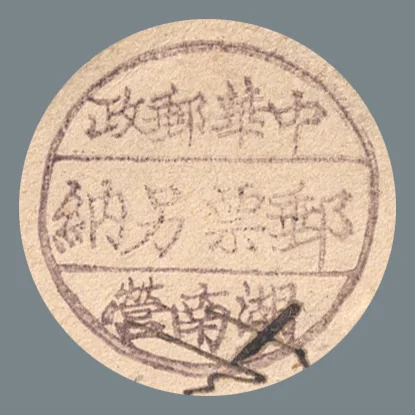
BMLC6
Hunan Ying (湖南營)
Postage Paid Separately Handstamp
Used around autumn 1946. Dark-violet circular postage-paid handstamp, 27.5 mm, applied in lieu of postage stamps at Hunan Ying (formerly Qianzhen), creating stampless covers.
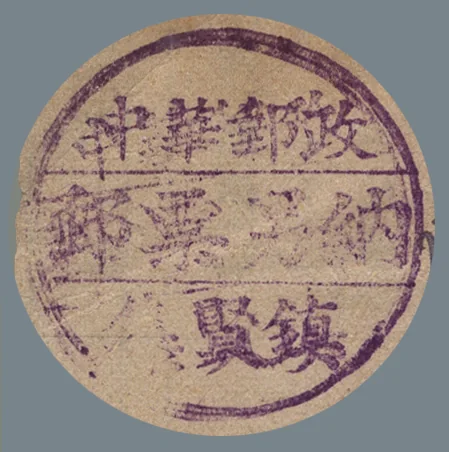
BMLC7
Jixian (集賢)
Postage Paid Separately Handstamp
Period of use unknown. Large circular violet postage-paid handstamp, 33.5 mm, applied in lieu of postage stamps at Jixian Town, creating stampless covers.
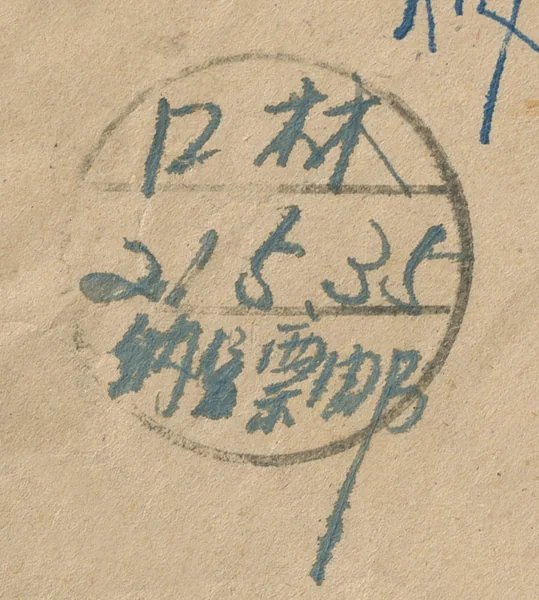
BMLC8
Linkou (林口)
Postage-Paid Handstamp
Used in May 1946. Circular black postage-paid handstamp, 23.6 mm, created from a regular postmark with segments removed and filled by hand, applied by the Linkou Post Office in lieu of postage stamps.
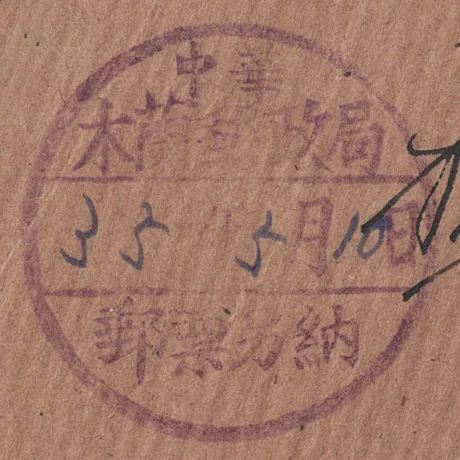
BMLC9
Mulan (木蘭)
Postage Paid Separately Handstamp
Used April to May 1946. Large circular violet postage-paid handstamp, 34.5 mm, applied in lieu of postage stamps at the Mulan Post Office, creating stampless covers.
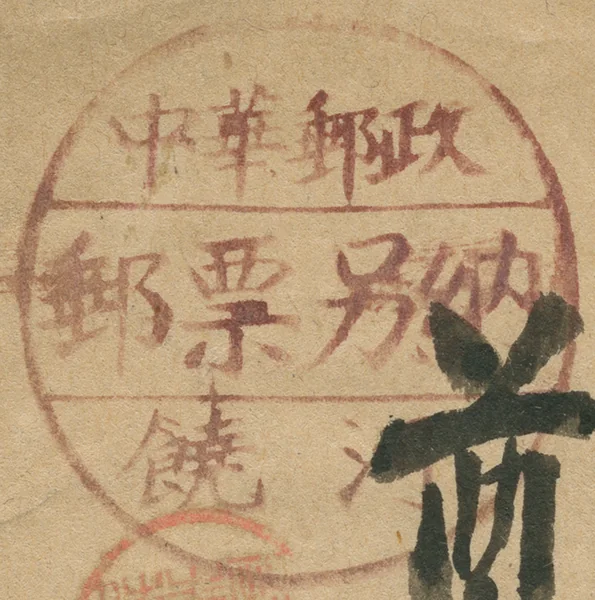
BMLC10
Raohe (饒河)
Postage Paid Separately Handstamp
Around 1945 to 1946. Large dark violet-red circular postage-paid handstamp, 30.5 mm, inscribed Chinese Post, Postage Paid Separately, Raohe. The exact period of use is unknown as no date stamps were applied.
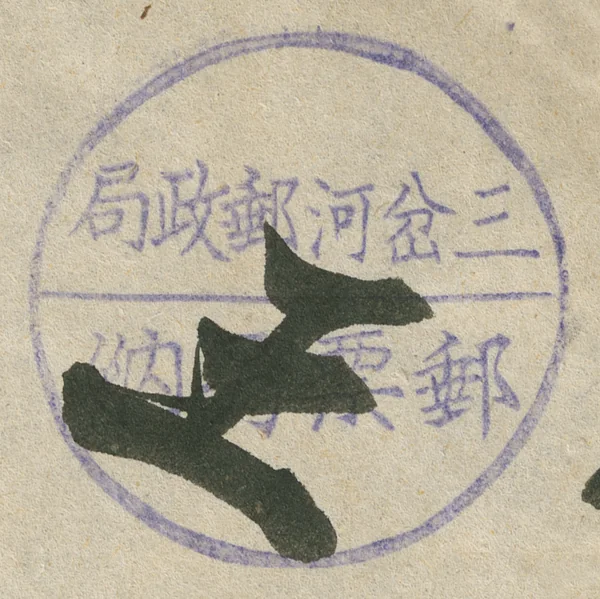
BMLC11
Sanchahe (三岔河)
Postage Paid Separately Handstamp
Late 1945 to mid-1946. Large violet circular postage-paid handstamp, 31 mm, reading Sanchahe Post Office, Postage Paid Separately, applied in lieu of postage stamps at Sanchahe.
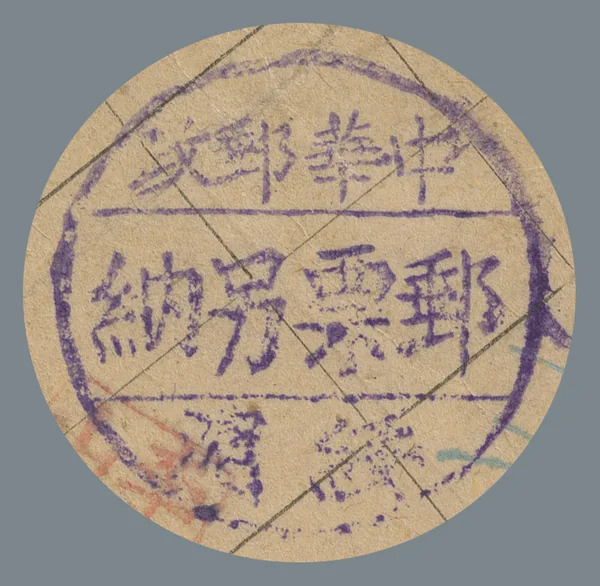
BMLC12
Suibin (綏濱)
Postage Paid Separately Handstamp
Around 1945 to 1946. Large violet circular postage-paid handstamp, 28 mm, inscribed Chinese Post, Postage Paid Separately, Suibin. The exact period of use is unknown as no date stamps were applied.
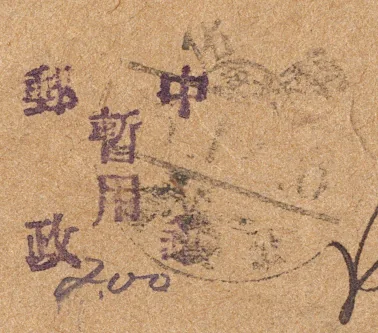
BMLC13
Suihua (綏化)
Rectangular Postage-Paid Handstamp
December 1946. Dark violet rectangular handstamp repurposed from the Suihua overprint chop, struck directly on covers with a handwritten $2 or $10 value supplement in lieu of stamps.
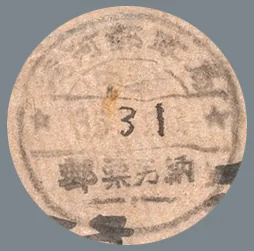
BMLC14
Tonghe (通河)
Postage Paid Separately Handstamp
March to June 1946. Circular greyish black 36.5 mm postage-paid handstamp, applied in lieu of postage stamps at Tonghe, creating stampless covers.
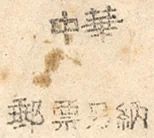
BMLC15
Tonghe (通河)
Rectangular Postage Paid Separately Handstamp
July to September 1946. Rectangular black 23 × 21.5 mm postage-paid handstamp, applied in lieu of postage stamps at Tonghe, creating stampless covers.
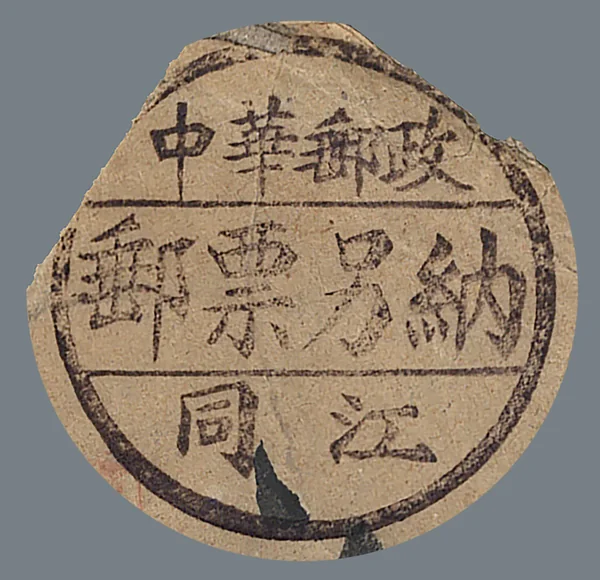
BMLC16
Tongjiang (同江)
Postage Paid Separately Handstamp
Period of use unknown. Circular black or violet 29.5 mm postage-paid handstamp, applied in lieu of postage stamps at Tongjiang, creating stampless covers.
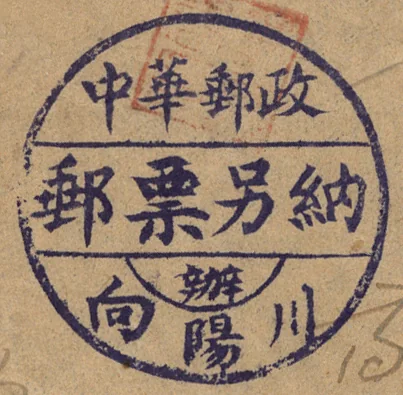
BMLC17
Xiangyangchuan (向陽川)
Postal Agency Postage Paid Separately Handstamp
Period of use unknown. Circular violet 31 mm postage-paid handstamp, applied in lieu of postage stamps at Xiangyangchuan, creating stampless covers.
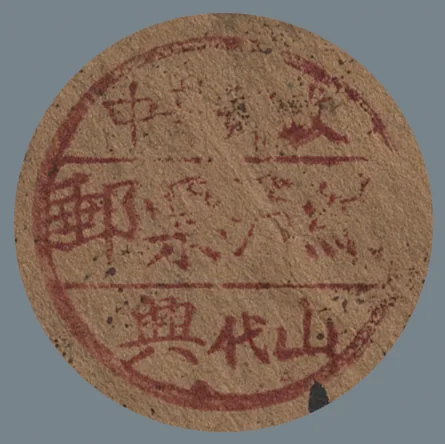
BMLC18
Xingshan (興山)
Postage Paid Separately Handstamp
Period of use unknown. Dark red circular postage-paid handstamp, 31.5 mm, applied in lieu of postage stamps at the Xingshan postal agency.
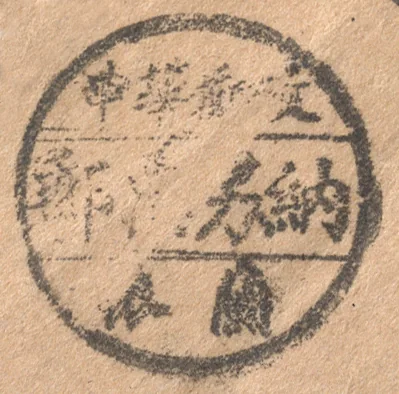
BMLC19
Yilan (依蘭)
Postage Paid Separately Handstamp
Used April 1946. Large circular black postage-paid handstamp, 29.5 mm, reading Chinese Post, Postage Paid Separately, Yilan, applied in lieu of postage stamps on domestic covers.